
Ever wonder how to keep your home powered safely during an outage? A generator transfer switch is the key to doing that smoothly and securely. It switches between utility power and your generator, preventing dangerous backfeeding and ensuring only one source energizes your home at a time.
Here’s what you need to know to choose and install the right one for you.
What Exactly Is a Generator Transfer Switch?
A generator transfer switch is an electrical device that directs your building’s power source between utility electricity and your generator. It is usually installed near your main electrical panel and serves as a dedicated connection point for backup power. The switch ensures that only one power source supplies your home at any given time, preventing dangerous backfeeding or electrical overlaps that could harm utility workers or damage your equipment. When choosing a transfer switch, consider pairing it with a high-quality inverter to ensure clean and stable power for sensitive electronics. Proper disposal of old diesel fuel at certified collection centers helps prevent environmental contamination and follows local hazardous waste rules.
Why Backfeeding Can Kill You (And How This Switch Stops It)
Backfeeding occurs when generator power flows backward through your home’s wiring into the utility system. This reverse current can energize power lines that are assumed to be dead, posing a serious risk. Utility workers, first responders, or neighbors who come into contact with live distribution equipment could be electrocuted. Additionally, backfeeding can damage your home’s wiring and create fire hazards. It’s not just a code violation—it’s a life-threatening danger. A proper transfer switch prevents this by physically isolating your generator from the utility grid. Installing a whole house surge protector can help safeguard your home’s electrical panel from damaging voltage spikes during generator use. It ensures only one power source—either your generator or the grid—feeds your home at a time. This eliminates the unsafe backfeed connection. You should never skip installing an approved transfer switch for the sake of convenience. During emergency preparedness, verifying that your transfer switch functions correctly is essential. Never plug a generator directly into a wall outlet, as this is a form of backfeeding. Always use an approved transfer switch to keep power safely contained inside your home. A reliable trickle charger can also maintain your car battery’s charge, but never use it to backfeed your home’s wiring. Because the transfer switch relies on mechanical interlocking to ensure that both power sources cannot connect simultaneously, it provides a fail-safe that prevents accidental grid connection.
How a Transfer Switch Actually Works During an Outage
When the power goes out, a transfer switch works by constantly monitoring your utility line for voltage drops or frequency issues. When it detects an outage or instability, the switch quickly assumes control, initiating a brief programmed delay to prevent false starts caused by momentary dips. Once the delay passes, the switch begins the isolation sequence: it physically disconnects from the utility line before establishing a connection with your generator. This break-before-make action ensures that no backfeed occurs, protecting both your equipment and utility workers. For camper travel, using a lightweight aluminum tank helps ensure the generator remains fueled without adding unnecessary weight.
The generator must start and reach stable voltage before the switch completes the transfer. Proper battery maintenance and fuel stabilization are crucial because, without reliable power and fuel, the generator may fail to start or run steadily. Once the generator’s voltage stabilizes, the transfer switch directs power to your designated essential circuits. It continues supplying power through the generator until utility power returns and remains stable for a preset period. At that point, the switch transfers back to utility power, allowing the generator to go through a cooldown period before shutting down and returning to standby mode.
Manual vs. Automatic Transfer Switches: Which Do You Need?
Choosing a manual transfer switch over an automatic one depends on your specific backup needs and budget. Manual switches require you to start the generator and switch the load yourself, making them a lower-cost and straightforward option. They are ideal if you are often at home and can manually restore power during an outage. Installing a manual switch is simpler, and it works well for basic backup setups or when you want to maintain more control over the process. For those considering pairing a transfer switch with a fuel source, reviewing top propane tanks for quality and performance can help ensure reliable generator operation.
Automatic transfer switches, on the other hand, detect power outages and switch to generator power automatically within seconds. This makes them a better choice for unattended properties or critical loads where continuous power is essential. Although they cost more upfront, automatic switches eliminate the need for manual intervention, reducing the risk of errors and increasing safety. If you rely on backup power for essential systems or are frequently away from home, an automatic switch provides seamless, reliable power restoration without your involvement.

This is the original, authentic, and patented EZ Generator Switch

Reliable Generator Transfer Switch: Designed to seamlessly switch from utility power to an auxiliary source like a gas or solar generator. With a 48000W capacity, this manual switch supports your entire home, including high-demand dryers and stoves, ensuring a secure power transition.

Current rating 50 Amps,operating voltage 240 volts,need some basic knowledge on electrical circuits
Whole-House or Selected-Circuit: Pros and Cons
Choosing between a whole-house or selected-circuit transfer switch depends on your needs for convenience, budget, and complexity. A whole-house switch connects all circuits, ensuring that no critical load is overlooked. This makes backup power straightforward, as you don’t have to worry about which appliances you’ve included. However, it requires a larger generator, which can be more expensive, and careful management to prevent overloading. Central air conditioning units, water pumps, and large appliances may demand close monitoring during power outages. To keep the cord connection safe and dry from the elements, you may also want to consider top cover choices for extension cords. For longer runs or higher power demands, a 14 gauge cord offers lower resistance and better current-carrying capacity than a 16 gauge cord, reducing voltage drop and heat buildup. To further protect stored fuel for the generator, adding fuel stabilizer per the manufacturer’s instructions helps prevent gum and varnish buildup in the engine.
A selected-circuit switch powers only essential loads, which can improve energy efficiency by excluding non-critical devices. This setup allows you to use a smaller, less costly generator because you are backing up fewer circuits. But missed or improperly planned circuits mean certain appliances won’t work during an outage. Additionally, adding new circuits later can be complicated, often requiring rewiring or upgrades to the transfer switch. Your choice should reflect your priorities: maximum convenience and coverage with a bigger budget, or cost savings and focused backup with precise planning.

Easy&Efficient Transfer Switch: The 100A manual transfer switch allowing seamlessly transfers power from the electric company to auxiliary power(gas generator, solar) with a simple movement of transfer switch lever; With a maximum handling capacity of 100A, a power capability of 24,000W, a commonly used voltage of 120/240V AC, the manual generator transfer switch effortlessly powers entire household and circuits like dryers, stoves and HAVC equipment during an emergency

Seamless Automatic Power Transfer Keeps your power on during outages by automatically switching from utility to generator power for single-phase systems.
High-Performance:This generator transfer switch is a high-performance device designed specifically for emergencies. With a simple movement of the control lever, it allows for quick switching between the main power source and an auxiliary power source (such as a gas generator or solar power). It has a maximum processing capacity of 200A and a power of 48,000 W
Can You Install a Transfer Switch Yourself?
You should not attempt to install a transfer switch yourself. This task involves working inside the main service panel, where lethal voltage is present, and mistakes can lead to backfeed risks that endanger utility workers and damage your equipment. Permits are usually required, and these must be obtained through licensed electricians, especially when wiring the panel. Even if you have experience with garage or outdoor wiring, moving circuits, routing conduit, and correctly terminating neutrals and grounds are complex tasks that demand professional knowledge. Knowing how to test a deep cycle battery for capacity and voltage drop can help you identify failing equipment before connecting it to a transfer switch. Local electrical codes vary, and improper installation can fail inspection, leaving you without legal approval to operate the transfer switch. Manufacturer instructions do not override licensing requirements, so unless you are a qualified electrician, it’s safest to hire a licensed professional for this job.
What Size Transfer Switch Do You Need?
To determine the right size transfer switch, match it to the larger of your utility service size or your generator’s output. For a whole-home setup, this typically means choosing a switch rated to your main breaker—commonly 100A, 200A, or 400A. Avoid relying on surge wattage; instead, base your choice on the generator’s running load current. Apply the 125% rule for continuous loads: multiply the running load by 1.25 to find the recommended switch size. Round this number up to the next standard rating for safety and compatibility. Also, check voltage, phase, and configuration to ensure your transfer switch can work seamlessly with your generator. Selecting the correct size reduces strain on your system and simplifies maintenance of your backup setup. For thermal performance under heavy loads, ensure the generator uses 10W-30 oil for generators to maintain stable viscosity and engine protection. Similarly, maintaining your motorcycle’s electrical charging system is just as important, which is why many riders rely on a reliable battery tender to keep batteries topped off during storage. When comparing top brands, Generac and Kohler both recommend matching the transfer switch to the generator’s running load for optimal safety and efficiency.

WHOLE-HOME AUTOMATIC BACKUP POWER: Service entrance rated at 200A, this switch replaces your main disconnect and transfers your entire home to a compatible Generac standby generator with no manual action required
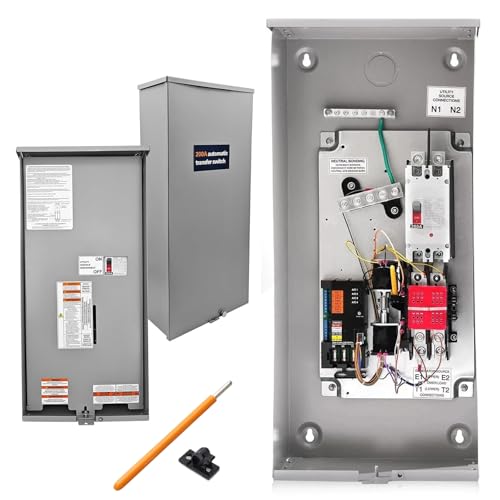
Seamless Power Transitions : This 200 Amp Automatic Transfer Switch is designed to seamlessly transfer the electrical load between a utility (primary) power source and a generator (backup) power source, it powers your entire household, including high-demand appliances, during outages.

WHOLE-HOME AUTOMATIC STANDBY BACKUP: Monitors utility power continuously and transfers your entire 200-amp home electrical load to a compatible Generac standby generator automatically, with no manual action needed
Which Home Circuits Must Go on Your Transfer Switch
Prioritize essential circuits to ensure your generator and transfer switch operate reliably without overloading. Start with the refrigerator, furnace blower, and sump pump—these are critical for food safety, winter heating, and flood prevention. Next, include your well pump if you rely on private water, along with basic safety circuits like lighting and a bathroom outlet. You can add a home office or security system if needed, but avoid connecting high-demand appliances like electric ranges, dryers, or central air conditioning, as they will quickly drain your generator’s capacity. For critical loads such as the sump pump, consider installing a battery backup to maintain operation during outages. Exploring solar integration can help offset some comfort circuits once your essential needs are covered. Remember, this setup is a survival panel, so keep it streamlined and focused on what’s most important. For a deeper understanding of capacity limits, review how portable backup generators compare in power ratings to ensure you select a model that can handle these prioritized circuits. Additionally, an inverter generator uses advanced electronics to produce clean, stable power, making it ideal for sensitive devices like home office equipment. Always avoid the common charging mistake of connecting a deeply discharged battery directly to a high-amp charger without first checking electrolyte levels, as this can damage the battery or cause unsafe conditions.

【BACKUP POWER FOR ESSENTIAL CIRCUITS】Designed to transfer generator power to a selected circuit during an outage. Suitable for compatible furnaces, refrigerators, lighting and other essential 120V home loads.

🚩【Auxiliary Power for Home Circuits】: The RVMATE generator manual transfer switch is rated at 15A 125V and provides auxiliary power to your home circuits. It allows you to safely connect the generator to your home's electrical system, supplying power to essential circuits such as the refrigerator, heating, outlets, lighting, and more. During short-term power outages, it can quickly and safely switch to emergency power, preventing risks like food spoilage and frozen pipes. Additionally, it enables your heating system to restart during power outages caused by winter storms.

Compatible with 12500W Generators: This manual transfer switch handles up to 50A and 10 circuits, allowing you to quickly switch from the main power to your generator with just the flip of a switch. It provides peace of mind and is a temporary power source during outages
Where to Mount Your Transfer Switch and How to Wire It
To wire your transfer switch, start by removing the main panel cover to access the interior. Feed the flexible conduit through the selected knockout, then secure it with a locknut and bushing to ensure a tight fit. Connect the transfer switch feed wires to their designated breaker terminals inside the panel. The white neutral wire should be attached to the neutral bus, while the green ground wire goes to the grounding bar. For the inlet box, mount it on an exterior wall near the transfer switch. Drill the necessary opening to route conduit directly between the inlet box and the switch, keeping the generator connection path as short and straightforward as possible to improve safety and ease of maintenance. To prevent electrical faults, always verify with a voltage tester that no voltage is present before handling any wiring inside the panel, as this is a critical safety protocol. For added protection, consider adding a DIY exhaust extension to route generator fumes safely away from your home’s air intakes.

【Compatible Models】Generator Interlock Kit Compatible with Square D QO or Homeline 150 or 200 amp panels.
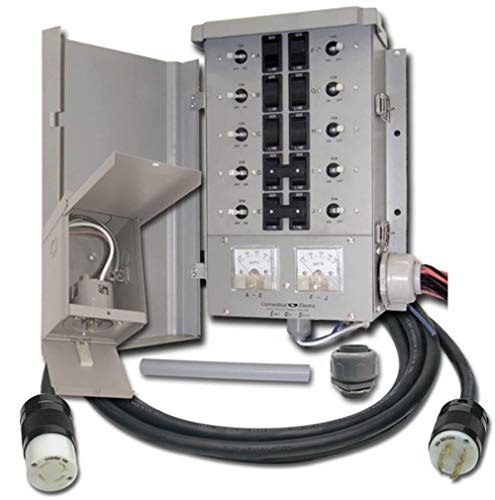
FOR PORTABLE GENERATOR: This transfer switch kit is designed to be used with emergency generators that have up to a 30-amp output, NEMA L14-30 receptacle. With easy-to-follow instructions, this unit is straightforward to install and a cheaper and safer alternative to running your portable generator without it.
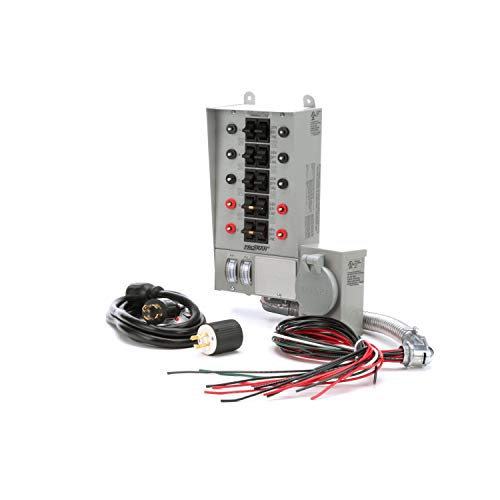
Convenient transfer switch kit, ideal for your circuitry and multi-wiring needs, is also made for reliably-fast installation in both residential and commercial applications
Transfer Switch Code Requirements That Keep You Safe
Code requirements for transfer switches mandate matching your device to the appropriate load classification—emergency, legally required, or optional standby. For emergency systems, you must select an automatic, factory-assembled switch that is listed to UL 1008 and NFPA 110 standards. Manual switches are not permitted in this context. Your transfer switch must prevent both parallel connection and backfeeding to ensure safety. Confirm that its short-circuit current rating meets or exceeds your available fault current to handle potential electrical faults safely. Proper voltage regulation and load balancing are essential to protect your equipment and minimize nuisance trips. Additionally, you need approval from the authority having jurisdiction and perform acceptance testing. Inspection is crucial; code compliance guarantees safe, reliable transfer between utility power and your generator. Following the same principles as stabil fuel stabilizer usage, always add the stabilizer to fresh fuel before storage to prevent ethanol-related corrosion in your generator. When installing the associated surge protector, follow proper grounding techniques to prevent dangerous voltage surges from damaging your transfer switch.


