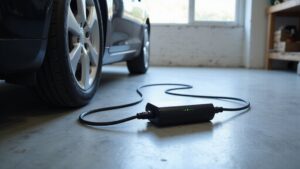
Wondering how long it takes for a trickle charger to fully restore your battery? If you’re using a standard 1-amp charger, expect the process to take one or two days, especially for a deeply drained battery.
The recovery time depends on the battery size and the charger’s amperage, but with a little planning, you can estimate exactly how long to wait.
Keep reading for a simple way to figure it out.
The Real Answer: One to Two Days for Most Drivers
Most trickle chargers take about one to two days to fully charge a battery. A deeply discharged battery, especially when using a 1-amp charger, often needs the full 48 hours to recharge safely. If your battery isn’t completely dead, a higher-amp charger like a 2-amp unit can sometimes bring it up faster, closer to 24 hours. The exact time depends on your battery’s chemistry and age; older or colder batteries tend to charge slower. For cars stored long-term, using a fuel stabilizer can prevent fuel system issues during the charging wait. Expect to wait at least a day or two for a safe, complete charge, rather than hoping for an overnight fix. Before relying on a slow charge, quick test methods can help assess if the battery is worth the wait. For safe reconnection, always follow proper wiring and fitting details to avoid damage or sparks.

Stay Charged: Battery Tender battery chargers and maintainers provide a full charge to your powersport vehicle’s battery before switching to float mode to maintain proper voltage levels for safe, long-term storage

For all 12V valve-controlled maintenance-free lead-acid batteries (motorcycle battery, car battery, backup power, ups, emergency power, solar, audio, fire power, security power, ATVs and Lawn Mowers, Electric Sprayer) satisfying your different needs for maintaining or restoring lost battery performance
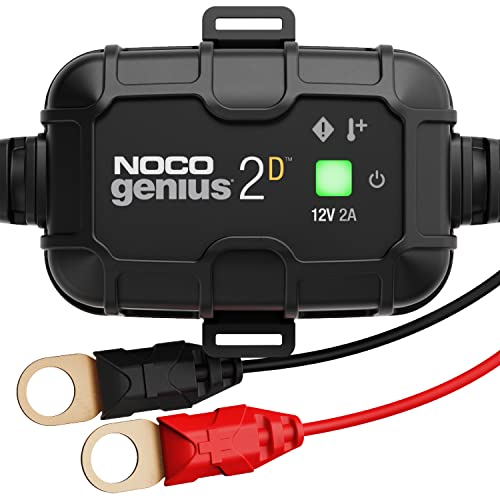
MEET THE GENIUS2D — The all-new direct-mount onboard battery charger for an under-the-hood battery charging system and year-round battery maintenance.
The Simple Formula for Estimating Trickle Charger Time
Estimating trickle charger time accurately involves a simple calculation. First, determine the amp-hours (Ah) you need to replenish. For example, a 50Ah battery at 50 percent charge requires about 25Ah. To find the charging time, divide the needed Ah by your charger’s amp rating. If your charger supplies 2A, then \(25 \div 2 = 12.5\) hours.
However, this is an ideal estimate that doesn’t account for real-world factors. Batteries, especially lead-acid types, become less efficient during charging, which can extend the time needed. To compensate, apply a charge factor of about 1.2 to the initial calculation, making the example’s estimate roughly 15 hours. Always check your charger’s compatibility with your battery; using a mismatched charger can further increase charging time. Remember, this formula provides a good planning estimate but isn’t a precise stopwatch. Trickle chargers prevent battery sulfation and extend battery life by delivering a low, steady current after the battery is fully charged. For car batteries, using a deep cycle battery in a standard vehicle is less efficient than using a dedicated starter battery, which can affect how long a trickle charger takes to restore a depleted battery. A whole house generator sizing calculation uses similar principles to match power needs without overspending.
Key Factors: Battery Capacity, Depth of Discharge, and Amp Rating
The factors most affecting trickle charger time are battery capacity, depth of discharge, and amp rating. Larger capacities, measured in amp-hours, require more energy to fully recharge, so a 0.5A charger will take significantly longer on a 100Ah battery than on a 20Ah one. Depth of discharge (DoD) plays a crucial role; a battery drained to 50% charges faster than one at 80%, since the amount of energy needed depends on how drained the battery is. Lead-acid batteries also prefer shallow cycles for better longevity, making partial charges more beneficial over deep cycling. To ensure a stable connection during charging, consider constructing a secure mount that prevents battery movement.
The charger’s amp rating determines the charging speed. For example, a 2A trickle charger will recharge a battery four times faster than a 0.5A charger on the same capacity. However, it’s important to consider the battery chemistry; flooded lead-acid batteries typically charge at about 10% of their amp-hour capacity, while AGM batteries can handle higher charge rates. Always match your charger to your battery type and avoid overcurrent situations, as excessive current stresses the cells and can cause overheating or damage. For solar setups, MC4 connectors are the industry standard for reliable and secure power transmission. When selecting a trickle charger, referring to reviews of the best inverter for portable generators can help ensure your charging setup is compatible with backup power systems.

Two battery type options: 12V Lead Acid and 12V Lithium(LiFePO4); Input voltage: 100-120VAC, Output: 12V 2A

Power Up Any Battery: Our smart battery charger is not only capable of charging 6/12V lead-acid batteries and LiFePO4 batteries, but also can maintain and repair lead-acid batteries while charging. Rated at 8A (2A per set), it can charge 4 sets of batteries simultaneously and automatically switch from full charge mode to float mode. Don't miss out on this powerhouse of a battery charger! Note: The charger is only suitable for batteries up to 40ah.

Fully-Automatic Smart Charging System: The Suuwer battery charging system is a 2.0-amp battery charger designed to fully charge a battery and maintain it at proper storage voltage without the damaging effects caused by trickle chargers. Once connected, the Chargers Manages Your battery's health on it's own
Real Charging Times for 40Ah, 50Ah, and 75Ah Batteries
Trickle chargers produce low current, so the actual charging times for 40Ah, 50Ah, and 75Ah batteries are quite lengthy—often measured in days rather than hours. For a 40Ah battery using a 1A charger, expect about 48 hours to fully charge. Doubling the current to 2A reduces the time to roughly 24 hours. A 50Ah battery takes approximately 60 hours at 1A or about 30 hours at 2A. For a 75Ah battery, the full charge requires roughly 90 hours at 1A or around 45 hours at 2A. Using a 3A charger shortens these times but still keeps them in the multi-hour range. These slow charging methods prioritize battery health and longevity, providing a gentle, complete recharge without stressing the cells. You’ll always spend more time waiting than you might prefer. Choosing a high-quality fuel, such as diesel for generators, ensures reliable engine performance during extended charging sessions. For campers relying on battery power, a portable inverter generator can supplement charging needs during the day. Similarly, protecting your camper’s electrical system with a top-rated surge protector can prevent damage from power fluctuations while connected to shore power.

Portable design: Our keychain ground bonding adapter feature makes it easy to store and carry, preventing the adapter from getting lost while you’re on the go. Perfect for outdoor use and traveling

224cc dual-fuel engine runs on both gasoline (4800 surge watts, 4000 rated watts) and propane (4320 surge watts, 4000 rated watts)

5000 Peak Watts and 3900 Rated Watts at Less Than 3% THD; Telescoping Handle; Gas Powered; Remote Start With Included Key Fob, Electric and Recoil Start
How a Deeply Dead Battery Affects Trickle Charger Time?
A deeply dead battery can take 24 to 48 hours or more to fully recover when using a trickle charger. When the battery’s charge drops near 0%, sulfation occurs, which significantly hampers its ability to accept current. This process causes the charger to work harder and extends the time needed for recharging. The battery’s age and overall health also influence recovery time; older batteries respond much more slowly.
Make sure your charger is compatible. Many smart chargers won’t activate if the voltage falls below about 10.5 volts. In such cases, a brief jump-start might be necessary to raise the voltage before the trickle charger can take over. Even then, expect a lengthened recovery period beyond typical maintenance time frames. Patience is essential—restoring a deeply drained battery often requires up to 60 hours for a proper full recharge.

PREVENT BATTERY FAILURE: Ensure reliable starts after storage with this 4-in-1 device that charges, maintains, tests, and restores batteries for cars, motorcycles, ATVs, trucks, SUVs, and boats.

PREVENT BATTERY FAILURE: Ensure reliable starts after storage with this 3-in-1 device that charges, maintains, and reconditions batteries for cars, motorcycles, ATVs, trucks, SUVs, and boats.
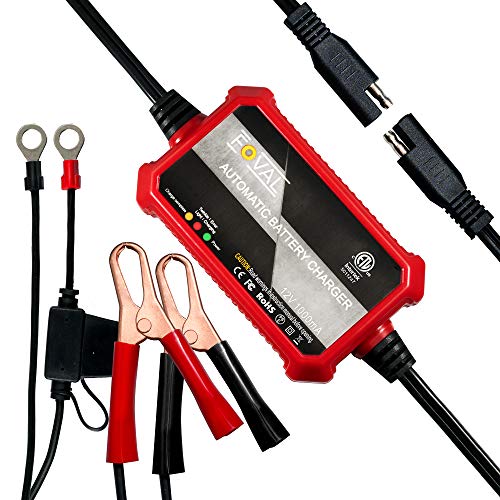
Automatic Battery Charger & Maintainer: 1A 12V smart battery charger perfect for SLA / VRLA / GEL CELL / AGM / WET lead acid batteries. It is a battery maintainer, trickle charger, float charger, and battery desulfator, also complete 4-step charging program (Initialization, Bulk Charge, Absorption Mode, Float Mode).
How Charger Amps Impact Your Wait Time
The amperage of your charger directly affects how quickly your battery charges. Increasing the current from 1A to 2A roughly halves the charging time—for a typical car battery, that drops from about 48 hours to around 24 hours. Jumping up to 6A cuts the time further to roughly 8 to 12 hours, while a 10A charger can bring it down to approximately 4 to 6 hours. Keep in mind, battery size matters: a 100Ah pack charged at 2A can still take nearly 50 hours if it’s half-empty. Faster charging amps are most effective when the battery isn’t deeply depleted, but safety considerations are key. Higher currents generate more heat, so always confirm your charger matches your battery’s specifications. For generator owners, understanding propane tank levels helps prevent unexpected shutdowns during extended charging sessions. Tapering the charge towards the end slows down the process, which extends your total time estimate. Using lower amps helps protect your battery’s lifespan, whereas repeatedly forcing high amps can stress the cells. Doubling the amps generally halves the charging time, but finding the right balance between speed and battery health is essential. For context, selecting the right equipment often requires comparing top picks on quality and performance to ensure compatibility. Using a 10W-30 oil made for generators can also improve engine longevity and charging efficiency.

【All-Climate Battery Charger】Built for extreme conditions (-20°C to 50°C), this intelligent car battery charger with dynamic temperature compensation (T-comp) technology for cars. Features adaptive winter/summer modes, AGM/GEL revival, and REPAIR mode for sulfated batteries, paired with zero-output trickle charging to prevent winter drain. The automotive battery charger weatherproof design and 24/7 support guarantee reliability in blizzards or heatwaves
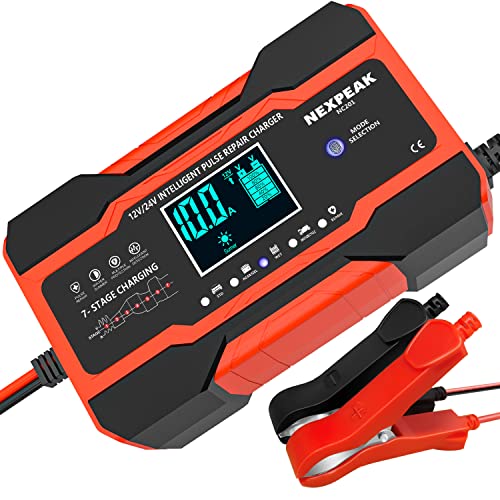
【10-AMP QUICK CHARGER】12V 10-Amp and 24V 5-Amp 7-stage quick battery charger, charging speed is much faster than 8-Amp or 5-Amp automatic chargers. Charge or repair all 12-volt and 24volt lead-acid automotive, marine and deep-cycle batteries including AGM, GEL, SLA, Flooded in cars, trucks, SUVs, motorcycles, lawn mowers, boats marine, etc. Perfect household tool and present for daily use! NEW REPLACEMENT AVAILABLE FOR ANY QUALITY ISSUE.

3-in-1 Smart Car Battery Charger: This 10A 12V car battery charger comes with a compact size and super fast charging, suitable for all 12V lead-acid batteries (including AGM, GEL, SLA, VRLA, etc.) and LiFePO4 lithium batteries. Charging, maintaining, and trickle charging modes for cars, motorcycles, trucks, boats, and more. Please note: this is a car battery charger and please connect it to a power source before use. (Please do not let the charger operating unattended for more than 12 hours.)
Summary: When to Expect Full Charge
Expect to wait between 24 and 48 hours for a full charge from your trickle charger when restoring a dead battery. If your battery is only partially drained, the process may be completed in about 8 to 18 hours. For completely depleted batteries, expect the charging time to extend up to 60 hours. The exact duration depends on your battery’s initial charge level, its size, age, and how well it accepts current. Smaller or newer batteries tend to charge faster, while larger or older batteries might take longer. Similar to a UPS battery backup, a trickle charger provides steady low-current power to safely replenish energy without overheating the battery. Smart chargers will switch to maintenance mode once fully charged to prevent overcharging, helping preserve your battery’s lifespan. Unlike basic chargers, a smart charger actively monitors battery voltage to adjust current and avoid damage. If you are using a generator for camping, consider its portable generator output to ensure it can power a compatible trickle charger. In practical terms, plan for about one day for a partial drain, one to two days for most cases, and two days or more for deeply discharged batteries. Remember, slow charging is better for your battery health and reduces the risk of damage.