Having enough fuel to keep your power on during an outage can be a challenge. A tri fuel generator offers a practical solution by letting you run your home on gasoline, propane, or natural gas.
This flexibility ensures you’re never stuck without power because of fuel issues. Keep reading to see how this versatile setup works and if it’s right for you.
What Is a Tri Fuel Generator, and Why Does It Exist?
A tri fuel generator can run on gasoline, propane, or natural gas, providing maximum flexibility during power outages. This versatility allows you to adapt based on fuel availability, giving you options when one fuel source runs out or is hard to find. Your fuel storage strategy becomes more efficient because you can stockpile propane for its long shelf life or rely on a natural gas line for continuous operation without refueling. If you need a portable setup, choosing the best inverter ensures clean power for sensitive electronics while maintaining fuel flexibility. To keep the generator operating smoothly, pay close attention to the carburetor and fuel lines, especially when switching fuels. Draining the carburetor after using gasoline prevents residues that can cause issues, and running the generator on propane once a month helps keep everything clean and ready for the next use. However, if your generator’s battery is deeply discharged, a standard battery tender cannot recharge it, as most battery tenders are designed to maintain rather than revive a completely dead battery. For a fully depleted battery, you should first confirm the voltage reading with a multimeter to assess whether it can accept a charge. This design aims to enhance your backup power reliability without adding unnecessary complication.
How Does a Tri Fuel Generator Work?
A tri fuel generator works by using a single internal combustion engine to burn gasoline, propane, or natural gas, generating mechanical energy to produce electricity. Each fuel has its own dedicated delivery path: gasoline flows through a carburetor, while propane and natural gas are regulated to match optimal pressure levels through specialized systems. The engine adjusts the air-fuel mixture based on which fuel is active, ensuring efficient and clean combustion. This precise control allows the generator to operate smoothly regardless of the fuel source, providing steady AC power. The rotating crankshaft, powered by the combustion process, drives an alternator that converts the mechanical energy into electrical energy for your outlets.
What Fuels Can a Tri Fuel Generator Use, and How Do You Switch?
You can switch a tri fuel generator between gasoline, propane, and natural gas by using a selector dial or valve. Always turn off the generator before making any fuel changes. Locate the switch labeled GAS, LPG, or NG, then turn the engine off. After that, rotate the dial to select your desired fuel source. The generator’s fuel switch positions include settings for storage (off), propane, gasoline, and natural gas at distinct clock positions.
For propane, connect a hose from the tank to the generator’s propane inlet. In the case of natural gas, you’ll need a permanent connection to a gas line. Once connected, adjust the choke if necessary before restarting the generator. Switching fuels requires a shutdown to prevent damage and ensure safe operation.

THE EASY FUEL OPTION: This 15' natural gas hose and quick connect adaptor lets your tri fuel Westinghouse generator run on safe, easy, endless natural gas—with a ½" diameter, it works with all Westinghouse tri fuel generators rated under 14,500 running watts—perfect for home backup

THE EASY FUEL OPTION: This 25-foot natural gas hose and quick connect adaptor allows your tri fuel Westinghouse generator to run on safe, easy, endless natural gas—with a 1/2" diameter, it works with all Westinghouse tri fuel generators rated under 14500 running watts—perfect for home backup

Stable & Safe Design of Dual Stage Propane Regulator: adopting a two-stage regulator system to stabilize the output pressure, effectively avoiding gas instability caused by temperature fluctuations or changes in gas tank pressure in a single-stage regulator, and ensuring flame stability without detonation. 2 stage propane regulator Equipped with a safety relief device, it automatically releases pressure when the system pressure is too high, preventing overpressure damage and safety accidents.
How Much Power Does a Tri Fuel Generator Deliver per Fuel?
Gasoline delivers the highest power output among tri fuel options, typically providing between 10,500 and 13,500 running watts. Switching to propane decreases this output by around 10%, resulting in approximately 9,500 running watts. Natural gas produces the least power, often 15% to 25% lower than gasoline, meaning you might see only about 8,500 running watts from the same generator. For example, a specific model like the Champion 201176 offers 7,250 running watts on gasoline, 6,525 on propane, and 5,875 on natural gas, demonstrating the power output per fuel differences in a real-world product.
Starting wattage follows a similar pattern: gasoline offers the highest, followed by propane, then natural gas. Keep in mind that propane and natural gas generally have lower fuel efficiency, which can lead to slightly reduced power output but offer benefits like cleaner burning and longer engine lifespan. Noise levels tend to stay similar regardless of fuel—engine tone changes are minimal, with decibel output staying fairly constant. Always consult your generator’s specification sheet for exact figures.
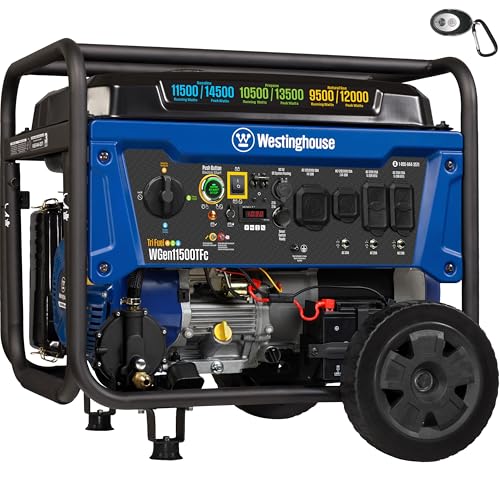
Perfect as a backup power source for larger homes or a dependable source of portable power

TRI-FUEL FLEXIBILITY FOR ANY SITUATION: Run on gasoline, liquid propane, or natural gas with a simple dial turn, delivering 9,500 running watts and 12,500 starting watts to power home backup, job sites, or RV setups

Your 6500-watt portable generator operates on natural gas, propane, or gasoline, plus natural gas and propane hoses are included so the unit is ready to run on any fuel right out of the box
What Are the Main Tradeoffs of a Tri Fuel Generator?
Tri fuel generators come with several notable tradeoffs. The initial cost considerations are significant—you can expect to pay considerably more upfront compared to single or dual-fuel models. Additionally, professional installation is often necessary, including a transfer switch and gas-line connections, which can add thousands to your total investment.
The environmental impact is mixed. While natural gas burns cleaner than gasoline, storing gasoline in approved containers or managing propane tanks presents logistical challenges and emissions concerns. Switching fuels also involves extra steps and parts, increasing maintenance complexity. Natural gas generally delivers about 20-25% less power than gasoline, which may require you to select a larger generator for your needs.
Noise output remains a factor, with levels typically around 68 to 78 decibels. This limits where you can safely place the generator, especially in noise-sensitive areas. Overall, while tri fuel generators offer remarkable flexibility, these tradeoffs should be carefully weighed against your power needs and budget.

13500 Peak Watts, 10500 Running Watts (Gasoline); 12500 Peak Watts, 9500 Running Watts (Propane); 10000 Peak Watts, 8500 Running Watts (Natural Gas); Remote Start with Included Key Fob, Electric and Recoil Start; Up to 19 Hours of Run Time on a 9.5 Gallon Fuel Tank with Fuel Gauge

Power Your Entire Home - With 13,000 watts of power, the DS13000MXT Tri Fuel generator will keep your whole home running during a storm or power outage, while protecting your family from harmful fumes with CO Alert.

Switch between gasoline (14500 surge watts, 11500 running watts), propane (12500 surge watts, 10300 running watts), and natural gas (10500 surge watts, 8750 running watts) with a simple turn of the selection dial
Fuel Flexibility Means You’re Never Stuck Without Power
A tri-fuel generator allows you to switch between gasoline, propane, and natural gas with a simple dial or hose swap, ensuring you’re never left powerless. This flexibility means you are not dependent on a single fuel type. If gas stations run out of gasoline, you can switch to your propane reserve. If your propane supply is exhausted, you can connect to a natural gas line. Fuel storage also becomes easier—propane can be stockpiled for long-term storage without degrading over time. This versatility is similar to how a trickle charger ensures your battery stays ready regardless of fuel conditions. For those who prefer a hands-on approach, building your own gas caddy from a kit can simplify moving heavy fuel containers safely. Propane also offers a longer lifespan for stored fuel compared to gasoline, which can degrade in months.
To maintain optimal performance, rotate your fuel sources regularly to keep the carburetor and seals in good condition. Running on natural gas can also extend engine life by leaving less residue inside the engine. This versatility ensures you won’t be halted by supply chain disruptions. Instead, you select the available fuel, keep the generator running, and maintain your power source without worry.

HUGE PORTABLE POWER: The WGen14500TFc tri fuel generator with CO sensor is an ideal power source for jobsites and emergency backup of larger homes. Gas: 18,000 peak watts, 14,500 running watts; Propane: 16,000 peak watts, 13,000 running watts; Natural gas: 14,400 peak watts, 11,600 running watts

HUGE PORTABLE POWER: Gasoline: 28,000 peak watts and 20,000 running watts; Propane: 25,200 peak watts and 18,000 running watts; Natural gas: 22,400 peak watts and 16,000 running watts; up to 15 hrs. of run time at 25% load on a 17.2-gal. tank with gauge; perfect backup power source for larger homes
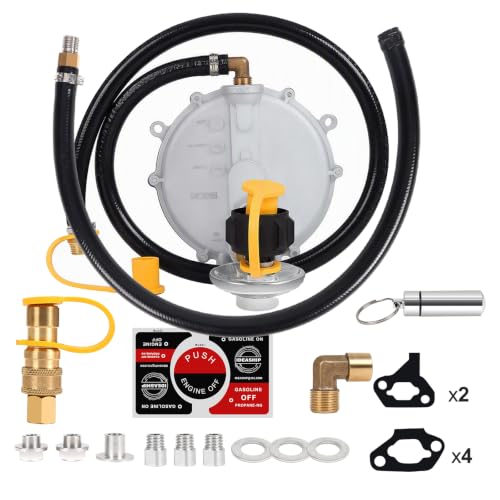
Three Fuel Compatibility: Compatible with Honda EU2200i portable generator, this conversion kit lets you effortlessly switch between gasoline, propane and natural gas. Enjoy maximum fuel flexibility to keep your power running whenever you need it
Safety Steps for Running a Tri Fuel Generator
Running a tri-fuel generator safely involves critical precautions. Always operate it outdoors, placing it at least 20 feet away from doors, windows, and vents, and ensure the exhaust is directed away from your home. Installing battery-powered carbon monoxide alarms on every level provides essential detection—test these alarms regularly, especially before storm season. Furthermore, when using propane, understand that the remaining fuel level must be checked to prevent unexpected shutdowns and ensure safe operation. For added protection, choose a model built with a weather-resistant housing to shield the generator from rain and debris.
Handle fuel with care. Refuel only when the engine is cool to prevent fires, and store fuel in approved containers, kept away from living areas. To manage noise, position the generator on a dry, level surface, avoiding enclosed spaces that can amplify sound. Conduct routine maintenance: check for leaks before each use, and turn off the unit for transport or storage.
Match the generator’s load to its rated capacity to prevent overloading. Always use a transfer switch when connecting to your home’s electrical system, and never backfeed power into the grid, as this can be dangerous. For devices like power inverters, a deep-cycle battery provides stable and reliable energy for extended operation. Following these safety steps reduces risks and keeps you and your family safe during power outages.
4 Specs to Compare Before Buying a Tri Fuel Generator
Compare running watts and starting watts. Gasoline usually provides the highest output, making it ideal for powering your most demanding appliances and tools. Natural gas units, on the other hand, tend to have lower wattage ratings, so check whether their output still meets your essential loads. Running watts determine continuous power, while starting watts account for brief surges when motors start up. Ensuring your generator can handle both prevents overloads and keeps your equipment running smoothly. For those prioritizing long-term reliability, consider diesel fuel options if your generator supports it. For efficient fuel handling, look into fuel transfer pumps that simplify refueling tasks.
Check fuel flexibility. Confirm that the unit can run on propane and natural gas as well as gasoline. This versatility allows you to switch fuel types based on availability and cost, providing greater convenience during extended outages. Make sure the output on propane and natural gas still covers your essential loads to avoid surprises when switching fuels.
Compare runtime at 50 percent load and fuel tank size. Larger tanks, around 9.5 to 10.5 gallons, support longer run times on gasoline, often exceeding 8 hours at half load. This is crucial for maintaining power through extended outages or outdoor camping trips. Keep in mind that natural gas and propane connections may influence runtime, depending on the setup.
Compare noise levels and weight. Noise levels typically fall in the mid-60s decibels, which is manageable for most residential environments. Weight usually hovers around 191 pounds, making the presence of wheels essential for mobility. Being aware of these factors helps you select a unit that fits your space and convenience needs.

HOME BACKUP POWER, ≤3% THD: The Westinghouse iGen12000TFc tri fuel inverter generator provides whole home backup power that's safe for sensitive electronics; It also has a 50A outlet; Gasoline: 12,000W peak/9,000W running; Propane: 11,000W peak/8,100W running; Natural gas: 9,800W peak/7,200W running

12500 Peak Watts, 9500 Running Watts (Gasoline); 11200 Peak Watts, 8500 Running Watts (Propane); 9500 Peak Watts, 7500 Running Watts (Natural Gas); Remote Start with Included Key Fob, Electric and Recoil Start; Up to 12 Hours of Run Time on a 6. 6 Gallon Fuel Tank with Fuel Gauge

INVERTER BENEFITS, HOME BACKUP POWER: The Westinghouse iGen8200TFc is a tri fuel generator with all the benefits of an inverter, but also with home backup power and a 50A outlet; Gasoline: 6600 running/8200 peak watts, Propane: 5940 running/7380 peak watts, Natural Gas: 5280 running/6560 peak watts