Are you wondering how to keep your car battery from dying after long periods of storage? A battery maintainer is a small, smart device that helps keep your battery fully charged and healthy over time.
It delivers just enough power to prevent self-discharge and overcharging, all while being easy to use.
By the end, you’ll know how to choose the right one for your battery and how to use it safely.
Keep reading for the full details.
Why Your Battery Dies Without a Maintainer
Without a maintainer, your battery can lose 4-6% of its charge each month due to self-discharge, even when you’re not using the vehicle. Heat increases this loss by accelerating chemical reactions inside the battery, making it drain faster. Parasitic drain from vehicle modules pulling 50 to 85 milliamps after shutdown adds to this problem; over weeks, this continuous draw can lead to a dead battery. When sulfation has already reduced capacity, you may need to learn quick test methods to determine if the battery can be saved. For generators, using a light-duty 10W-30 oil can help reduce internal resistance and improve cold-weather starting performance. Understanding small generator prices can help you budget for additional battery maintenance equipment.
Extended storage worsens the issue by promoting sulfation, where the lead sulfate crystals that form from low charge become hard and reduce battery capacity permanently. Maintaining the battery’s charge helps prevent sulfation and keeps it healthy longer. Additionally, a fully charged battery helps protect the terminals from corrosion.
Choosing the right maintainer depends on your vehicle’s electronic system; not all chargers are compatible or safe for sensitive electronics. Using a proper maintainer ensures your battery remains charged and healthy, preventing these silent killers from damaging it over time.
What Is a Battery Maintainer and How Does It Work?
A battery maintainer is a low-amp smart device, typically outputting 1-2 amps, designed for long-term connection to your battery. It works by continuously monitoring your battery’s voltage and delivering charge only when necessary, which helps preserve charging efficiency and prevents overcharging. If you need to temporarily power devices from the battery, a 400-watt inverter can run small electronics, but it is crucial to understand the difference between starting watts and running watts to avoid overloading the system.
When you connect it, the maintainer first assesses your battery’s chemistry and may perform a desulfation pulse to break down lead-sulfate crystals that can impair performance. It then enters a bulk charging phase, delivering maximum current until the battery nears full capacity. Next, it switches to an absorption phase that maintains a steady voltage while gradually reducing current flow. Finally, it enters float mode, holding the voltage around 13.2 to 13.5 volts to keep your battery topped up without risk of damage.
Its microprocessor constantly cycles the charging process on and off, automatically adjusting for self-discharge and environmental changes. This smart regulation system prevents overcharging and ensures your battery stays healthy and ready, all without manual intervention. For comparison, solar panel buyers choosing between types must weigh differences in performance, running cost and lifespan.
Battery Maintainer vs. Battery Charger: Know the Difference
A battery maintainer is designed to keep a healthy battery charged over long periods, whereas a battery charger is built to restore a deeply depleted or dead battery quickly. A charger delivers high current—often several amps—to rapidly bring the battery back to full capacity. It’s suitable when you need immediate power recovery and typically requires you to disconnect once the battery reaches full charge to prevent overcharging.
In contrast, a maintainer provides a low, controlled current—usually less than one amp—and operates over extended periods. Its purpose is to prevent a healthy battery from losing charge during storage without risking overcharge. It monitors the battery’s voltage levels, cycles on and off automatically, and can safely stay connected for weeks or even months. For diesel engines, adding a fuel stabilizer can further protect stored equipment from fuel degradation. Checking battery fluid levels is important, just as you would check propane levels to ensure safe and efficient operation. For smaller engines like those in portable generators, understanding the correct oil capacity is essential for proper maintenance and preventing mechanical failure.
The key difference lies in their cycles and protocols. A charger performs aggressive, full-cycle charging that might risk damaging a healthy battery if left connected, while a maintainer follows gentle, automatic routines aimed at long-term preservation. Think of the charger as a rapid recovery tool, and the maintainer as a preventive measure to extend your battery’s lifespan.

Charger, Maintainer & Desulfator - An all-weather battery charger, battery maintainer, trickle charger, and battery desulfator. Perfect for charging and maintaining all 12-volt lead-acid, flooded or sealed maintenance free batteries (AGM and gel cell).

Compact & Robust - Compact size for easy storage. Enhanced plastic case with top grade fire-resistant feature. Perfect for charging and maintaining all 12-volt lead-acid, flooded or sealed maintenance free batteries (AGM and gel cell). Up to 8.5FT cables with SAE quick release connection options: 7.5amp fuse protected Ring Terminals Harness and Fully insulated enhanced 50amp Alligator Clamp Harness. Works with all devices with standard SAE connectors.

3-in-1 Smart Car Battery Charger: This 15A 12V car battery charger comes with a compact size and super fast charging, suitable for all 12V lead-acid batteries (including AGM, GEL, SLA, VRLA, etc.) and LiFePO4 lithium batteries. Charging, maintaining, and trickle charging modes for cars, motorcycles, trucks, boats, and more. Please note: this is a car battery charger and please connect it to a power source before use. (Please do not let the charger operating unattended for more than 12 hours.)
When Should You Use a Battery Maintainer Instead of a Charger?
A battery maintainer is ideal when your battery is already healthy and you want to prevent it from draining over time. It automatically offsets the self-discharge caused by your vehicle’s always-on electronics, making it perfect for keeping a battery topped off without manual intervention. For RV and camper owners, selecting a deep cycle battery that pairs well with a maintainer extends the battery’s lifespan. However, a maintainer is not designed to revive a dead or deeply discharged battery; in that case, you need to start with a charger first. Once the battery has been restored to a healthy state of charge, switching to a maintainer helps maintain that level. For example, just as a propane tank for a generator must be sized to match the runtime needed, a battery maintainer should be selected based on the battery’s capacity to ensure optimal performance.
For periods of inactivity longer than 30 days, using a maintainer is especially beneficial. It continuously supplies a small, safe current that keeps your battery ready to start without the risk of it becoming fully discharged. This approach reduces the chances of finding a dead battery when you need it most and saves you the hassle of frequent manual checks.

MEET THE GENIUS1 — Similar to our G750, just better. It's 35% smaller and delivers over 35% more power. It's the all-in-one charging solution - battery charger, battery maintainer, trickle charger, plus desulfator.
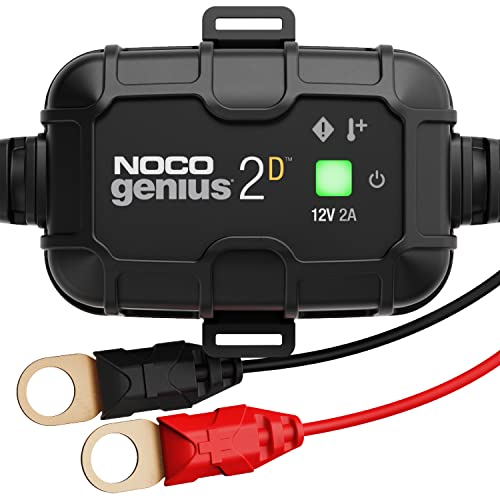
MEET THE GENIUS2D — The all-new direct-mount onboard battery charger for an under-the-hood battery charging system and year-round battery maintenance.

PREVENT BATTERY FAILURE: Ensure reliable starts after storage with this 3-in-1 device that charges, maintains, and reconditions batteries for cars, motorcycles, ATVs, trucks, SUVs, and boats.
Which Batteries Work With a Battery Maintainer?
Not all batteries are compatible with a battery maintainer. The key factor is your battery’s chemistry. Most standard lead-acid types—flooded, AGM, and gel—are generally compatible, but you must verify that the maintainer supports their specific charging requirements. AGM and gel batteries often need a maintainer with dedicated modes for each chemistry to prevent damage or improper charging.
Check your battery’s label carefully. Look for terms like SLA (Sealed Lead Acid), VRLA (Valve-Regulated Lead Acid), or MF (Maintenance-Free), which indicate lead-acid chemistry. Keep in mind that older maintainers might only support flooded or AGM types, while newer, smarter units usually include additional modes for gel and sometimes lithium batteries. If you have a lithium battery, such as LiFePO4, ensure the maintainer explicitly states lithium support. Using a lead-acid-only maintainer on lithium batteries can damage the battery and void warranties.
Never rely solely on voltage to determine compatibility. Wrong chemistry support can lead to battery deterioration or damage to the maintainer. Always compare your battery’s label against the manufacturer’s list of supported chemistries in the maintainer’s manual for a safe match.

Two battery type options: 12V Lead Acid and 12V Lithium(LiFePO4); Input voltage: 100-120VAC, Output: 12V 2A

HQRP® Sealed Lead Acid Smart Battery Charger with Charging Light; Built-in Auto Voltage Detection Feature Intelligently Identifies the Voltage of your SLA Battery and Delivers the most Suitable Charging Output; Accurate Positive Voltage Detection Function: It will not charge when the battery is full; In-built LED Indicator shows the charging status;

3-Stage Automatic Charging:The Unocho 12V 750mA battery charger uses a 3-stage CC, CV and float charging process to help charge 12V lead-acid batteries and switch to maintenance mode after charging is complete.
What Features Separate a Good Maintainer From a Dangerous One?
A safe maintainer will have essential safety features that actually protect you and your battery. Look for built-in protections against overcharging, reverse polarity, and short circuits. These features prevent dangerous situations like gassing, sparks, or melted leads that can cause fires. Spark-proof circuitry is especially important near fuel vapors, as it helps prevent ignition. Temperature compensation adjusts the charging voltage based on hot or cold conditions, avoiding overcharge in summer and undercharge in winter. Multi-stage smart charging systems are preferable because they shift to maintenance pulses or automatically shut off when finished, rather than just delivering a constant current. Certification standards like UL or ETL confirm that the device has undergone independent safety testing. Without these protections, you risk heat buildup, battery damage, or even fires. For example, the MOTOPOWER MP00205A includes a 24-hour timer that terminates charging at 14V and transitions to maintenance mode to prevent overcharging. Always choose a maintainer with recognized safety certification to ensure safe operation. For motorcycles stored long-term, a maintainer with desulfation modes can help recover lost capacity and extend battery life, a feature commonly highlighted in comparative reviews. Attempting to use a 12V maintainer on a 24V battery will not work and can cause permanent battery damage due to insufficient voltage.

MEET THE GENIUS2 — Similar to our G1100, just better. It's 30% smaller and delivers over 140% more power. It's the all-in-one charging solution - battery charger, battery maintainer, trickle charger, plus desulfator.
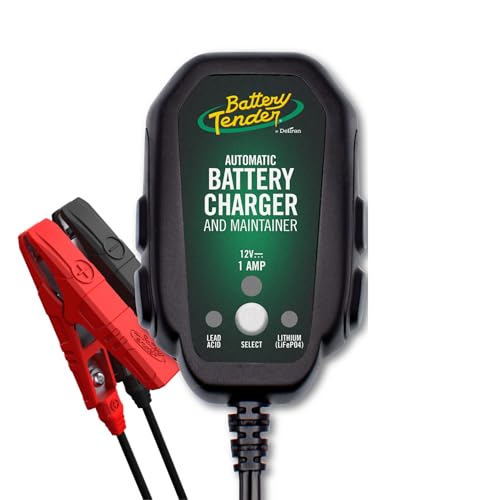
Stay Charged: 12V Battery Charger, 800mA Selectable Lead Acid/Lithium Battery Charger It will keep your battery fully charged so that it is ready to go when you are

Compact, Smart & Durable - It can charge all types of 12V lead-acid batteries, including flooded or sealed maintenance free batteries (AGM & gel cell). It's the best smart charger for automotive, motorcycle, marine, RV, Powersport, lawn&garden, etc.
What Happens If You Leave a Maintainer Connected Too Long?
Leaving a maintainer connected too long can cause serious problems if it’s a basic charger. A simple charger continually forces current into the battery, which can lead to overheating, sulfation, and electrolyte loss in flooded cell batteries. Over time, this accelerates capacity decline and internal damage. It also increases the risk of gas buildup, corrosion, or even fire if the battery dries out.
In contrast, a smart maintainer designed for your battery chemistry automatically stops charging once the battery is full. It then switches to a float mode that only provides enough current to counteract self-discharge, allowing it to remain connected indefinitely without overcharging or damaging the battery. Always ensure your maintainer matches your battery type and check it regularly. Do not assume that leaving a basic charger connected indefinitely is safe.
Can a Battery Maintainer Revive a Dead Battery?
A battery maintainer cannot revive a dead battery. While it can keep a battery healthy over time, it is not designed to recharge a severely discharged or damaged battery. If the battery is completely dead—especially if it has been deeply discharged or shows signs of sulfation—a standard charger with a repair mode or a conventional charger is needed first to restore some capacity. A maintainer is best suited for maintaining or slowly topping off a battery that already has some charge, not for bringing back a dead one. If the battery has internal damage or a protection circuit lockout, no maintainer will be able to recover it. Use a proper charger to revive a dead battery, then employ a maintainer to keep it in good shape afterward. However, a dead battery can sometimes be revived by temporarily boosting voltage from a 12V source like a jumpstarter kit to enable charger detection.
9 Maintenance Habits That Double Your Battery’s Life
Regularly driving your vehicle for 20 to 30 minutes each week helps keep your battery’s charge levels up. Short trips under 10 minutes often undercharge the battery, leading to reduced lifespan over time. If you use your vehicle infrequently, consider starting it and taking it for a longer run once a week. This prevents the battery from deep discharging and losing its ability to hold a proper charge. Unlike an RV power inverter, which converts DC battery power to AC for running household appliances, a battery maintainer focuses solely on keeping the battery’s DC power topped off when the vehicle is not in use. For portable generators, an inverter is essential for converting DC power into stable AC power that safely runs sensitive electronics. For safe and effective charging, always follow proper wiring and fitting details to avoid damaging the battery or electrical system.

Adaptive Smart Charging: Our battery maintainer adapts to the needs of your 12V battery, ensuring optimal charging and extending battery life. Ideal for Automotive, Motorcycle, and Lawn Mowers.
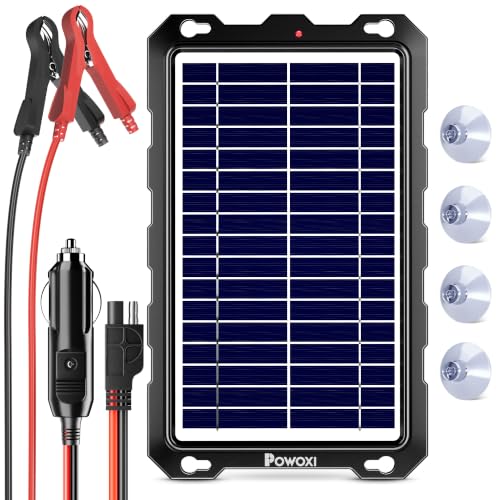
Upgrade Intelligent Charge Controller: Built-in internal protection system and smart fast charging Cooperate with Quality solar silicon material ensures high conversion and stable output the solar panel's energy conversion efficiency to 25-30%

PREVENT BATTERY FAILURE: Ensure reliable starts after storage with this 4-in-1 device that charges, maintains, tests, and restores batteries for cars, motorcycles, ATVs, trucks, SUVs, and boats.