
If you’re wondering which inverter type is best for your sensitive electronics or everyday devices, the answer depends on your power needs.
A pure sine wave inverter provides cleaner, more stable power, making it ideal for delicate electronics.
While a modified sine wave works fine for simpler loads like lights and appliances.
Keep reading to see which option suits your setup best.
Pure vs. Modified Sine Wave: What’s the Real Difference?
The main difference between pure and modified sine wave inverters lies in the quality and shape of their output waveforms. A pure sine wave inverter produces a smooth, continuous AC wave that closely resembles power from the grid. It delivers clean, consistent power with less than 3% total harmonic distortion (THD), making it ideal for sensitive electronics and appliances. On the other hand, a modified sine wave inverter creates a stepped, blocky approximation of a sine wave, with THD often ranging from 20% to 30%. This rougher waveform results from abrupt polarity shifts, which can cause more noise—like hum or buzz—and may lead to less efficient operation. When choosing an inverter for portable generators, selecting a pure sine wave model ensures compatibility with sensitive electronics like medical devices or laptops. Pure sine wave inverters generally convert DC to AC at over 90% efficiency, ensuring minimal energy loss, whereas modified sine wave models typically range between 70% and 80%. The choice between them depends on your needs: pure units provide premium power suitable for delicate devices, while modified sine inverters serve as a more affordable, less refined alternative for simpler applications. To protect your equipment from cold-weather startup issues, consider how a fuel stabilizer ensures reliable generator performance during seasonal storage. For optimal generator performance, using high-quality diesel fuel reduces deposit buildup and extends engine life.
Which Devices Work (and Fail) on Each Inverter Type?
Devices with simple resistive loads, like incandescent bulbs, toasters, and basic space heaters, work reliably on modified sine wave inverters. Brushed power tools, basic fans, and simple phone chargers also generally function well. However, many electronics that contain sensitive components or require a pure, smooth waveform may experience reduced efficiency, audible noise, or overheating on modified sine wave inverters. Motor-driven devices such as pumps or compressors are prone to warmer operation and less reliable starting due to the waveform’s irregularity, which can strain your battery and complicate inverter sizing. For critical or sensitive devices—like laptops, CPAP machines, microwaves, or laser printers—you should opt for pure sine wave inverters. These devices typically fail or may not operate correctly on modified sine wave power because they require a cleaner, more stable electrical supply. Using improper inverter types can also mask early warning signs of battery failure, since irregular waveforms may cause performance issues that are mistakenly attributed to the battery rather than the power source. By contrast, a pure sine inverter produces a smooth, consistent waveform that closely mimics utility grid power, ensuring reliable operation and preventing overheating in sensitive electronics. A thorough safety check of all wiring and connections is critical before powering any inverter to prevent short circuits or fire hazards.

【POWERFUL DC-AC】This renogy 1000 watt inverter 12V to 110V provides 1000W continuous DC to AC power, 2000W peak surge during load start-up, 12V to 120VAC pure sine wave with conversion efficiency >90%, reduces conversion loss
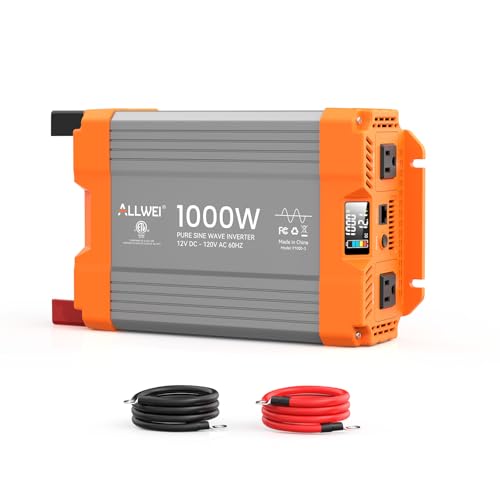
【Powerful DC-AC Converter - Effortless Start】: ALLWEI 1000 watt inverter delivers continuous DC 12V to 110V/120V AC power, 2000W peak surge handles smooth load start-ups effortlessly, is suitable for inductive and capacitive loads—no more startup power struggles. Pure sine wave with maximum conversion efficiency >91%, this power inverters for vehicles minimizes conversion loss while powering RVs, trucks, off grid electrical appliance.This inverter has got ETL UL458 certificate

【𝟑𝟎𝟎𝟎 𝐖𝐚𝐭𝐭 𝐈𝐧𝐯𝐞𝐫𝐭𝐞𝐫】--- This pure sine wave inverter can provide 3000W continuous clean DC to AC power (6000W surge) with >91% efficiency, which strongly and effectively reduces conversion loss and protecting sensitive electronics (Microwave Oven, Laptops, CPAPs, LEDs) from damage. Handles heavy startups (Coffee Machine, Window AC, Power Tools) effortlessly. For RV, Home, Solar, Emergencies.
Why Modified Sine Wave Can Damage Sensitive Electronics
Modified sine wave power produces sharp, blocky voltage steps rather than smooth, continuous waves. These abrupt changes generate high-frequency harmonics that can interfere with sensitive electronics. Microprocessors and digital circuits are especially vulnerable, as these harmonics can cause data errors and unpredictable behavior. You might also notice internal power supplies draw current less efficiently, leading to excess heat build-up that stresses components and hastens wear. Devices designed for pure sine wave input—such as certain audio equipment or medical devices—may experience instability or even void their warranties when powered by modified sine waves. Over time, motors and compressors can overheat and degrade faster, reducing their lifespan and efficiency. Essentially, you’re risking cumulative damage and increased maintenance costs rather than just facing short-term glitches.

BESTEK 300W Pure Sine Inverter (Patent Number US D818,853 S): Designed for your devices that require careful protection, provide 300W continuous DC to AC power and 700W of peak power featuring 2 AC outlets and 2 USB charging ports, great for Christmas gift, charging string lights, laptop, speakers, camera, nebulizer, game console, kindle, iPad and other
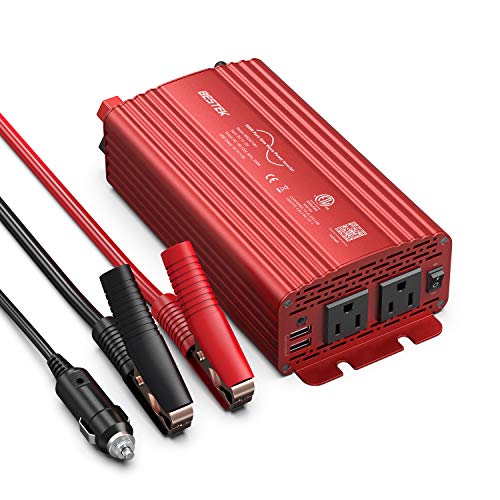
BESTEK 500W Pure Sine Wave Car Inverter:Its output waveform is same as the AC power waveform of mains power grid which delivers a smoothly-varying sine wave for sensitive electronics provided by the electric utility.Perfects for off-grid system,Lower THD,Less wear,Strong inductive Loads Capability.It has little interference with radios, communication and precision equipment.It's also recommended by most cordless tool manufacturer that a pure sine wave inverter is used to ensure long battery life

【POWERFUL DC-AC】This 2000 watt inverter is perfect for solar systems. The power inverter 12V to 110V provides 2000 watt continuous DC to AC power, 4000 watt peak surge during load start-up, 12V to 120VAC pure sine wave with conversion efficiency >90%, reduces conversion loss.
Efficiency & Heat: Does Pure Sine Wave Save More Battery?
Pure sine wave inverters are significantly more efficient than modified sine wave units, typically running at 90% to 95% efficiency. In contrast, modified sine wave inverters fall in the 75% to 85% range and can drop below 70% under light loads. This efficiency gap directly affects your battery life. With a pure sine wave inverter, a greater proportion of DC power is converted into usable AC, which means your battery drains more slowly. Because less energy is wasted as heat, your battery chemistry benefits from reduced stress and longer lifespan. For example, just as plugging a surge protector into another can create dangerous electrical loads, selecting an inefficient inverter can waste energy and stress your system. Additionally, lower heat generation in pure sine wave inverters reduces thermal stress on internal components, boosting durability. Conversely, modified sine wave inverters waste more energy as heat, causing your battery to work harder for the same output. Under light loads, this difference becomes even more pronounced: a pure sine wave inverter can stay above 88% efficiency, while a modified sine wave unit may dip below 50%. Overall, choosing a pure sine wave inverter helps you conserve battery power and extend system longevity. For example, a standby generator relies on a transfer switch to safely disconnect from the grid, preventing dangerous backfeeding.

【POWERFUL DC to AC CONVERTER】: This solar inverter delivers 2000W of continuous battery DC 12V to AC 110V 120V power and up to 4000W of peak surge power when the load is started. The 12V inverter has a conversion efficiency of greater than 93% during normal working and low no-load losses

【PURE SINE WAVE INVERTER】: The power inverter output waveform is consistent with the AC waveform of the utility grid and is suitable for inductive and capacitive loads. It extends the service life of the equipment and reduces the fault rate. Can be used with electrical equipment such as televisions, home theaters and other sensitive loads for a long time

【2080W Continuous Power Output | Junbpaw Heavy-Duty Pure Sine Wave Inverter for RV & Solar Systems】 The Junbpaw 2080W pure sine wave inverter delivers 2080W continuous power with up to 6000W surge capacity and 93% high conversion efficiency. Designed by Junbpaw for RV systems, off-grid solar setups, trucks, and home backup power, it provides stable and reliable energy conversion for demanding high-load applications.
Hum, Buzz, and Interference: How Waveform Impacts Devices
Modified sine wave inverters produce a stepped waveform with abrupt voltage shifts, which can cause audible hum and buzz in many sensitive devices. This occurs because these harmonic-rich shifts lead magnetic components like transformers, motors, and speakers to vibrate. The resulting noise is not due to a malfunction but is a direct consequence of harmonic interference. Audio equipment interprets this interference as static or degraded sound quality, while motors and transformers may buzz louder. To avoid this problem, using a pure sine wave inverter, which provides a smooth, sinusoidal output similar to utility power, reduces the stress on magnetic components and eliminates the humming noise. If your setup involves a vehicle or other alternator-powered system, note that some alternators can introduce additional noise when paired with modified sine wave inverters. Pure sine wave inverters often include cleaner switching algorithms that further minimize interference, helping your electronics operate quietly and reliably. Similar to how you must store propane tanks safely away from electronics to prevent ignition risks, isolating sensitive audio gear from noisy power sources is equally critical for performance.
Cost Comparison: Is the Pure Sine Wave Premium Worth It?
The pure sine wave premium is often worth it despite higher upfront costs. A 1,000W pure sine unit typically costs between $150 and $400, while a modified sine wave inverter in the same range runs about $30 to $100. The savings on the initial purchase may be significant, but lower efficiency in modified units can lead to higher operating costs over time. Additionally, poor voltage stability can damage sensitive electronics, potentially voiding your warranty coverage on connected devices. Pure sine wave inverters eliminate these compatibility and damage risks, which can reduce long-term repair or replacement expenses. At lower wattages, the price gap narrows to as little as $10 to $15, making the premium more justifiable. Overall, investing in a pure sine wave inverter tends to pay off through greater reliability, efficiency, and fewer headaches in the long run. For generator applications, using a 10W-30 oil helps maintain consistent engine performance and protects against wear. For installation of the inverter’s power supply, following proper surge protector installation steps ensures the unit is safely wired into the electrical panel. Without the right generator oil capacity, the engine may run hot and significantly shorten the lifespan of the generator.

【𝟏𝟎𝟎𝟎 𝐖𝐚𝐭𝐭 𝐈𝐧𝐯𝐞𝐫𝐭𝐞𝐫】--- This pure sine wave inverter can provide 1000W continuous clean DC to AC power (2000W surge) with >91% efficiency, which strongly and effectively reduces conversion loss and protecting sensitive electronics (LEDs, Laptops, CPAPs, Microwave Oven) from damage. Handles heavy startups (Kettles, Power Tools) effortlessly. For RV, Home, Solar, Emergencies.

【POWERFUL DC to AC CONVERTER】: This solar inverter delivers 1000W of continuous battery DC 12V to AC 110V 120V power and up to 2000W of peak surge power when the load is started. The 12V inverter has a conversion efficiency of greater than 90% during normal working and low no-load losses

【TRUE 1000W PURE SINE WAVE POWER (2000W PEAK)】: Delivers 1000W continuous and 2000W peak power, converting 12V DC from your battery into stable 120V AC electricity. Pure sine wave output provides clean, utility-grade power safe for sensitive electronics and medium-watt appliances.
When to Choose Pure Sine Wave Over Modified (and Vice Versa)
Pure sine wave inverters are the best choice for sensitive electronics, motors, and permanent installations. They produce a smooth, consistent power wave that closely mimics utility power, which helps protect your devices and prolong their lifespan. You should opt for pure sine wave if you need to run laptops, refrigerators, CPAP machines, or any equipment that relies on stable, clean power. For those seeking reliable automatic battery chargers, reviewing top picks can guide your purchase. When paired with a 50 amp generator, these inverters ensure seamless operation for heavy-duty RV appliances. This is especially important when using a quality surge protector to guard against power spikes.
Modified sine wave inverters are suitable for basic, low-risk loads such as incandescent lights, resistive heaters, or temporary lighting. They are generally less expensive and simpler in design but can cause noise, hum, or overheating in certain devices. Avoid using modified sine wave for motors, compressors, or devices with sensitive electronics, as these may overheat, produce excessive noise, or degrade faster.
Choosing between these types depends on your load. For permanent setups or mixed loads with sensitive equipment, always select pure sine wave. If your application is temporary, low-risk, or involves simple resistive loads, modified sine wave can be a cost-effective alternative. However, never gamble with uncertain or motor-driven devices—stick with pure sine wave for peace of mind and higher reliability.
Smart Inverter Choice: RV, Home, or Off-Grid Setup Guide
To properly size an inverter for your RV, home, or off-grid system, you need to match its capacity to your actual power demand. For an RV, a 2000W inverter works well for moderate loads such as kitchen electronics and charging devices. If you plan to run larger appliances like a full-size refrigerator or microwave, a 3000W inverter provides enough headroom. For off-grid living, especially when supporting an air conditioner around 10 to 15K BTU, 3000W to 5000W is typical for small setups. Larger systems that support multiple appliances or heavy-duty tools often require 5000W to 10,000W. Always account for the starting-watts versus running-watts difference when calculating the total power needed for motor-driven appliances. A poor battery connection is one of the most common beginner mistakes to avoid during any electrical startup process. When choosing a camping generator, look for portable inverter models that offer quiet operation and fuel efficiency for outdoor use.
When selecting an inverter, match its voltage to your battery bank. For setups up to 1500W, a 12V inverter is usually sufficient. For larger systems above 3000W, a 48V inverter improves efficiency and reduces wiring losses. Always size your inverter based on the total amount of power your devices will draw simultaneously. Calculate the total running watts and add a safety margin of 20 to 30 percent to cover startup surges and future expansion.
Additionally, verify that your battery capacity can handle the inverter’s discharge current and ensure your installation complies with local electrical codes. Regular maintenance, including checking connections and keeping batteries in good condition, helps keep your diy solar system reliable over time.

【Easy connection and power worry-free】Renogy inverter PUH has an on-grid transfer switch, so you can seamlessly switch between on-grid AC and off-grid DC power, ensuring uninterrupted operation and worry-free energy.

【POWERFUL DC-AC】This 3000 watt inverter 12V to 110V provides 3000W continuous DC to AC power, 6000W peak surge during load start-up, 12V to 120V AC pure sine wave with conversion efficiency >90%, reduces conversion loss.
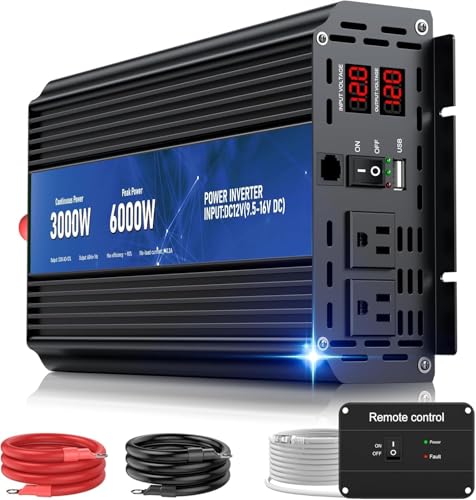
【3000 Watt Inverter for Multiple Devices】This 3000 watt inverter converts 12V DC to stable 110/120V AC power with conversion efficiency over 90%, delivering 3000W continuous and 6000W peak power. This 12V power inverter easily powers TVs, laptops, fans, small appliances, and power tools. Features 2 AC outlets and 1 USB port for convenient everyday use at home, in RVs, trucks, and off-grid setups.
The Bottom Line: Matching Waveform to Your Real Load
A modified sine wave inverter is suitable only for simple resistive loads, such as incandescent lights or heaters. These loads draw steady current and are unaffected by the waveform shape, making them compatible with lower-quality inverters. However, for demanding devices like computers, medical equipment, or sensitive electronics, a pure sine wave inverter is the safer choice. For homeowners relying on natural gas backup power, a pure sine wave inverter ensures your furnace controls and refrigerator compressors run smoothly without malfunction. Matching the inverter waveform to your actual load prevents issues like buzzing, overheating, or device failure. Always evaluate your appliance’s requirements before choosing an inverter, since the wrong match can lead to frustration and potential damage. Your load dictates the waveform—don’t assume one size fits all. Just as a solar charge controller manages power flow to protect your battery bank, selecting the correct inverter waveform protects your sensitive devices from harm.


