Most people wonder if they need a surge protector or an uninterruptible power supply (UPS) to keep their devices safe.
The truth is, each protects against different problems—the surge protector shields against voltage spikes, while the UPS keeps your equipment running during power outages.
Knowing which to use depends on what kind of protection you’re after, and this guide will help you decide.
Surge Protector vs UPS: What’s the Real Difference?
A surge protector and a UPS serve different purposes and are not interchangeable. A surge protector primarily guards against voltage spikes, clamping down on sudden increases in electrical energy that can damage connected equipment. It offers no backup power or runtime when the electricity goes out. A UPS, or uninterruptible power supply, provides backup power through batteries, allowing your devices to stay on during outages or brownouts. This means you can save work or safely shut down sensitive equipment like computers or routers. For truck drivers relying on a power inverter for trucks, choosing the right protection is equally important to prevent damage from voltage spikes in the vehicle’s electrical system. When selecting a surge protector, looking for a model with a high clamping voltage rating ensures better defense against sudden spikes.
Cost-wise, surge protectors are more affordable, often costing under $50. They are simple devices designed mainly for spike protection. UPS units tend to be more expensive, sometimes costing hundreds of dollars, because they incorporate batteries, charging circuits, and other complex components. The right choice depends on what you need: a surge protector handles microsecond voltage surges effectively, while a UPS supplies longer-term backup power for critical devices. Each addresses a unique problem—one prevents damage from spikes, the other keeps your devices running through power failures. For solar panel users, selecting the right power protection solution is also crucial to safeguard sensitive equipment like inverters and charge controllers.

KEEP YOUR COMPUTER, WI-FI AND ROUTER RUNNING THROUGH POWER OUTAGES: Supplies short-term battery power during outages to maintain internet connectivity and allow safe shutdown of computer during power interruptions

425VA/260W Standby Uninterruptible Power Supply (UPS): Uses simulated sine wave output to provide battery backup power and to safeguard home office, home entertainment including computers, gaming consoles, and broadband routers

425VA / 255W RELIABLE BACKUP POWER: Supplies short-term battery power during outages to maintain internet connectivity and allow safe shutdown of devices during power interruptions
Which One Should You Pick for Your Setup?
Choosing between a surge protector and a UPS depends on the specific power issues you want to address. If your primary concern is voltage spikes from lightning or grid switching, a surge protector provides basic defense against brief spikes. It’s an affordable option for noncritical devices like TVs and chargers where losing power temporarily isn’t a big problem. Surge protectors rely on metal oxide varistors to absorb excess voltage and prevent damage to connected electronics. However, if maintaining power stability is crucial—such as keeping a PC, NAS, or router running during blackouts or brownouts—a UPS is the better choice. A surge protector can’t keep your equipment online when power drops. For gaming PCs or workstations, a UPS safeguards your data and allows a safe shutdown. For TVs or speakers, a surge protector suffices. Ultimately, your choice hinges on whether uptime or upfront savings matters more in your setup. For generator owners, understanding 100 lb propane tank capacity helps estimate how long your fuel supply will last during an extended outage. When charging a car battery, for example, using a dedicated charger prevents the common mistake of overcharging and damaging the battery.

1500VA / 900W RELIABLE BACKUP POWER: The highest VA capacity available for home use; delivers short-term battery power to keep essential devices powered during blackouts, surges, and unexpected power interruptions

1500VA/1000W PFC Sinewave Uninterruptible Power Supply (UPS): Uses sine wave output to provide battery backup power for Active PFC & conventional power supplies; Safeguards computers, workstations, network devices, and telecom equipment

1500VA/900W Intelligent LCD Uninterruptible Power Supply (UPS): Uses simulated sine wave technology to provide battery backup power to safeguard workstations, networking devices, and home entertainment equipment
When a Surge Protector Beats a UPS for Budget Setups
A surge protector is often the smarter move for budget setups where keeping devices running during an outage isn’t necessary. You’re saving cost upfront by spending $15–$30 instead of $50 or more for a basic uninterruptible power supply (UPS). For noncritical gear like lamps, fans, or phone chargers, battery backup isn’t needed because a sudden shutdown won’t harm those devices. If you face long outages, however, a gas electric generator can provide extended power without the limited runtime of a UPS. Paying for power redundancy you’ll never use is just wasting money. With a surge protector, you also avoid the ongoing expense of replacing batteries and the standby power draw that a UPS requires. If your power supply is generally stable and your main concern is protecting against voltage spikes, a surge protector gives you better value. It frees up your budget for higher-priority upgrades instead of investing in features you don’t need. However, a basic UPS like the Amazon Basics 800VA model provides 450W capacity for critical devices that require safe shutdown during outages.
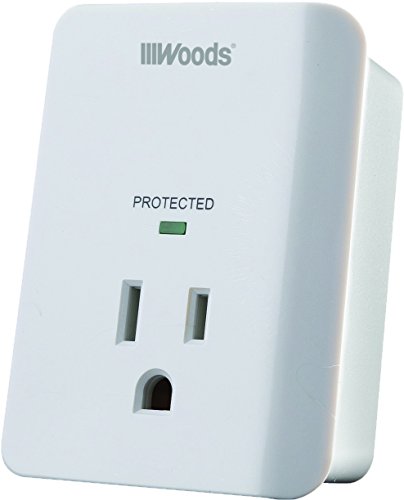
Compact Protection: The Southwire Surge Protector offers 1 grounded outlet, 1080J appliance surge protector, and LED safety status light with alarm for reliable electrical overload protection

【28-in-1 Versatile Power Strip】 FCC, RoHS safety certified, with the extension cord and flat plug certified by UL. Superdanny power strip surge protector has 22 grounded 3-prong outlets and 6 USB ports, providing power for all devices that you need to plug in at one location. Perfect for gaming or media set up, surround sound system, TV, phone, tablet, PC, laptop, gaming computers, lamps, and other devices simultaneously.

MULTI-OUTLET SURGE PROTECTOR: Power everything on your desk with a single compact multi outlet extension cord; 12 AC outlets with surge protection charge your computer, laptop, phone, camera, etc.
Why a UPS Is Essential for Desktops and Storage Devices
A UPS is essential because it provides a short-term battery backup that a surge protector alone cannot offer. In the event of a sudden blackout, your unsaved work can be lost, and active files can become corrupted without warning. A UPS supplies enough power to save your work and shut down the system safely, preventing data loss. It also stabilizes power supply by filtering out electrical sags, brownouts, and line noise that can gradually damage your hardware. This power conditioning extends the lifespan of your desktop and storage devices, avoiding hidden damage caused by unstable electricity. Additionally, a UPS gives you crucial time to close applications, stop data transfers, and perform a controlled shutdown, safeguarding your sensitive data and hardware. For a similar investment in power reliability, a standby generator provides automatic long-term backup for an entire home, but unlike a UPS, it does not supply instantaneous battery power to prevent data loss. Without one, your system remains vulnerable during unexpected power failures, making a UPS indispensable for any data-critical setup. For example, the best LED work lights often include integrated surge protection, but they lack battery backup, further highlighting why a UPS is necessary for critical equipment. For generators, a fuel stabilizer is similarly critical for preventing fuel degradation and ensuring reliable starting during emergencies.

[LiFePO4 Battery, Ultra-long Endurance]: This lithium UPS is equipped with a state-of-the-art Lithium Iron Phosphate Battery Pack, delivering a lifespan of over 10 years and more than 5000 charge cycles. Compared to traditional lead-acid battery solutions, it offers a total cost of ownership (TCO) that is more than 40% lower. The advanced battery technology not only ensures long-lasting performance but also providing a cost-effective and reliable power backup solution

KEEPS DEVICES RUNNING DURING POWER OUTAGES: Reliable 550VA / 330W UPS battery backup that protects home office electronics and keeps essential devices powered during blackouts, surges, and unexpected power interruptions

12 NEMA 5-15R OUTLETS: Six battery backup & surge protected outlets; Six surge protected outlets (Three ECO controlled); INPUT: NEMA 5-15P right angle, 45 degree offset plug with five foot power cord
Compare These Key Specs Before Buying
When comparing surge protectors and uninterruptible power supplies (UPS), it’s essential to understand their different specifications. Surge protectors are rated by joules, clamping voltage, and response time. Higher joule ratings, such as 1000 joules or more, mean the protector can absorb more energy over its lifespan before failing. A clamping voltage below 400V ensures tighter protection by limiting the voltage that reaches your devices. Response times under one nanosecond are ideal, providing immediate suppression of voltage spikes to prevent damage. For a comparison, a DIY cord reel build also requires careful attention to sufficient joule ratings for any integrated surge protection. A surge protector’s component degradation over time means its protection level diminishes with each large spike, so replacement is necessary. Just as with a standby generator, a surge protector’s useful lifespan depends on how many large surges it endures before components fail.
In contrast, UPS units are rated by volt-amps (VA), watts, transfer time, and runtime. Your chosen UPS should have a VA and watt capacity that comfortably exceeds your load to prevent overloads. Transfer time, the delay during switching from utility power to battery, is typically measured in milliseconds; a delay of a few milliseconds is acceptable for most electronics, but online double-conversion UPS systems can switch instantly with zero delay. Runtime indicates how long your equipment can remain operational during a blackout, often varying from minutes to hours depending on battery size.
It’s vital not to confuse these metrics. A high joule rating does not provide backup power during outages, and a long runtime does not guarantee effective spike suppression. For sensitive electronics, look for features like voltage regulation and power conditioning, which are exclusive to UPS units and help maintain stable power quality—features a basic surge protector does not offer.

Heavy Duty Power Strip: SUPERDANNY 15A/1875W heavy duty power strip features 13 widely-spaced outlets and 4 fast-charging USB ports (including 2 Type-C), handling all your power needs from one place. The multiple outlets replace your old power strips and accommodate all your equipment without any interference.

Desk power strip surge protector - ETL listed, this massive outlet expansion features 13 AC outlets and 4 usb charging ports(17w total usb output), which provide power and charging for up to 17 devices from a single wall outlet. Max. power: 1875w (125v~15a)

SHIPMENT CONTAINS: 12-outlet surge protector power strip with 8-foot extension cord delivers reliable electricity and safeguards electronics from surges and outages
Should You Use Both Together for Complete Protection?
Using both a surge protector and an uninterruptible power supply (UPS) together provides comprehensive protection. However, never plug a surge protector directly into a UPS outlet, as this can cause overloads and reduce the lifespan of the UPS battery. Instead, install a panel-level surge protection device upstream in your electrical system, similar to the way many homeowners fill their propane tank at a dedicated supply point for safety and reliability. Surge protectors and UPS units differ in running cost and lifespan, making it important to choose the right device for each specific need. For long-term storage of a device, always ensure the fuel system is treated with a stabil fuel stabilizer to prevent gum and varnish buildup. This layered approach shields your sensitive equipment from transient voltage spikes while also providing backup power during outages. When properly installed, combining both devices offers smarter, more reliable protection than relying on just one.