You might think your power strip is enough to protect your electronics, but without surge protection, it’s really just a fancy extension cord.
A proper surge protector uses special components to guard against voltage spikes, giving your devices real defense.
Knowing the difference can save your gadgets from damage.
Keep reading to learn how to spot a true surge protector from a regular power strip.
What Is a Power Strip vs. a Surge Protector?
A surge protector is different from a standard power strip because it includes internal components that guard your devices against voltage spikes. While both expand the number of outlets, a simple power strip only distributes electricity without offering any protection. Surge protectors typically contain metal-oxide varistors or other components that absorb excess voltage during a spike, preventing damage to your electronics. You can’t identify a surge protector by appearance alone; always check the label or packaging to see if it offers surge protection. For everyday use with non-sensitive devices, a power strip may be sufficient. However, for valuable electronics like computers or home entertainment systems, investing in a dedicated surge protector is a safer choice. When deciding on a purchase, consider how lifespan and running cost compare between similar safety devices, much like evaluating battery chargers against jump starters. For RVs and campers, a 30 amp surge protector is essential to safeguard sensitive onboard electronics from campground power fluctuations. For whole-home protection, a single point-of-entry device, such as a whole house surge protector, is installed at the main electrical panel to shield all circuits.
Why a Power Strip Can’t Protect Your Electronics From a Spike
A standard power strip cannot protect your electronics from a spike because it lacks voltage-clamping components like metal-oxide varistors (MOVs). Without these components, a power surge passes directly through to your devices, offering no barrier against overvoltage. While a surge protector includes MOVs to absorb excess energy, a basic strip only multiplies outlets without providing any surge mitigation. When a spike occurs, your electronics are exposed to the full overvoltage force, which can cause damage or shorten their lifespan. That’s why checking for a joule rating and a surge-protection label on devices is crucial—they indicate whether the strip can effectively guard your electronics against power surges. For genuine protection, look for units that rank highly in quality and performance reviews, similar to how top-rated propane tanks are evaluated. A dual fuel generator, by comparison, offers fuel flexibility to ensure power availability in varied conditions. In contrast, testing a deep cycle battery requires specific load tests to assess its remaining capacity and internal health, not just a simple voltage reading.
When You Need a Surge Protector Instead of a Power Strip
If you’re plugging in devices that contain microprocessors, hold valuable data, or have a high replacement cost, a surge protector is essential instead of a basic power strip. Microprocessor-based devices like computers, routers, and gaming consoles rely on stable voltage levels to operate properly. A surge protector clamps suddenly high voltage spikes, preventing them from reaching sensitive electronics. Without this protection, a power surge can instantly damage hardware or wipe out irreplaceable files.
You should use surge protection especially in storm-prone areas, near large appliances that cycle on and off, or where network equipment like modems and NAS units are connected. Home entertainment setups with sound systems, streaming devices, and smart TVs also benefit from surge protection to avoid costly repairs and downtime. If a device stores important data or has a high replacement value, it is wise to skip basic power strips and always connect through a surge protector.

MULTI-OUTLET SURGE PROTECTOR: Power everything on your desk with a single compact multi outlet extension cord; 12 AC outlets with surge protection charge your computer, laptop, phone, camera, etc.
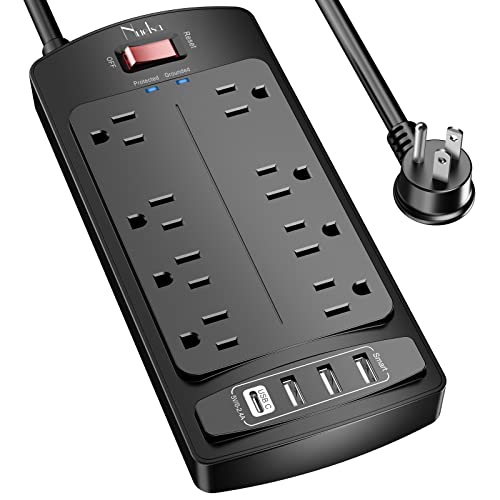
【Power Strip with 8AC outlets & 4 USB】- Power bars with surge protector with 8AC outlets & 4 USB charging ports (1 USB C Outlet), 6 Feet Heavy Duty extension cord, surge protector(2700 Joules) with overload protection protects against spikes and fluctuations.

12 IN 1 Surge Protector Power Strip: Features 8 AC outlets, 2 USB-C port, and 2 USB-A ports to give everything you need to power up all of your electrical appliances. The 4-side layout prevents power outlet obstruction, allowing simultaneous use of multi USB outlets and AC ports. Designed with extra space (1.65 inch) between outlets to accommodate even the largest plugs.
How to Spot a Real Surge Protector (Joule Rating, UL 1449)
To spot a real surge protector, look for the UL 1449 safety standard on its label. Ensure it displays the joule rating, which indicates the total energy absorption capacity over its lifetime—higher numbers mean more protection. The device should also specify the Voltage Protection Rating (VPR); lower VPR values like 330 V or 400 V are preferable since they limit the surge voltage reaching your equipment. Vague claims such as “surge suppression” are not enough. Instead, the label must clearly show UL 1449 compliance along with the VPR and joule rating side by side. If these ratings or the UL mark are missing, you are probably holding a regular power strip rather than a surge protector. For example, comparing running cost and lifespan between devices is a key factor when evaluating long-term protection, just as one would assess a generator versus a portable power station. When selecting a surge protector, also consider whether it can handle continuous power demands similar to how an inverter’s peak efficiency affects generator performance. Understanding your backup system’s energy capacity is similar to knowing that a 100 lb propane tank holds roughly 23.6 gallons of fuel, which directly impacts how long your generator can run during an outage.

SHIPMENT CONTAINS: 12-outlet surge protector power strip with 8-foot extension cord delivers reliable electricity and safeguards electronics from surges and outages
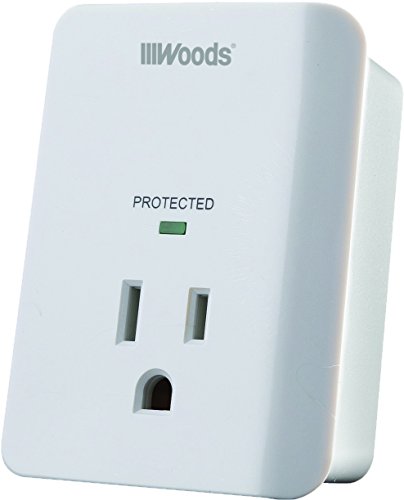
Compact Protection: The Southwire Surge Protector offers 1 grounded outlet, 1080J appliance surge protector, and LED safety status light with alarm for reliable electrical overload protection

15 Foot, 6 outlet surge protector power strip with lighted On/Off switch. 2 USB Ports with 2.4A of power. Surge protector rated for 15 AMP / 120V / 60 Hz / 1875 Watts / 1ns response time. 14/3 Gauge Wire. Two keyhole style mounting holes in the back. UL Listed and conforms to ETL standards.
The One Label That Tells You It’s a Surge Protector, Not a Power Strip
The key indicator that a device is a surge protector and not just a power strip is its label. Look for the specific terms “Surge Protector,” “Surge Protective Device,” or “Surge Suppressor” printed on the back, bottom, or packaging. These labels are crucial because they confirm the device’s protective function; a simple power strip will not carry these designations. Additionally, a “Protected” light near an indicator confirms that the surge protection feature is active. A surge protector works by diverting excess voltage to the ground wire, preventing it from reaching connected electronics. Unlike a basic power strip, a surge protector includes a metal oxide varistor that absorbs the excess energy.
Always install your surge protector before your equipment, not after extension cords. This placement ensures optimal protection. When comparing costs, a surge protector with an explicit label will typically cost more than a basic power strip, but the added protection justifies the expense. Be cautious of vague claims like “UL Listed” or “6 outlets”—they do not guarantee surge protection. Instead, check the fine print for phrases like “protected outlets” or similar wording. If the device only mentions “power strip” or “tap,” it’s likely not providing surge coverage. Unlike a propane regulator, which requires resetting the regulator following a specific order of steps to avoid damage, a surge protector is a plug-and-play device with no reset procedure.

【10 IN 1 USB Wall Outlet Extender】- 6 AC outlet adapter (3 side, 15A/125V/1875W) with built-in 1800 Joules surge protector and 4 USB charging ports (2 USB C, total output DC 5V/3.1A), 180 degree rotating AC plug. The grounded indicator light that assures your devices are secure. WARNING: Please read the user manual before use.
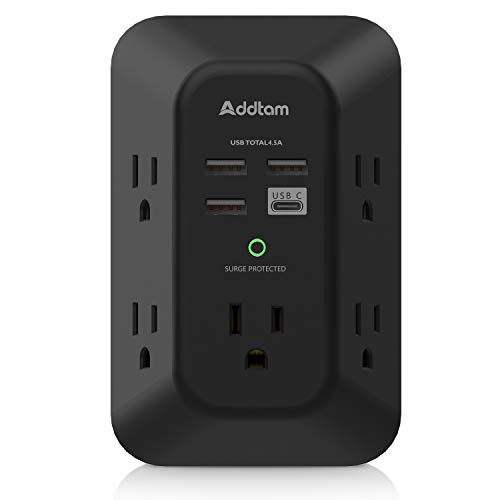
【9 IN 1 Function USB Wall Outlet】- Fit duplex outlet perfectly, just plug in to use. Please NOTE: For some outlets, the black plastic prong can be cut off before using. You get 5 AC outlet splitter (3 sides) with wide space in between; 4 USB charger ports; 1800 joules surge protector protect electronics by improving your power quality

★Multi Function Power Strip: Power strip surge protector with 12AC outlets & 4 USB charging ports, 6-foot Heavy Duty power extension cord, surge protector (2700 Joules)with overload protection protects against spikes and fluctuations.