Having trouble with your propane regulator not working properly? If your grill isn’t delivering gas, there’s a quick fix you can try to reset it.
By following a few simple steps, you might be able to restore flow without replacing parts. Keep reading to learn how to safely reset your propane regulator and get your grill back in action.
Turn Off All Burner Knobs and Close the Tank Valve
Turning off all burner knobs and closing the tank valve is the first step in safely resetting the regulator. Start by rotating each burner knob fully to the OFF position with the grill lid open, ensuring they are not turned partially. Then, close the propane tank valve by turning it clockwise until it stops—do not force it past the stop. This process isolates the fuel supply, reducing ignition risks and preventing gas build-up. Always turn the burner knobs first, followed by the tank valve, as this sequence is crucial. Proper shutdown clears the path for the regulator’s excess-flow mechanism to reset smoothly, helping you avoid low-flow lockout issues. Choosing top propane tanks ensures that the valve and regulator components are built for reliable performance and safety. For portable generators, selecting the best inverter ensures stable power output even during regulator resets. Similarly, the car starter requires ensuring all connections are secure before attempting any jump start to prevent dangerous electrical surges.
Disconnect the Regulator From the Propane Tank
To disconnect the regulator from the propane tank, first ensure the gas supply is fully shut off. Identify your connector type—look for a hand-tightened QCC collar or a brass hex nut that requires a wrench. Always follow safety precautions: wear gloves, work outdoors, and stay away from flames or sparks.
Loosen the coupler by turning it counterclockwise; avoid forcing plastic collars with tools, as this can cause damage. If you smell gas at any point, stop immediately and check for leaks. Once the connection is free, move the regulator away from the tank valve to prevent damage and keep the connection point clean. Do not remove the regulator if the system is still active or if fittings are corroded. For storage, hang the regulator on an appliance hook or cover the opening with a cylinder plug designed for that purpose. You can also protect the regulator during outdoor storage by using a waterproof cover to safeguard it from rain and debris. Knowing the warning signs of voltage drop can help you anticipate when a battery is failing, just as you would monitor a propane system for declining performance.
Vent the Gas Line After Disconnecting the Regulator
After disconnecting the regulator, you should vent the gas line carefully to release residual propane. First, shut down all appliance valves—close every burner, pilot light, and connected equipment—to reduce the amount of gas that can escape. Next, open a designated purge point or the appliance valve briefly to bleed the line, but do so slowly to prevent a sudden burst of gas. For safety, always consult top generator reviews to ensure your equipment is rated for reliable performance. Keep the vent point outdoors and at least 5 feet away from any ignition sources. This ensures safety and prevents fire hazards. When selecting a generator, prioritizing a high-quality propane model ensures safer and more reliable operation. The goal is to lower the gas concentration gradually, so do not rush the venting process. Continue venting until the propane odor dissipates or the flow stops completely. Never vent near pilot flames or into enclosed spaces, as this can create dangerous conditions. After thoroughly clearing the line, you can proceed to leak-check the system, but avoid returning it to service until you confirm that no gas remains. Keep in mind that propane remains fluid in cold weather because it does not freeze like diesel fuel does.
Reconnect the Regulator Hand-Tight and Check for Damage
Once the gas line is fully vented, you can reconnect the regulator by hand-tightening it until the fitting is fully seated. Do not use a wrench; hand-tight is sufficient because overtightening can deform sealing parts and cause leaks. Before connecting, perform a thorough seal inspection—check that the O-ring or sealing ring is present, clean, and in good condition. Also, verify that the connector surfaces are free of debris for a proper seal. For safe operation, always apply stabil fuel stabilizer to stored fuel to prevent gum and varnish buildup that can clog the regulator system.
Next, conduct a damage assessment of the regulator and hose. Look for cracks, dents, or corrosion on the regulator body, and examine the hose for cuts or kinks. Make sure the fitting sits squarely without wobbling. If, after hand-tightening, the connection feels loose, do not force it—this indicates thread damage or worn parts. In such cases, replace the damaged component to prevent leaks. A snug, secure hand-tight connection is all that is needed for safe operation. For those using portable generators for camping, it is critical to ensure the regulator is fully functional to avoid disrupting power during your trip. You can also check the tank itself for warning signs of damage such as rust or dents, which indicate when replacement is necessary.

Package Includes: You will receive 30 pieces of propane O rings, sufficient quantity to meet your replacement and backup needs.

【Sealing Set】 Contains 15pcs propane tank O-ring, 15pcs propane tank gasket, 1pcs PTFE thread sealing tape, regular replacement to avoid O-ring wear, threaded sealing tape is used as a sealing supplement to enhance the sealing performance in case the connector rusts or otherwise

SIZE DETAILS - Approximate size OD 0.579 inch or 14.7mm, ID 0.394 Inch or 10 mm. Suitable for propane adapters, pipe connectors, elbow sealing material, cold and hot water pressure.
Open the Tank Valve Slowly to Prevent Regulator Lock
Start with all burner knobs turned off. Open the tank valve slowly, just a little at first, to gradually pressurize the hose and regulator. This slow opening helps prevent regulator lock and false leak detection. After a few seconds, continue opening the valve to its normal position. A similar safety principle applies when running an RV generator while driving, as doing so requires careful ventilation and adherence to safety rules. The regulator’s internal diaphragm and valve assembly rely on this gradual pressure buildup to function correctly and avoid unexpected flow restriction. Inverter generators also manage fuel flow through a sensitive internal regulator and electronic control module to maintain stable output.
Safety is key: stand near the tank so you can shut it off quickly if needed, and keep all ignition sources away. Listen closely for a rushing sound, which indicates abnormal flow. If you open the valve too quickly and cause regulator lock, simply close the tank valve, wait a moment, then reopen it slowly.

USER FRIENDLY AND TOP QUALITY CONNECTION - this high-pressure regulator and hose is adjustable from 0-20 psi with its red knob and has a top notch output for a wide variety of propane appliances from burners and heaters to smokers and fryers
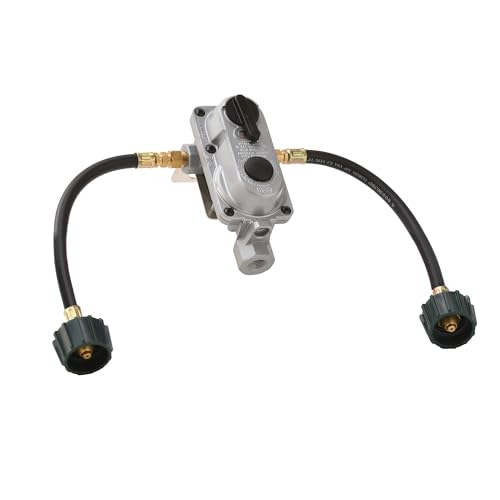
Allows removal of the empty cylinder for refill without interrupting propane supply; includes 2 of the 12-inch pigtails to connect the regulator to the propane tank or propane supply

Adjustable from 7,000 BTU/hr to 12,000 BTU/hr
Test a Single Burner Before Lighting the Whole Grill
Start by testing a single burner before lighting the entire grill. With the tank valve open and the system pressurized, turn only the left burner to HIGH. This isolates your ignition troubleshooting from broader gas-flow issues. Open the lid to prevent trapped gas from causing problems. Use the igniter or a long lighter—if the burner lights, you’ve ruled out a fuel-supply fault. If it doesn’t light but a match does, then your igniter may be faulty. A weak, yellow flame indicates the burner needs maintenance, such as cleaning blocked ports. Keep in mind that if your grill were part of a fixed home system, the whole house generator would not typically be tax deductible for a primary residence. Using a solar charger can help maintain your car battery without needing a wall outlet. Always open the gas can carefully to avoid spills and static sparks.
Once that burner burns a steady blue flame, proceed to light the next one. Testing each burner sequentially helps you identify exactly where any issues lie without wasting time on guesswork. Don’t move on until the first burner stays stable and burns properly.

Package Content: You will get 1 piezo igniter, 1 wire, 2 nuts and 1 spacer, which are enough to meet your usage needs.

DIY kit suitable for all Propane & Natural Gas Gears gas appliance, grill, fireplace, stove,but you may need do some modification during installation, It not fits all the current hole for install or the length of wire,The cable length 11.8inch for the current one. (if power is not enough you can use two)
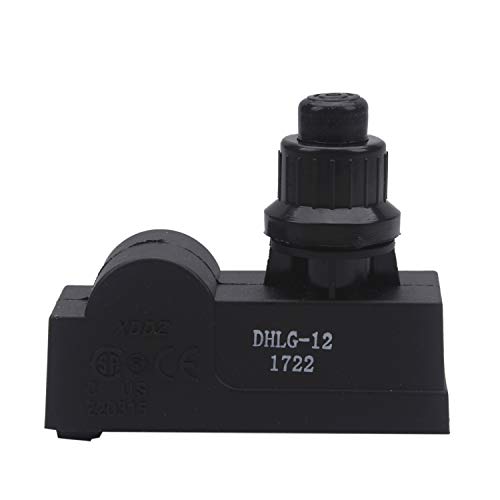
GasSaf(2 Outlet) Universal Spark generator BBQ Gas Grill Replacement 2 Outlet "AAA" Battery Push Button Igniter (Battery not included). Replacement for BROIL KING 1992 & after:9211-54,9211-57,9215-54,9215-57,934664,934667,9453-64,9453-64C,9453-67,9453-67C,9455-84,945584,945587,94644,94647,94944,94947,94994,94997,9561-54,9561-57,9565-54,9565-57,9615-54,9615-57,9865-54,9865-57,9865-74,9865-77,9867-74,9867-77,9869-54,9869-54ED,9869-57,9869-57,9869-74C,9869-74ED,9869-77C,9869-77ED
Still No Gas? Repeat the Regulator Reset or Inspect for Damage
If your grill still won’t ignite after the single-burner test, perform the regulator reset again by following a complete shutdown sequence. Turn off all control knobs, close the tank valve, and disconnect the regulator. Briefly open the appliance valves to release residual pressure, then close them securely. Wait several minutes to ensure all pressure dissipates, then reconnect the regulator, slowly reopen the tank valve to prevent safety locks from triggering, and try lighting again. Rushing this process by opening the valve quickly can cause safety features to activate, preventing ignition. For reference, a similar generator like the Predator 3500 requires proper oil volume for reliable engine startup and pressure stabilization. Portable generators used for camping often feature built-in safety mechanisms that prevent startup if pressure is unstable. Using a high-quality surge protector can similarly safeguard sensitive electronics from sudden power fluctuations.
For advanced troubleshooting, use soap and water to check all connections for leaks—bubbles will form at any escaping gas. Inspect the regulator body for damage such as cracks, dents, or corrosion. Examine hoses and fittings for kinks, cuts, or looseness. Confirm that the propane tank isn’t empty and ensure all connections are tight. If you notice any damage to parts, do not attempt to reuse them; replace the faulty component. Only perform the full reset sequence again if all parts appear undamaged and properly connected.

The Weber Hose and Regulator provides a secure, airtight connection between your grill and tank while controlling the flow of propane to the burners. .Regulates liquid propane flow for consistent, uniform heat distribution2-year limited warrantyPlease double check the specs and fits info to ensure that you’re choosing the best part for your grill.

For Weber Regulator Replacement (for Weber Grill Replacement Parts for weber regulator replacement) Compatible Grills: For weber grill hose and regulator kit, for weber grill propane hose, for weber grill parts regulator, for weber genesis gas hose fits Genesis Silver A/B and Spirit 200/300 series (with front-mounted controls before 2009) gas grills, Genesis II/II LX, Genesis Gold B, Weber Genesis Silver C, Gold B/C, Platinum B/C and Summit Silver/Gold/Platinum gas grills manufactured after 2002.

For Weber Genesis Grill Parts Safety and Reliability: The for weber grill regulator and hose ensures a secure, airtight connection between your grill and propane tank. This guarantees a leak-free, safe grilling experience every time. With precise propane flow regulation, enjoy consistent, even heat distribution and say goodbye to weak flames for perfect grilling results. Whether you’re hosting a barbecue or a family dinner, elevate your grilling game with for Weber grill replacement parts.
When to Replace a Locked-Up Regulator for Good
You should replace a locked-up regulator permanently when it shows obvious signs of physical damage, exceeds its expected service life, or fails to provide consistent gas flow after thorough troubleshooting. Regulators are designed to last between 10 and 15 years, though some models may reach 20 to 25 years. Once that timeframe is exceeded, replacing the unit is recommended even if it appears to be functioning normally. Physical cracks, severe rust, or bent connections are clear indicators that immediate replacement is necessary because these issues cannot be repaired. MEC recommends a 25-year service life for regulators to maintain system efficiency and safety. If your regulator remains locked up after multiple resets or continues to deliver no gas, internal failure is likely to have occurred. Persistent problems should be treated as safety hazards rather than routine maintenance issues. Additionally, contamination or exposure to harsh environments can accelerate wear, making reuse risky. Always shut off the tank, install a new regulator, and perform a leak test before resuming use. Replace the regulator for good when damage, age, or ongoing issues threaten your safety.
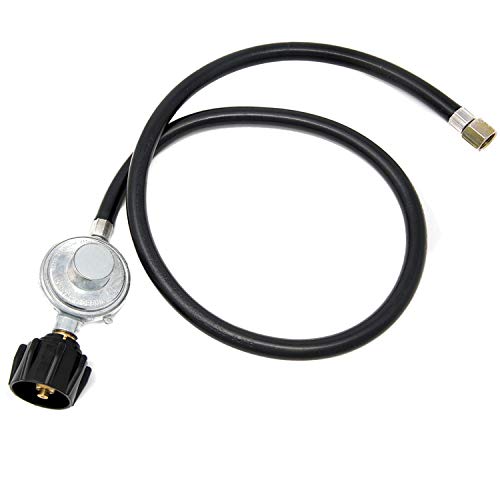
A TOP QUALITY PROPANE REGULATOR AND HOSE - maxing out at 80, 000 BTU, this 3Ft low pressure propane regulator is fiber reinforced to ensure quality performance. The hose is the perfect fit for a wide variety of grills, fire pit tables, and other propane appliances
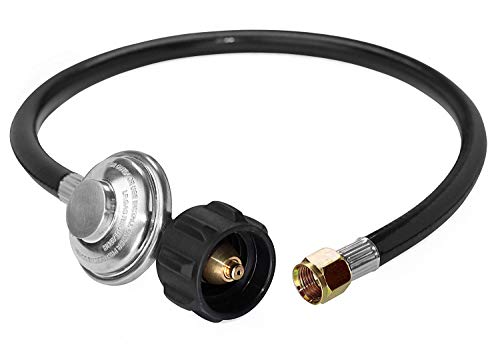
Type-1 (QCC-1) tank (cylinder ) connect - fits all appliances with a type 1 connection. 3/8" Female Flare.Nut Thread 5/8"-18UNF. Swivel Nut.5/16" diameter LP hose.

Multi-Purpose: Fits most gas grill, heater, fire pit, lp generator, lantern, two burner camping stove, side burner, and used for most low pressure gas propane application, fits for Replacement Weber Genesis 300 series gas grills, Genesis Silver C, Genesis Gold, Genesis Platinum, Spirit E-210/E-310, etc.,Char-broil, Nexgrill, Monument, Dyna-Glo, Brinkmann grill and other outdoor propane grills with 5/8" male fittings