Not sure what size power inverter you need? The key is to add up the wattage of all your AC devices and then choose an inverter that can handle that total plus some extra for startup surges.
With a little calculation, you’ll find the right size to keep everything running smoothly.
Keep reading for a simple way to size your inverter accurately.
What Size Power Inverter Do I Need?
To determine the right power inverter size, start by calculating the total running watts of all the devices you plan to use at the same time. Then, add a safety margin of 20% to 30% by multiplying the total running watts by 1.2 or 1.25. This extra capacity prevents overheating and ensures reliable operation, especially when connecting to renewable sources like solar panels. Keep in mind grid compatibility: your inverter must match your local voltage and frequency standards if connecting to utility power. You also need to factor in surge power, which is the maximum power appliances may draw at startup. For example, motor-driven devices like pumps or refrigerators can require 2 to 7 times their running watts during startup. To safely handle these peaks, choose an inverter with a surge rating that exceeds this initial demand. Understanding the main components of an inverter, such as the DC-to-AC conversion circuitry, helps explain why surge ratings are critical for reliable operation. For small setups such as charging phones or powering LEDs, a 300 W to 600 W inverter suffices. For off-grid cabins or RVs with more demanding appliances, 2000 W to 3000 W is typically needed. Always round up to the next standard wattage class to ensure safety and future-proofing. Just as you should never use diesel in a kerosene heater due to combustion safety risks, never oversize your inverter without checking its surge rating. A 400 watt inverter, for example, can typically run a small TV or laptop but may fail to start a refrigerator that requires high startup wattage.
How Inverter Sizing Works in 3 Steps
To properly size your inverter, follow these three steps. First, list all the AC loads you plan to run simultaneously, using their running wattages rather than their nameplate ratings. This provides a realistic estimate of your continuous power needs. Second, identify the device with the highest start-up surge among those loads, as this determines your surge capacity requirement. Your inverter must handle both the normal operating wattage and this brief moment of higher demand without shutting down. When selecting an inverter for a portable generator, look for models that prioritize clean power output to safely run sensitive electronics. For systems relying on battery storage, regular testing and maintenance ensures the battery bank can deliver the required surge current without voltage sag. Finally, add a safety margin of 20 to 30 percent to accommodate efficiency losses and potential future growth. Also, ensure your battery bank’s DC voltage matches the inverter’s input voltage range. Mismatched voltages can cause performance issues or damage your system.

400W continuous power with 800W peak power for devices needing additional ramp-up power

【POWERFUL DC to AC CONVERTER】: This solar inverter delivers 2000W of continuous battery DC 12V to AC 110V 120V power and up to 4000W of peak surge power when the load is started. The 12V inverter has a conversion efficiency of greater than 93% during normal working and low no-load losses
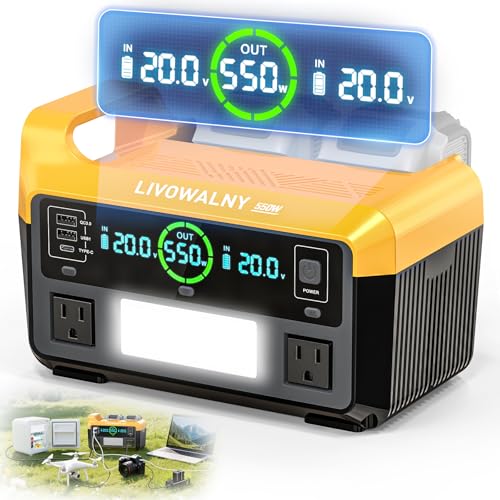
POWER YOUR EXPECTATIONS: Featuring 2* AC outlet (110V+10% 60Hz), 1* USB-C ports (PD 20W 5V 2.4A), 2*USB-A ports (DC 5V 4A 20W), the battery converter can charge (up to) 5 devices (e.g. phone, laptop, cameras, etc.) at the same time to satisfy your outdoor needs.
Running Watts vs Surge Watts: Why the Difference Matters
Surge watts are just as important as running watts when sizing a power inverter. Running watts represent the steady power your device needs during normal operation, like a fridge humming along. However, many appliances require a much higher startup power—often two to three times their running watts—to kick-start their motors or compressors. Ignoring surge ratings can lead to overload trips precisely when your appliances need power most. This startup demand is similar to the way fuel degradation can cause appliances to struggle with performance when left unused for too long. Choosing an outdoor extension cord with multiple outlets can help you safely distribute power from your inverter to several devices without overloading a single outlet. Understanding the main parts involved in a diesel generator, such as the alternator and governor, helps clarify why surge capacity is critical for motor loads.
To size your inverter correctly, ensure its continuous (running) rating meets your total simultaneous load, plus a safety margin of around 25 percent. Then, verify that the surge rating can handle the highest startup spike, especially for motors, pumps, freezers, or air conditioners. Resistive loads, such as lights, typically have minimal surge requirements, while motor loads demand a higher surge capacity. Properly matching both ratings ensures efficient energy use and reliable power regulation, helping you avoid unexpected shutdowns due to insufficient capacity.

SUPER COMPACT: This inverter is mini type and very compact for you to use in car to run various small power apppliances power less than 150Watt.

【2000W CONTINUOUS - POWERFUL DC to AC CONVERTER】 Convert 12V DC battery power into clean 110V/120V AC household power. This 2000 watt pure sine wave inverter delivers 2000W continuous output and up to 4000W surge power, providing the extra starting capacity needed by refrigerators, microwaves, power tools and other motor-driven appliances.

SUPER COMPACT: This inverter is mini type and very compact for you to use in car to run various small power apppliances power less than 150 Watt.
How to Calculate Your Total Load (With a Real Example)
Start with a worksheet: list each device, its running wattage, and the quantity. Multiply the wattage by the quantity for each device to find its subtotal. Then, add all the subtotals together to determine your total load. For example, if you have a refrigerator at 150W, a set of 40W LED lights, a 65W laptop, and an 80W television, the calculation would be: (150W x 1) + (40W x 1) + (65W x 1) + (80W x 1), resulting in a total load of 335 watts. This total wattage provides your baseline for inverter sizing, serving as the continuous wattage requirement. Remember to keep essential devices grouped separately for clarity and easier planning. A surge protector also safeguards your devices from damaging voltage spikes, though it does not supply power like an inverter.

BESTEK 300W Pure Sine Inverter (Patent Number US D818,853 S): Designed for your devices that require careful protection, provide 300W continuous DC to AC power and 700W of peak power featuring 2 AC outlets and 2 USB charging ports, great for Christmas gift, charging string lights, laptop, speakers, camera, nebulizer, game console, kindle, iPad and other

BESTEK Advantage Upgraded: Bestek is power inverter patents owner, America's leading power inverter brand. Our inverter tech upgraded to 11-17V compatible with Tesla. It provides 300 Watts continuous DC to AC power and 700 Watts instantaneous power, featuring 2 AC outlets and 2 USB ports

〖UPGRADE TO 17V WITH EFFICIENT QUICK CHARGING〗Bestek power inverter upgrade to 11-17V, suit for Tesla and other ner energy vehicle; 38W fast Type-C car inverter supporting PD 20W(Max) and QC 18W(Max) high output, can fast charge all prevailing phones simultaneously. The PD port, 6X faster than a 2.4A charger, can quickly charge iPhone, iPad, MacBook, etc.
Why a 20–30% Safety Margin Protects Your Inverter Choice
A 20–30% safety margin is essential to protect your inverter choice. High heat or low battery voltage can reduce performance, pushing your system closer to its limits. Operating your inverter at or beyond its maximum capacity shortens its lifespan and risks system failure. To build in a safety buffer, multiply your total load by 1.2 to 1.25 before selecting your inverter. Always add surge requirements separately to account for short-term power spikes. This isn’t extra capacity for free; it’s a reliability strategy that minimizes stress on batteries and wiring. A properly sized inverter safeguards against real-world losses and fluctuations, ensuring your system performs reliably over time. For long-term storage of the fuel powering your generator backup system, top fuel stabilizers help prevent degradation. For example, pairing your inverter with a generator using 10W-30 oil ensures stable engine operation under varying loads. Reviewing top automatic battery chargers for reliable power can further support your inverter’s performance by maintaining optimal battery health.
Common Inverter Sizes and What They Power
For most small electronics like phone chargers (5–20W) and Wi-Fi routers (10–30W), a 300–600W inverter is sufficient. This size provides enough power with a safety margin to handle surges and ensure reliability, without wasting energy. It’s ideal for powering laptops and LED lights, but avoid connecting appliances with compressors or heating elements, as these can draw more current than the inverter can handle at startup.
When you move up to a 600–1000W inverter, you can comfortably run an LED TV, a fan, or a basic desktop computer. Efficiency becomes more important here because mixed loads — multiple small devices running together — draw less total power than a single large appliance.
For higher power appliances such as microwaves (1000–1500W) or coffee makers, choose an inverter in the 1000–1500W range. This ensures that the inverter can handle the initial surge when these appliances turn on. Placing the inverter close to your battery minimizes wiring length, reduces power loss, and enhances overall efficiency.

Power your life on the go with the BieiFAU 600W car power inverter—your ultimate 12V DC to 110V AC converter for home emergencies, RV camping, outdoor adventures, or mobile workspaces! With two 110V AC outlets (600W peak), this heavy-duty car inverter delivers stable, this car inverters for vehicles continuous power for devices under 600W, including CPAP machines, mini-fridges, laptops, and tools. Never worry about blackouts or road trip limitations again!

Super Powerful Output: YSOLX 300W car power inverter equipped with 2 AC outlet output ports. with 2 fast-charging USB-A ports with a power of 24W each, and 2 USB-C ports that can flexibly switch between 24W and 65W. This meets the fast-charging needs of your different devices. Whether it's a mobile phone, a tablet or a laptop, it can quickly replenish the battery power, ensuring that you won't worry about your devices running out of power during your journey

[High Performance 300 Watt Inverter] Converts 12V DC to 110V AC stable power with ease. This high performance 300W car power inverter is the reliable choice for charging high end laptops and small appliances while on the road or during camping adventures.
Sizing Chart: Cabins vs. Homes vs. Backup Systems
For sizing an inverter, consider your total load and surge requirements. A small cabin without air conditioning typically needs a 1,500 to 2,000-watt inverter. Medium cabins with pumps might require 3,000 to 4,000 watts. For home backup essentials like lights and a refrigerator, a 2,000 to 3,000-watt inverter usually suffices. If you want to power an entire house with air conditioning, you’ll need an inverter rated between 8,000 and 12,000 watts. Keep in mind that inverter efficiency impacts your usable power, so adding 25 percent surge headroom is essential for motor loads. Matching your inverter size to your biggest surge demand, not just average loads, helps prevent overloads and extends runtime. Proper battery management is also crucial; ensure your battery bank can handle the inverter’s size to maintain system stability and efficiency.

HOME BACKUP POWER, ≤3% THD: The Westinghouse iGen12000TFc tri fuel inverter generator provides whole home backup power that's safe for sensitive electronics; It also has a 50A outlet; Gasoline: 12,000W peak/9,000W running; Propane: 11,000W peak/8,100W running; Natural gas: 9,800W peak/7,200W running

HOME BACKUP POWER, ≤3% THD: The Westinghouse iGen12000DFc dual fuel inverter generator provides whole home backup power that's safe for sensitive electronics; It also has a 50A outlet; Gasoline: 12,000W peak and 9,000W running; Propane: 11,000W peak and 8,100W running

⚡ Massive Power & Grid Savings: Unleash 12,000W of pure sine wave power (120V±5%) to run heavy loads like central AC, refrigerators, and power tools simultaneously. Our revolutionary battery-free design feeds excess solar energy directly to your home and the grid (with optional CT sensor), slashing battery costs by up to 40%! Ideal for large homes (3-4 bedrooms) and RV parks.
How Battery Voltage Affects Your Inverter Size Selection
Battery voltage directly impacts how much current your inverter will draw. For a 1000W load, a 12V battery system requires about 88 to 105 amps, whereas a 48V system only needs around 22 to 26 amps. This significant difference highlights the importance of voltage optimization, as higher voltage systems reduce current flow. Lower current means less stress on your cables and connections, making larger inverters more feasible and efficient. For example, a 48V system also supports longer equipment lifespan by reducing heat buildup on wiring and components.
For smaller loads under 1500W, a 12V system usually suffices, especially in applications like RVs. When you move into the 1500 to 3000W range, upgrading to a 24V system can cut the current in half, easing wiring and component demands. For loads exceeding 3000W, a 48V system is often the best choice, lowering current even further and boosting overall efficiency. It is critical that your inverter’s voltage matches your battery bank’s voltage to avoid shutdowns or damage. Proper voltage selection also determines the maximum inverter size you can safely operate.