Wondering if diesel fuel can catch fire? The answer is yes, but only under certain conditions.
While less volatile than gasoline, diesel can ignite if its vapors reach a high enough temperature, especially around hot surfaces or sparks.
Knowing the risks can help you stay safe—here’s what you need to watch out for.
Yes, Diesel Can Catch Fire: But Only Under Specific Conditions
Diesel can catch fire, but only under specific conditions. To ignite diesel, you need a vapor-to-air mixture that reaches its flash point, which is typically between 126°F and 205°F. Heating the liquid just enough to produce enough vapor is essential—boiling is not necessary, just warming. Once the vapor is present, an open flame, a spark from a tool, or static discharge can ignite it. Poor ventilation worsens the risk by trapping vapor above the fuel surface. Additionally, contact with hot surfaces like an exhaust manifold or catalytic converter at or above diesel’s autoignition temperature of about 210°C can cause sudden combustion. Ignoring vapor buildup and hot surfaces increases the chance of a fire. For portable generator setups, selecting an inverter with proper safety features can help manage fuel storage and reduce ignition risks. The same principle of monitoring for warning signs can prevent failure in diesel systems as it does in deep cycle battery maintenance. A load tester can help ensure that the battery powering critical diesel systems maintains sufficient voltage to avoid unexpected shutdowns.
Why Diesel Is Less Likely to Ignite Than Gasoline (But Still Dangerous)
Diesel is less likely to ignite than gasoline because of its higher flash point, which is around 52°C compared to gasoline’s -43°C. This means diesel requires much more heat to generate vapors that can ignite. As a result, a small spark or open flame normally will not set diesel off easily. Additionally, diesel’s lower volatility means it evaporates slowly, so fewer flammable vapors remain at normal temperatures, further reducing ignition risk. This characteristic enhances engine performance and fuel efficiency because compression ignition depends on controlled, precise combustion. For generator maintenance, choosing 10W-30 oil can help ensure reliable engine operation alongside proper fuel handling. However, once diesel becomes fine enough to spray—such as through a leak or mechanical failure—it turns highly combustible. In such cases, even a small hot surface or open flame can ignite it readily. Therefore, while a spill of diesel might be less immediately dangerous than gasoline, stored diesel still poses a serious hazard near heat sources. Surge-protected power strips can help prevent electrical sparks that might otherwise trigger combustion in fuel storage areas. When selecting a generator for whole-home backup, choosing a model with proper safety certifications ensures adherence to industry standards for fuel handling and electrical system isolation. Proper handling, good ventilation, and careful storage remain essential to stay safe around diesel fuel.
What Exactly Is a “Flash Point” and Why Does It Matter for Diesel?
The flash point of diesel is typically above 52°C (126°F). This is the lowest temperature at which diesel’s chemical composition releases enough vapor to ignite momentarily when an external spark or flame is present. It’s important because it indicates how easily the fuel can catch fire under specific conditions. A higher flash point means that diesel is less likely to ignite at normal temperatures, making it safer to handle, store, and transport. For example, the price of small generator ownership often includes considerations for safe fuel storage, which is simpler with diesel due to its higher flash point. Understanding the flash point helps prevent accidents, as it guides safe practices in handling fuels that are stored near heat sources or during transport. To further reduce fire risk during storage, using a fuel stabilizer for power washer equipment helps maintain diesel quality and prevent vapor formation. Although diesel’s flash point offers a safety margin, it still poses a fire risk when exposed to high heat, as the vapors can ignite if the temperature surpasses that point. For those selecting a portable generator, diesel’s higher flash point reduces the risk of accidental ignition during outdoor use.
6 Common Ignition Sources That Can Set Diesel on Fire
The most common ignition sources for diesel fires include open flames, hot work like welding, hot engine surfaces, electrical sparks, static electricity during refueling, and compression heat. Open flames and hot work can easily ignite diesel mist or soaked materials, so controlling these around fuel is essential. Hot engine parts such as exhaust manifolds or turbochargers can reach temperatures high enough to ignite leaks without any flame present. Adding a fuel stabilizer for gas can help prevent fuel degradation that might worsen leak risks. For protection against related electrical surges, consider using a surge protector designed for fuel storage areas to mitigate ignition risks from power fluctuations. Electrical sparks from frayed wires or loose connections are a leading ignition cause because they generate static or electrical energy suddenly. Proper panel installation of surge protectors ensures that wiring and grounding meet code requirements to reduce the chance of sparking in these areas. Static electricity during refueling poses a risk as it can produce sparks without physical contact if bonding and grounding are not properly managed. Lastly, compression heat in engines can cause self-ignition of leaked fuel when it reaches hot surfaces or components. Recognizing these ignition sources is vital to maintaining fire safety around diesel fuel.

Helps prevent fuel spills when filling up

Replacement OEMs: K161-793-22, KWK16179322

Replacement OEMs: K161-793-22, KWK16179322, K161-934-11, KWK16193411
How to Store Diesel So It Doesn’t Become a Fire Hazard
Storing diesel safely is essential to prevent fire hazards. Keep it in a cool, dry, well-ventilated area away from heat sources and incompatible materials such as oxidizers or acids. Use only approved containers designed specifically for diesel storage, and always keep them upright and tightly sealed to prevent leaks. Clearly label every drum and tank with a warning that it contains diesel to avoid accidental mixing with gasoline or other fuels. Conduct regular inspections—look for signs of leaks, corrosion, or damage, and ensure vents are functioning properly. Implement fire safety training for anyone handling or storing diesel, so they understand the risks and proper procedures. Keep storage areas locked to restrict access to authorized personnel only, reducing the chance of accidents or intentional misuse. For refilling portable diesel containers, use approved propane filling stations that also offer diesel to ensure proper handling and equipment compatibility. Comparing the quality and performance of top propane tanks can help you choose reliable equipment for storing other fuels. Vigilance and proper practices significantly lower the risk of fire from diesel storage. Using a battery charger with desulfator can help maintain the performance of stored diesel equipment batteries, reducing electrical fire risks from sulfated batteries.

CONTROLLED FUEL TRANSFER: The patented manifold and Safe-Squeeze trigger provide smooth, glug-free dispensing with improved flow control. This safety gas can helps reduce spills and supports more accurate fuel transfer

Fits Your Needs - Type I safety cans have a single opening for filling and pouring fluids. They are used to safely store, transport, and dispense flammable liquids.
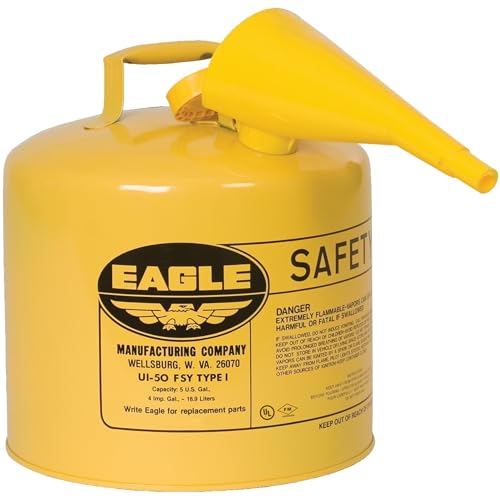
Fits Your Needs - Type I safety cans have a single opening for filling and pouring fluids. They are used to safely store, transport, and dispense flammable liquids.
How to Handle a Diesel Spill or Fire in 3 Steps
If you’re dealing with a diesel spill or fire, follow these three essential steps immediately. First, stop the spill and eliminate ignition sources. Safely shut off the leak, evacuate non-essential personnel, and remove flames, sparks, or hot work in the area. Ventilate enclosed spaces to disperse vapors and prevent buildup that could ignite. Before handling any cleanup, ensure your jump starter battery is fully charged and stored safely away from the spill area to avoid creating an accidental spark.
Second, contain the diesel to prevent further spread. Use absorbent materials like pads, soil, or sand for small spills. For larger spills, set up dikes or booms around the affected area to keep the diesel from reaching drains, soil, or waterways. Collect all contaminated materials into sealable containers to facilitate proper disposal and compliance with environmental regulations.
Third, if a fire develops, respond with the appropriate extinguishing methods for Class B liquids like diesel. Use foam, dry chemical agents, carbon dioxide (CO₂), or water fog to put out the fire. Never use a solid stream of water, as it can cause the burning fuel to spread. For large fires, prioritize calling emergency services and ensuring everyone’s safety. After controlling the fire, report the incident according to your workplace procedures.

Oil-Only Selective Absorption: FlashDry marine oil absorbent pads soak up engine oil, diesel, gasoline, and transmission fluid while actively repelling water, keeping bilge water clean and pumpable without wasting pad capacity on non-hydrocarbon liquids.

ABSORBS LIQUID: Premium absorbtion of oil, grease, coolant, water and other leaky fluids

Heavy-Duty Absorption: 8-layer polypropylene pads soak up oils, coolants, solvents, water, and chemicals for all-purpose spill control.