Ever wonder if you should go for a manual interlock kit or a fancy automatic transfer switch for your backup power needs?
The main difference boils down to cost and effort: interlock kits are budget-friendly and require you to manage loads yourself, while transfer switches offer automatic safety features but come with a higher price.
Keep reading to see which option best fits your setup.
Interlock vs Transfer Switch: How Each Works
A transfer switch uses dedicated switching hardware to isolate sources, providing superior system compatibility with automatic generators. This allows for unattended power restoration, meaning your system can switch sources without manual intervention. You don’t need to interact with the main panel; instead, the switch manages source selection automatically. Compared to the interlock method, which requires manual operation on the main panel, the transfer switch offers a more streamlined and reliable process. Although it involves higher installation complexity and cost, it simplifies operation and reduces the risk of human error during power source transitions. For those seeking even greater flexibility, choosing the best inverter for portable generators can further optimize portable power setups.

Functions and Features: 100a 2p dual power auto transfer switch W2R is a PC-level infrequent switching switch, mainly used for automatic or manual conversion of two power supplies, and can test whether the common power supply or backup power supply is normal. When the common power supply A is abnormal, the backup power supply B is quickly switched and put into use within 0.05 seconds to ensure the continuity, reliability and safety of power supply. When the common power supply returns to normal, it automatically switches from the backup power supply to the common power supply. Both power supply A and power supply B can be connected to the mains/generator/photovoltaic, with four wiring.
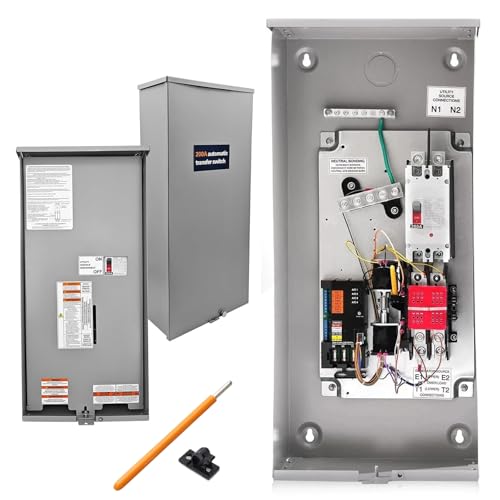
Seamless Power Transitions : This 200 Amp Automatic Transfer Switch is designed to seamlessly transfer the electrical load between a utility (primary) power source and a generator (backup) power source, it powers your entire household, including high-demand appliances, during outages.

【CONVERSION FUNCTION】: The automatic transfer switch seamlessly transitions between power sources, ensuring continuous power supply during power outages, thereby protecting your appliances and eliminating downtime
Load Management: Whole-Panel Flexibility vs Preset Circuits
Managing loads during an outage can be approached with whole-panel flexibility or preset circuits, each offering distinct advantages. An interlock kit provides whole-panel control, allowing you to keep every breaker live and adjust priorities as needed. This flexibility means you can easily shift power from lighting to critical appliances like a sump pump without reconfiguring your system. However, you must manually shed some loads to prevent overloading the generator, or risk tripping it and losing utility power again. For those using propane generators, a quality propane tank ensures consistent fuel delivery during extended outages. Regular deep cycle battery testing helps ensure any backup battery system remains reliable for critical circuits during an outage. Understanding whether your backup battery is a deep cycle AGM battery clarifies its specific charging and safety requirements for prolonged use.
Transfer switches, on the other hand, preset specific circuits, locking you into a fixed load plan. This simplifies operation because you don’t need to constantly monitor your power consumption; it automatically switches designated circuits on or off. The trade-off is reduced flexibility. You’ll need to plan carefully in advance, sacrificing the ability to adapt in real time. Pairing either setup with battery backup allows you to maintain power for critical loads, but the interlock kit’s added flexibility means you can tap into any circuit, offering superior adaptability compared to the preset circuit method.
Can Each Option Power Your Whole House?
Both options can power your whole house, but the size of your generator ultimately determines whether you can do so fully. An interlock kit provides access to the entire electrical panel, allowing you to manually flip switches for any circuit you need. However, since you can’t run everything at once without risking an overload, you must carefully manage your loads. This method is cost-effective and keeps your home safe because the interlock disables utility power while running on generator. You’ll need to avoid heavy appliances like electric ranges or HVAC systems during a blackout to prevent tripping the breaker. The Natupal model SD-100A interlock kit is compatible with Square D QO & Homeline panels and supports a maximum current rating of 30A to ensure safe load management. To protect the generator cord from weather and damage, consider using a durable outdoor extension cord cover for added safety at the connection point.
A whole-house manual transfer switch offers similar coverage but with dedicated hardware for clearer load control. It makes switching easier and safer, but like the interlock, you need to prioritize which circuits are essential if your generator’s wattage isn’t sufficient. In both cases, you can technically power every circuit connected to the panel, but your generator size and capacity decide if you can run the entire house at once.

【Compatible Models】Generator Interlock Kit Compatible with Square D QO or Homeline 150 or 200 amp panels.

Generator interlock kits are available for Square D QO and Homeline 150 and 200 amp panels.

Compatible Models: Generator interlock kit compatible with Siemens/Murray 100 Amp panels
Cost Comparison: Where Interlock Kits Save the Most
Interlock kits offer the greatest cost savings at a low upfront hardware cost, typically between $50 and $150. This is significantly less than manual transfer switches, which usually start around $300 to $700, and automatic transfer switches, which range from $750 to over $2,200. When opting for an interlock kit, you can save between $150 and more than $550 on hardware alone compared to these alternatives. For generator owners using an interlock kit, understanding AGM battery charger settings is important to ensure the battery on your generator stays properly maintained without overcharging. Additionally, following proper grounding rules is critical to prevent electrical shock when connecting the generator to your home. In 200A homes, the total installation cost for interlock kits usually falls between $500 and $1,000, whereas manual transfer switch installations often range from $1,200 to $3,500. The savings are even more substantial against automatic transfer switches, where you typically save $1,000 to over $4,000. This is largely due to reduced installation complexity, as interlock kits eliminate the need for a separate switch panel or subpanel, keeping labor costs lower. Overall, if your main priority is minimizing upfront expenses and complexity, choosing an interlock kit presents the most significant cost benefit.

【Compatible Models】Generator Interlock Kit Compatible with ITE, Gould, Murray, Siemens, and Thomas and Betts, 150 or 200 amp panels

【Compatible Models】Generator interlock kits are compatible with Siemens or Murray 150 & 200 amp panels. The spacing between main and branch breakers is 7/8 - 1 1/4“

QYZZRS Generator Interlock Kit Compatible with Eaton Cutler Hammer 100 Amp and 125 Amp Panels Breaker.
Installation: Retrofitting an Interlock vs Wiring a Transfer Switch
Installing an interlock kit is generally less costly and simpler compared to wiring a transfer switch. With an interlock, you are retrofitting your existing electrical panel by mounting a metal bracket, removing the panel cover, and attaching the device with screws. This process is mechanical, involving no rewiring of circuits. You will need to shut off power, align the breakers to prevent simultaneous operation, and reattach the cover. A key benefit of this approach is that it does not require running new conduit for exhaust routing, unlike adding a DIY generator exhaust extension to a separate enclosure. When building a dedicated enclosure, the frame must be built from non-combustible materials to safely vent exhaust away from living spaces. Wiring a transfer switch, on the other hand, involves more steps and equipment. You must preselect which circuits will be switchable, mount a separate enclosure, and then pull each targeted branch circuit over to it, terminating the wires correctly—black to black, white to white. This creates a more complex setup with increased material costs. Maintenance considerations also differ: an interlock uses your existing panel, so changing breakers remains straightforward. A transfer switch adds an extra enclosure, which can be less convenient to update or replace. Visually, an interlock maintains the original look of your panel, whereas a transfer switch introduces a second box on your wall that could impact the aesthetics of your setup. While a transfer switch requires circuit prioritization to avoid high-power loads like an electric stove or water heater, an interlock relies on the user manually managing which breakers are on to prevent overloading the generator. Both methods require a solid ground connection to the vehicle chassis to ensure electrical safety, similar to properly securing a power inverter.

Compatible Models: Generator Interlock Kits fit for General Electric GE 150 or 200 Amp Panels.

Compatible Models: Generator interlock kit compatible with Square D QO or Home line interlock kit for 100 and 125 amp panels

【Compatible models】Generator Interlock Kits Compatible with General Electric vertical 150 or 200 amp panels.The Spacing between main and branch breaker is 2 1/4 inches. Before buying, you need to make sure the model and spacing are correct
Backfeed Hazard: Why Transfer Switches Offer Safer Isolation
A transfer switch creates a physical barrier that prevents backfeeding your home’s wiring, significantly reducing the risk of electrical hazards. By isolating your generator from the utility grid, it stops power from flowing back into the lines, which can be dangerous for utility workers repairing outages. For example, installing a whole house surge protector on your main panel works alongside a transfer switch to guard against voltage spikes that could damage sensitive electronics. This separation also protects your home from ground faults that could otherwise feed electricity through your circuits, risking shocks or fires. Additionally, a transfer switch ensures that if your generator malfunctions or needs to be shut down, it can be done safely without backfeeding. This complete isolation keeps your home’s wiring protected from overloads and prevents neighboring transformers from energizing your home during an outage. Ultimately, a transfer switch provides total separation, not just a mechanical block, for safer operation during power disruptions. Using jump starter cables incorrectly can also cause dangerous backfeeding or sparks, but a transfer switch eliminates these risks entirely. For added protection at the device level, pairing your setup with a surge protector helps prevent spikes from reaching electronics plugged into backup circuits.
When an Interlock Kit Is the Smarter Choice
Choosing an interlock kit over a transfer switch is often the smarter choice for those seeking affordability and simplicity. Hardware costs typically range from $50 to $150, making it a budget-friendly backup option. Unlike transfer switches that may require a separate subpanel, an interlock kit allows you to use your existing panel without additional modifications, preserving its capacity. It also offers full breaker-by-breaker control, enabling you to select specific circuits to power during an outage.
This setup is ideal for users who prefer a hands-on approach. It requires manual load management—turning circuits on and off within your generator’s wattage limits—to ensure safe operation. This makes it particularly suitable if you already own a portable generator and do not need automatic restoration features. For small-scale, essential loads like lights, a refrigerator, and a sump pump, an interlock kit provides a simple, cost-effective solution without sacrificing control or safety.

Compatible Models: Fit the Eaton Cutler Hammer BR SERIES 150amp & 200amp Panels
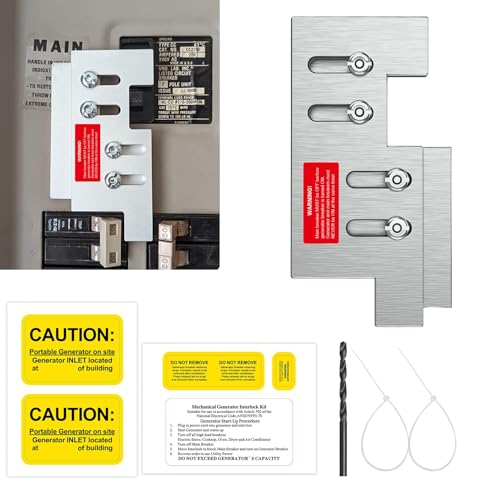
Compatible Models: Fit the Eaton or Cutler Hammer Vertical Throw CH Series CH-5 150 or 200 amp panels