Wondering what a 5000-watt generator can handle? This size can power essential home devices like a refrigerator, LED lights, a furnace blower, a sump pump, and a TV.
To avoid overloads, you’ll need to manage startup surges and avoid running high-demand appliances at the same time. Keep reading to see how to make the most of your generator’s power.
Does Your Refrigerator Work on a 5000-Watt Generator: And What About the Startup Surge?
A 5000-watt generator can definitely power your refrigerator, but you need to account for the startup surge. Modern fridges typically run between 100 and 250 watts, thanks to energy-efficient designs. However, the compressor’s startup surge can spike to two to four times that amount, meaning up to 600 to 1200 watts. Your generator’s capacity to handle a surge of this size is crucial. Since a 5000-watt generator can handle surges of 600 to 1200 watts comfortably, it provides plenty of headroom. To ensure reliable startup, check your refrigerator’s label for starting amps or use a watt meter for precise measurements. Focusing on surge capacity, not just running watts, guarantees your fridge starts every time during an outage, keeping your food safe. Selecting the right 10W-30 oil can also keep the generator performing reliably under load during extended outages. Regularly testing the generator’s output with a multimeter also verifies it maintains stable voltage under load. For long-term use, investing in a heavy-duty extension cord ensures safe power delivery from the generator to your appliances.

Meet the new REFRIGMATIC MEGA: Now with even more power in a compact, versatile size. Safeguard your large refrigerators and freezers with our unbeatable Mega Features!

𝗥𝗲𝗹𝗶𝗮𝗯𝗹𝗲 𝗣𝗼𝗿𝘁𝗮𝗯𝗹𝗲 𝗚𝗲𝗻𝗲𝗿𝗮𝘁𝗼𝗿 𝗳𝗼𝗿 𝗘𝘀𝘀𝗲𝗻𝘁𝗶𝗮𝗹 𝗕𝗮𝗰𝗸𝘂𝗽 𝗡𝗲𝗲𝗱𝘀: Provides 4000 rated watts and 5000 peak watts to support essential household appliances during temporary outages. Designed for home backup, RV trips, and general outdoor power needs.

High Power Output: 5000 peak watts and 4000 running watts, Includes 1*12V DC port, 2*120V AC ports, 1* 30A RV port, gas powered by 223CC 4-stroke OHV engine for RV camping, emergency home backup and power tools
Essential Home Loads a 5000-Watt Generator Handles Easily
A 5000-watt generator can easily handle your core household essentials and some additional support systems. You can power LED lights, Wi-Fi routers, modems, TVs, and phone chargers without exceeding capacity, leaving room for other critical devices. Using a transfer switch makes it safer and more convenient to keep these circuits active, eliminating the need for messy extension cords.
Heating and water systems are also within reach if you manage startup surges. The furnace blower, small fans, sump pump, and even a ½ HP well pump can run on a 5000-watt generator. Adding a battery backup for electronics or pumps can help reduce peak loads, giving your generator some breathing space. Just remember to limit space heaters to one at a time and rotate kitchen appliances such as the microwave, coffee maker, and toaster to avoid overloading. For a cleaner and more stable power supply, consider pairing it with a top-rated inverter to protect sensitive electronics from voltage fluctuations.

Reliable Generator Transfer Switch: Designed to seamlessly switch from utility power to an auxiliary source like a gas or solar generator. With a 48000W capacity, this manual switch supports your entire home, including high-demand dryers and stoves, ensuring a secure power transition.

This is the original, authentic, and patented EZ Generator Switch

Compatible with 12500W Generators: This manual transfer switch handles up to 50A and 10 circuits, allowing you to quickly switch from the main power to your generator with just the flip of a switch. It provides peace of mind and is a temporary power source during outages
What Other Appliances Can Run Alongside a Refrigerator on 5000 Watts?
You can run several smaller appliances alongside a 5000-watt generator. In addition to your refrigerator, devices like LED lights, Wi-Fi routers, and TVs fit comfortably within this capacity because their startup surges are minimal. Small kitchen appliances such as a microwave or a coffee maker are also possible if you avoid running them simultaneously with the refrigerator’s compressor startup. Fans, whether ceiling or portable, work well to improve comfort and stay within your wattage limit. For truck applications, a top power inverter is specifically designed to handle similar loads and provide reliable power on the road. To maintain safe operation, it is also wise to regularly check your propane tank level if your generator runs on propane, as running out can damage the unit. For those seeking a reliable backup, many of the best propane generators balance fuel efficiency with sufficient wattage for home essentials.
Design considerations are important: stagger the startup of motor-driven loads like a sump pump or freezer to prevent overlapping surges that could overload your generator. Keep the refrigerator’s load as your primary focus and add only one moderate-demand appliance at a time to ensure safe, reliable operation without exceeding the capacity.
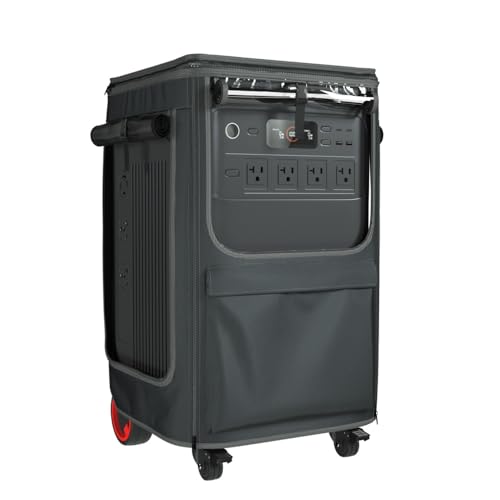
✅ All-Around Protection・Durable and Rugged: Crafted from premium high-strength waterproof and tear-resistant Oxford fabric, paired with an internal thickened cushioning layer, it provides comprehensive defense against bumps, rain, dust, and scratches during outdoor use, significantly extending the service life of the Jackray Solar Generator 5000 Plus.

Heavy-Duty Protection: Crafted from 420D Oxford/polyester fabric with a waterproof laminated undercoating, it delivers all-around defense against rain, sun, wind, snow, dust, and dirt, extending your generator's lifespan—ideal for 3000w-15000w gas/inverter generators with multiple size options

Compatible - More sizes for 3000w -5000w gas generator or inverter generator.
Appliances That Fit Only With Smart Load Scheduling
Appliances with specific load requirements, like your laundry and kitchen devices, must be scheduled carefully to avoid overloading your power source. The washer typically uses around 1,000 watts, while the dryer can demand up to 4,850 watts. Because of this large difference, running them simultaneously is not advisable. Instead, complete the wash cycle first and then operate the dryer using the full generator capacity afterward. Kitchen appliances such as microwaves and coffee makers are designed to operate one at a time and should be kept separated from motor-driven loads to prevent circuit overloads. Proper load scheduling ensures that your power system remains balanced and prevents interruptions during your daily routines. For sustained, repeated use of these appliances, a deep cycle battery is better suited than a cranking battery to handle the prolonged discharge without damage. Finding non-ethanol gasoline is similarly important for smaller engines like those in generators to avoid fuel system issues and ensure reliable operation. When selecting a battery for your RV, a quality battery charger with smart charging features can significantly extend the lifespan of your deep cycle battery.
5 High-Draw Appliances That Will Definitely Overload a 5000-Watt Generator
Certain high-draw appliances will easily overload a 5,000-watt generator even if you try to balance the load. An electric clothes dryer needs between 5,000 and 5,600 watts to run, which is already at the generator’s limit. Pairing that with a window air conditioner’s 1,200 to 3,800 watts and its triple startup surge leaves no room for other devices. Electric water heaters draw 3,000 to 5,000 watts continuously, consuming almost all available capacity and leaving no reserve. A microwave typically uses about 1,500 watts, which seems manageable, but when you include a refrigerator’s 800 to 1,200 watt startup surge, your total load can easily exceed the generator’s limit.
Running these appliances together can damage your generator by causing strain on the engine and increasing fuel consumption. It also decreases overall reliability, risking shutdowns or damage over time. Avoid operating two large heaters at once or running a dryer alongside an air conditioner. Instead, opt for smaller appliances if you want to maintain a stable and efficient power supply without risking overloads.

98Wh Capacity & Airline-Safe:The HOWEASY Portable Power Station features a 99Wh battery compliant with FAA regulations, making it ideal for travel. As a power bank station, it powers smartphones, laptops, drones, and mini fridges effortlessly. Compact and lightweight (2.3 lbs,,6.6 x 4 x 3 inches), it doubles as a reliable mini generator for camping or emergencies.

Replacement Generator Circuit Breaker:20 amp generator circuit breaker Replace 202030GS 191479DGS 209181G. Compatible with Briggs Stratton generator models.To fix no power or intermittent output issues please confirm model before purchase

【Multiple Charging Ports, Compact &Small Power Station 】with 2* 120W MAX AC Outlets, 1* DC (12V~16.8V/6A MAX), USB1*5V/2.4A, 1*QC USB2 (5V/3.1A 9V/2A MAX), 1* USB-C (5V/3.1A 9V/2A MAX), ZeroKor Portable Power Station is powerful enough to power your smartphone, tablet, laptop, camera, drones and more. LED Flashlight with reading mode , SOS mode for emergency,the Portable Power Station is designed for home power failure and outdoor activities (NOTE:Long press the DC button to enable the portable generator) (NOTE:If your devices need air compressor to work,We recommend that you purchase more powerful power station)
How to Calculate Your Total Load for a 5000-Watt Generator
To calculate your total load for a 5000-watt generator, start by listing every appliance, light, and tool you plan to run simultaneously. Use their nameplate data to find each item’s wattage, then sum all the running watts to establish a baseline. This steady load represents the continuous power demand your generator must supply.
Next, identify the largest motor-driven load, as motors typically draw more power during startup. Determine its starting wattage and subtract the running wattage to find the surge or incremental starting load. Add only this surge amount to the total running load; including full starting wattages for all devices would overstate the needed capacity and risk voltage drops or engine stalls during startup.
Convert all wattages into consistent units, such as volt-amperes (VA), especially if your calculations need to adjust for power factor. Remember, generator ratings are often given in kilovolt-amperes (kVA), so a conversion may be necessary. Then, add a safety margin between 10% and 25% to account for heat and atmospheric conditions—these factors can slightly increase your actual power needs. Ensure your total load, including headroom, stays below the generator’s rated output to maintain stable operation without overloading.
Common Mistake: Running a Microwave, Fridge, and Sump Pump at the Same Time
Running a microwave, fridge, and sump pump at the same time can overload your generator, even if their combined running wattage appears manageable. The key issue is the startup surge, which can significantly exceed the rated wattage. For example, a fridge that typically runs at 1,200 watts can spike up to 2,200 watts during startup, and a sump pump might surge to 2,100 watts. When these appliances start simultaneously while your microwave is already running, the combined surge can push well beyond a 5,000-watt capacity. This can trip your breaker or stall your appliances. Always remember that the label wattage is for continuous operation, not the startup surge. To prevent overloads, you must stagger their startup times, starting one appliance at a time rather than all at once. Choosing a model with remote start can add convenience by letting you power on the generator from inside, minimizing trips outside during bad weather while you manage load sequencing. This approach helps manage motor-driven surges and keeps your generator within safe operating limits. For motorhome owners, a quality battery charger can also help manage power distribution during peak loads. It is also critical to use the best oil for your generator to ensure reliable startup performance and protect the engine during these demanding surge events.

【PATENTED 30Amp Plug Adapter with Twist Lock】Plug (Male): NEMA L14-30P, 30-Amps, 125/250-Volts, Maximum Wattage: 7500 Watts. Receptacle (Female): NEMA L14-30R, 30-Amps. The NEMA L14-30P plug is suitable for the interface of generator power.
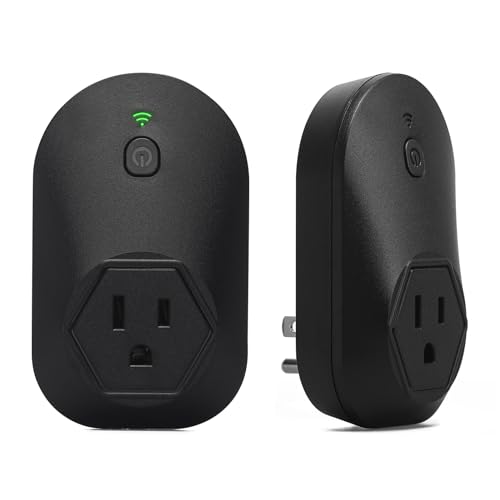
ADVANCED ELECTROMAGNETIC PROTECTION: The generator electromagnetic protector can be plugged into the socket of the inverter and generator equipment. The protector can withstand multiple high-voltage surges to prevent equipment from being damaged by surges.

Easy Installation- The T.R.A.P.-AC plugs into the three-prong AC receptacle of an inverter or portable generator.
Load Prioritization During Power Outages
During a power outage, you should prioritize your loads to prevent generator overloads effectively. Begin with life-safety and health-critical equipment, such as medical devices that cannot tolerate interruptions. These top the list, ensuring vital needs are met first. Next, focus on emergency lighting, alarms, and communication devices to maintain safety and stay informed. To avoid risking carbon monoxide poisoning, always operate the generator outdoors and away from windows and doors. Protecting your refrigerator and freezer is crucial to avoid food spoilage, so include these in your immediate load sequence. Afterward, add low-wattage essentials like fans and key lighting to keep comfort and convenience. Practice load shedding by delaying high-draw appliances, like microwaves or space heaters, until there is sufficient generator capacity. Sequencing loads this way extends your generator’s runtime and helps avoid tripping breakers. Remember, it is smarter to run critical circuits in short, controlled bursts rather than trying to power everything simultaneously. This strategy ensures continuous operation and reduces the risk of generator overload. Similarly, pairing your generator with a power surge protector helps safeguard sensitive electronics from voltage spikes during outages. Using a flat plug extension cord can also help keep the generator connection tidy and low-profile, preventing tripping hazards near the power source.