Ever wonder if a Battery Tender can bring a dead battery back to life? The simple answer is no, not if the battery drops below about 3 volts—it can’t detect or properly charge it.
However, if your battery is above that threshold, a Battery Tender can gradually restore it and then keep it topped off.
Keep reading to learn the full steps for safely reviving your battery.
What a Battery Tender Is: and What It Isn’t
A Battery Tender is an automatic, smart charger designed to maintain a battery’s charge over long periods of inactivity. Unlike high-output chargers or jump starters, it doesn’t deliver rapid bursts of power or attempt to revive a dead battery quickly. Instead, it provides a gentle, steady charge to prevent the battery from losing its ability to start or function. Once the battery reaches full charge, the Tender automatically switches to float mode, maintaining the optimal voltage without overcharging. This process helps extend the overall lifespan of the battery while eliminating the need for manual intervention. It’s best suited for seasonal storage, long-term maintenance, or keeping batteries healthy for motorcycles, ATVs, lawnmowers, and similar equipment. Unlike a standard charger, a battery tender’s float mode is designed to prevent overcharging during long periods of disuse. It’s not designed to provide immediate cranking power or revive deeply discharged batteries, so for emergencies or quick recoveries, a jump starter or high-output charger remains necessary. This is because deeply discharged batteries require a bulk charge to safely recover, which a tender cannot deliver. For those relying on portable power sources, choosing the best inverter for portable generators can ensure stable AC output for charging sensitive electronics alongside battery maintenance.

Stay Charged: Battery Tender battery chargers and maintainers provide a full charge to your powersport vehicle’s battery before switching to float mode to maintain proper voltage levels for safe, long-term storage

Adaptive Smart Charging: Our battery maintainer adapts to the needs of your 12V battery, ensuring optimal charging and extending battery life. Ideal for Automotive, Motorcycle, and Lawn Mowers.

Stay Charged: The 4 amp car battery charger automotive provides a full charge to your machine's battery before automatically switching to float mode to maintain proper voltage levels for your battery without overcharging
The Voltage Threshold: How Low Is Too Low for a Battery Tender?
The minimum voltage required for a Battery Tender to start charging is 3 volts. If your battery’s voltage is below this threshold, the charger’s safety circuit prevents operation to avoid damage. Lead-acid batteries can drop below 2 volts per cell when deeply discharged, but a 12V battery at 6 volts total remains too low for most Tenders to engage. The internal charging algorithms interpret voltages under 3V as a potential short or open cell, preventing activation. To begin charging, you’ll need to bring your battery’s voltage above that 3-volt mark using another charger or method before connecting your tender. A quick test with a multimeter can confirm whether the battery has a bad cell, as a defective cell often prevents the Tender from ever engaging. For a battery that is still above the threshold, using a quality and value trickle charger model ensures reliable performance without risking damage. For those seeking reliable power solutions, portable solar generators offer a versatile alternative for maintaining a charge in various conditions.
When a Battery Tender Can Revive a Deeply Discharged Battery (Above 3 Volts)
Once your battery’s voltage exceeds 3 volts, your Battery Tender is more likely to revive it. At this point, the charger’s sensing circuitry can recognize the battery and switch to charge mode to begin a recovery process. The effectiveness of revival depends on the battery chemistry; flooded lead-acid and AGM batteries respond differently, but both can benefit from the Tender’s controlled, gradual charging. Understanding how a portable generator works can help clarify the role of controlled, gradual charging in battery maintenance. Unlike a standard trickle charger, a Battery Tender uses a float charger design that automatically switches to maintenance mode once the battery is full, preventing overcharging and extending battery lifespan. For reliable results, it is important to use top propane tanks for quality and performance when powering your generator for extended charging sessions.
Before connecting the charger, ensure all external loads are disconnected, as parasitic drains can prevent proper detection. Make sure the connections are clean and tight so the charger can accurately read the voltage. Recovery is generally more successful if the battery was briefly deeply discharged rather than subjected to long-term damage. Watch the charge indicator; a solid light signals that the process is underway and likely successful.
During recovery, voltage should increase gradually to at least 12.7 volts, indicating the battery is regaining energy. If the voltage stalls or fails to rise, the battery may have internal damage beyond repair. Patience is key, since revive can take several hours or even days depending on the depth of discharge and battery condition.
4 Reasons a Battery Tender Won’t Charge a Dead Battery
If your Battery Tender won’t charge a dead battery, one common reason is that the battery’s voltage is too low for the tender to detect. Most chargers won’t begin charging if the voltage drops below 3 volts because they interpret the battery as being disconnected or dead. This low voltage can occur if the battery has been discharged for a long time or severely drained, making it appear as if there’s no capacity left. This issue can also arise if you have attempted to dispose of a similar item improperly, so it is important to follow safe disposal methods for household hazardous waste. Ensuring the battery has at least 3 volts is essential before attempting to charge it with a tender. A simple way to restore voltage is to connect the battery to a DIY solar panel setup for a brief trickle charge. For generator applications, using a high-quality 10W-30 oil can help maintain engine efficiency and prevent similar power loss during operation.

Charger, Maintainer & Desulfator - An all-weather battery charger, battery maintainer, trickle charger, and battery desulfator. Perfect for charging and maintaining all 12-volt lead-acid, flooded or sealed maintenance free batteries (AGM and gel cell).

PREVENT BATTERY FAILURE: Ensure reliable starts after storage with this 3-in-1 device that charges, maintains, and reconditions batteries for cars, motorcycles, ATVs, trucks, SUVs, and boats.

【Short Circuit Protection】:This charger adopts the best integrated circuit solution without worrying about overcharging. It has multiple protection functions, and its protection system can prevent short circuits, overcurrent, overheating, high voltage spikes, and low voltage drops to achieve maximum safety.
How to Test Your Battery Voltage Before Plugging in a Tender
To test your battery voltage before plugging in a tender, you need to measure its resting voltage with a multimeter first. Set your multimeter to DC volts on a 20V range. Turn off the vehicle and all accessories to ensure an accurate reading. Connect the red probe to the positive terminal and the black probe to the negative terminal. Allow the battery to sit after driving to dissipate any surface charge—skipping this step can give a misleading reading. A fully charged 12V lead-acid battery typically reads between 12.6V and 12.8V; around 12.2V indicates about half charge. If the voltage is below 12.0V, the battery is considered low. Keep in mind, different battery chemistries like flooded, AGM, and lithium have their own specific voltage charts, so consult these if possible. Don’t rely on a single reading, especially if the battery has been recently charged. Surface charge can temporarily boost voltage, masking the true state of the battery. Also, inspect the terminals for corrosion, which can affect readings and overall battery health. Before plugging in your tender, check its minimum-voltage requirements to ensure compatibility. For lithium batteries, it is especially important to avoid deep discharge as it can cause permanent damage or unsafe charging conditions. Additionally, just as a jump starter’s lifespan depends on proper storage and maintenance, a battery tender’s effectiveness also relies on consistent care to avoid premature failure. Selecting a charger with a dedicated LiFePO4 charging profile ensures safe and efficient recharging for lithium iron phosphate batteries.
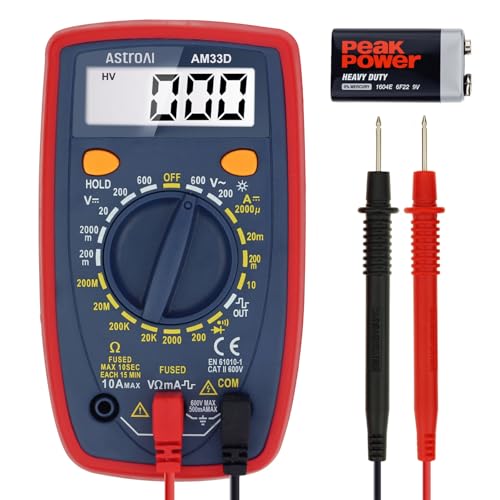
Additional Tips - The following incorrect operations may cause the multimeter not to show results: Firstly, the plugs of test leads are not fully inserted or not inserted into the correct sockets. Secondly, the manual rotary switch is not placed in the correct position. In addition, this meter can not test all AC Current and below 100mV AC Voltage. Please check the user manual carefully before measurement.

Accurately Test Full Features: Accurately measures AC/DC voltage, DC current, resistance, continuity test, diode and batteries.
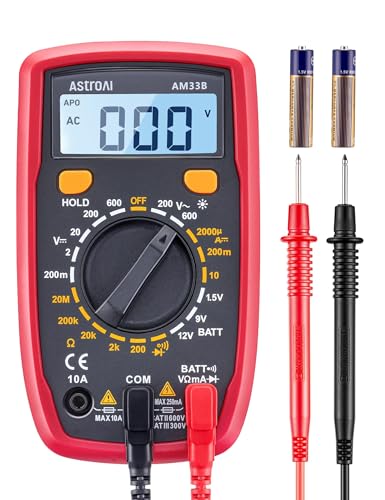
Versatile Digital Multimeter - Accurately measures AC/DC Voltage, DC Current, Resistance, and Diode. This Multimeter is a really useful tool for solving industrial and household electrical issues. Suitable for Household Outlets, Fuses, Batteries (including Vehicles), Automotive Circuit Troubleshooting, Charging Systems, Testing electronics in Cars etc.
How to Bump-Start a Dead Battery So Your Tender Can Take Over
To bump-start a dead battery, you need to do it with a manual-transmission vehicle that still has enough residual power to run the ignition and fuel system. Begin by turning the ignition on and fully depressing the clutch pedal. Then, select second gear, which is gentler on the drivetrain than first gear. Next, roll or push the car to a speed of about 5 to 10 miles per hour. Once you reach that speed, quickly but smoothly release the clutch pedal. If the engine catches, push the clutch back in immediately to prevent stalling.
This method works best on a slight downhill or with help from another person pushing the vehicle. As soon as the engine starts, keep the engine running. The alternator will begin charging the battery, but this won’t fully restore a depleted battery. You will still need to connect a battery tender afterward for proper maintenance. If the engine stalls repeatedly despite this process, the battery is probably too depleted for bump-starting to be effective. Remember, bump-starting is a temporary fix and not a substitute for regular charging of your vehicle’s battery.
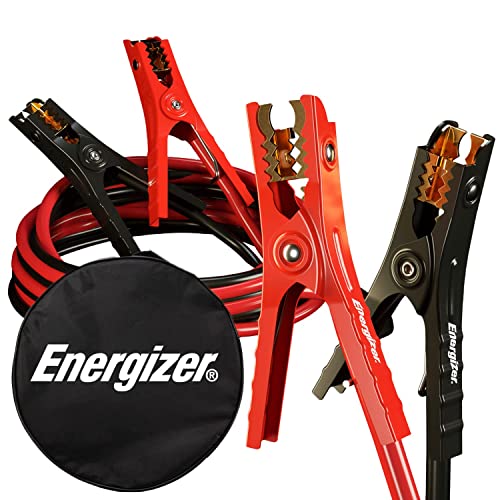
ENERGIZER 16 FEET JUMPER CABLES - 6 Gauge, 16 FT booster battery jumper cables for jump starting a dead or weak battery. Ideal for trucks, SUVs, full-size cars, mid-size cars and small/compact cars

A must-have for all PWC users

UNIVERSAL FITMENTS :NOONE 10 FT car jumper cables support 200A peak current for jumping start 12/24V car battery. So NOONE booster cables are suitable for your vehicles with up to 3.0 L Gas Engines
Safety Checks Before Charging a Dead Battery With a Tender
Before connecting a battery tender to a dead battery, you must perform several safety checks. Start by measuring the battery voltage with a digital multimeter. If the reading shows below about 2 to 3 volts, the tender may lock out and refuse to charge. This low voltage can also indicate that the battery’s lifespan is significantly compromised. Then, inspect the battery case carefully for cracks, swelling, or leaks—never attempt to charge a damaged battery, as it can be hazardous. Check if the battery is frozen; charging a frozen battery can cause it to explode. Always work in a dry, well-ventilated area away from flames or sparks. Ensure that your charger’s voltage and type match your battery specifications. When connecting, attach the positive lead first, then the negative. Reverse this order when disconnecting. Wear eye protection and gloves throughout the process. Keep a close eye on the battery during charging, and immediately stop if it becomes hot, emits a smell, or vents gases. Performing these safety checks helps maximize charging efficiency and minimizes risks.

VERSATILE FUNCTIONALITY: Measures AC/DC voltage up to 600V, 10A DC current, 2MΩ resistance; additional features include continuity, diode test and battery test

Versatile Digital Multimeter - Accurately measures AC/DC Current, AC/DC Voltage, Capacitance, Frequency, Duty Cycle, Resistance, Diode, Continuity and Temperature.

Important Tips - This CM2K0R clamp meter can not test DC Current. To measure the AC Current you need to clamp the meter around one of the wires and not the whole power cord. Ensure the conductor to betested is in the center of the clamp head. The clamp Jaw is only used to measure current. Do not measure voltage by clamping the conductor being measured.
When to Give Up: Signs Your Battery Is Beyond Help
If your battery shows clear signs of internal damage or has reached the end of its lifespan, it’s time to replace it. Swollen, cracked, or leaking cases indicate internal damage that poses safety risks and means the battery must be discarded immediately. A strong sulfur smell or excessive heat during charging also signals severe internal problems; if the temperature exceeds 125°F, stop charging immediately. Batteries that charge quickly but fail to hold a charge suffer from advanced sulfation and are beyond recovery. If the voltage never recovers or your smart charger displays “SUL” or “battery won’t accept charge,” the internal damage is irreparable. Age is another crucial factor: batteries over five to seven years often cannot be revived. Repeated jump-starts, slow cranking, or consistently weak performance also point to internal damage that cannot be fixed. When low-rate charging and desulfation attempts fail, continuing to invest time and effort is futile—it’s best to replace the battery. For generators, selecting the best oil is crucial to ensure reliable performance and avoid similar issues. When replacing a dead battery, selecting a power inverter that matches your energy needs ensures your new battery stays properly supported during use.