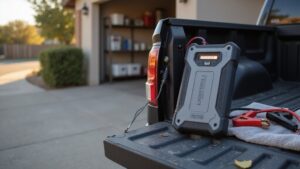
Filling or storing a gas can properly can feel overwhelming, especially with safety in mind. Using the right type of container and following basic precautions can make all the difference.
Whether you’re topping off your equipment or storing fuel for seasonal use, knowing the essentials helps keep you safe.
Below, you’ll find practical tips to make handling gasoline straightforward and secure.
Choose a Safe, Approved Gas Can Before You Start
Before you even think about pouring gasoline, you need to start by choosing a safe, approved gas can. You can’t just grab any container; fuel classification matters. For gasoline, use an approved safety can of 5 gallons or less, certified by a recognized lab such as UL or FM. Carefully check the labeling on the container—it should clearly specify “gasoline” and indicate compliance with OSHA or DOT standards. Look for features like a spring-closing lid, a flame arrester, and a pressure-relief mechanism to prevent accidents. Ensure the can has a tight, leak-proof seal to avoid spills and vapor leaks. Always verify that the approval matches your intended use, whether storing at home or transporting. For comparison, propane generators often emphasize quality, performance, and value in their design, but gasoline containers prioritize safety certifications to prevent dangerous spills as seen in reviews of propane tanks for quality and performance. This step is essential to prevent dangerous spills and vapor release before handling any fuel. Many propane tanks for home use also include a flame arrester to stop potential flashbacks, a feature equally critical in approved gasoline cans.

Fits Your Needs - Type I safety cans have a single opening for filling and pouring fluids. They are used to safely store, transport, and dispense flammable liquids.
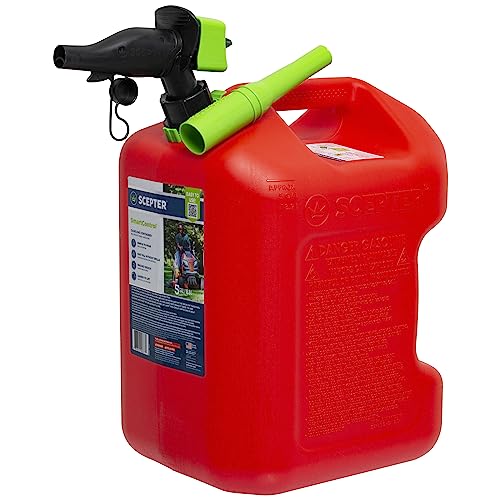
EASY TO POUR GAS CAN – Amazon exclusive, 5-gallon fuel container for easy refilling of lawnmowers, chainsaws, yard tools, recreational vehicles, ATVs, motorcycles, and other gas-powered equipment

CONTROLLED FUEL TRANSFER: The patented manifold and Safe-Squeeze trigger provide smooth, glug-free dispensing with improved flow control. This safety gas can helps reduce spills and supports more accurate fuel transfer
How to Fill a Gas Can Without Spills or Static Sparks
To fill a gas can without spills or static sparks, follow a careful, step-by-step process. First, place the can on bare ground—never on your vehicle or truck bed—as direct contact grounds the can, reducing static electricity buildup. Keep the nozzle touching the can’s rim throughout the fill; this continuous contact helps dissipate static charges and prevents sparks. For optimal safety, using an inverter for portable generators can provide cleaner power and reduce ignition risks when powering equipment near fuel. Next, fill the can slowly at a controlled pace. Rushing increases foaming and risk of overflow. Stop filling once the can reaches about 95 percent capacity to leave space for vapor and to prevent overfilling. A well-built DIY generator enclosure can further contain fuel vapors and protect equipment from weather exposure. If you later need fuel for engines or tools, check local gas station listings for stations that offer non-ethanol gasoline to avoid ethanol-related damage to small engines. Once full, wipe away any drips immediately to avoid vapor release and tighten the cap securely. Always extinguish any open flames, turn off the vehicle’s engine, and avoid re-entering your car during fueling to eliminate ignition risks. Following these steps ensures a safe, spill-free, spark-free filling process every time.

【PERFECT FIT, EXTRA-LONG SPOUT FOR EASIER POURING】: The KILWANI upgraded gas can spout replacement is compatible with most 1/2/5/10-gallon plastic gas cans, fitting oil jug mouth sizes ranging from 1.7 to 1.82 inches. The extended 8.1-inch gas can nozzle length ensures greater convenience and pouring flexibility.

Country Of Origin: United States

Our Gas Can Spout Replacement, designed to fit most 1/2/5/10-gallon oil cans. Before purchasing, please ensure your oil can mouth size matches the internal thread size of (1-3/4 - 1.7 inches). This spout can be used for gas cans with a can mouth size of 1.75 inches. Measure your oil can mouth size to confirm compatibility.
Seal and Strap Your Gas Can for Secure Transport
Once you’ve filled the gas can and wiped away any drips, it’s essential to seal it properly before transportation. Tighten the spout firmly so the lid engages fully, ensuring a leak-proof seal. If your can has a vent cap, close it securely and inspect it for any damage. Never transport a container that leaks or doesn’t seal completely, as this poses safety risks. Using a 10W-30 oil specifically rated for small engines can help maintain generator performance during power outages. For added safety, consider a transfer switch to safely connect your generator to household circuits. For long-term storage, adding a fuel stabilizer helps prevent ethanol-related corrosion and fuel degradation.
Secure the can upright on a level surface in a well-ventilated area, away from heat sources or sparks. Use ratchet straps to fasten the can so it cannot shift during braking or turns, and ensure the O-shaped loop drops over the jug spout for a positive, no-slip hold. Route the straps over the main body of the container, avoiding the spout or vent. Attach the straps to the vehicle’s tie-down points, not to loose interior parts. A sealed and properly strapped can prevents fumes from escaping and reduces the risk of tipping over, ensuring safer transport.

Keeps Liquid Jugs from Tipping or Shifting: Unlike generic cargo straps, the large O-shaped loop section drops over most fuel jug spouts for a secure, no-slip hold during off-road travel, bumps, or hard braking

VERSATILE FOR MULTIPLE APPLICATIONS: These endless ratchet straps excel where traditional ratchet tie downs just won't work. Excellent for securing kayaks, bikes, ladders, furniture, battery boxes, camping gear, and other cargo. The continuous loop design works brilliantly as motorcycle tie downs, boat tie down straps, and situations where standard hooks would damage vehicles or cargo.

AMERICAN OWNED, FAMILY OPERATED - Join the Rhino USA Family and Support a Father/Son Business With USA-Based Live Phone Support.
Where to Store Gasoline to Protect Your Home
Store gasoline in a detached, lockable, well-ventilated shed or separate outbuilding to maximize safety. This location is far safer than an attached garage, basement, or living space, because it reduces the risk of fire from accidental ignition. Place containers on a level, cool, and dry surface to prevent tipping and avoid temperature fluctuations that could compromise the container. Never store gasoline indoors, as basements and living areas trap flammable vapors and increase the chance of leaks or explosions. To prevent corrosion, keep storage areas dry and free from indoor humidity, which can cause metal cans to deteriorate over time. Maintain a safe distance of at least 50 feet from heaters, water heaters, and pilot lights to reduce ignition risks. Secure the storage area from children, pets, and traffic, and select a spot where spills can be cleaned up easily. Clearly label each container with its purchase date and contents to track aging and ensure proper handling. For additional safety, consider using a reliable power inverter to run ventilation fans or monitoring equipment in the storage area. Keep your total residential gasoline storage under 25 gallons, and check local regulations for stricter limits.
Fire Safety Rules That Apply Directly to Gasoline
Strict fire safety rules are essential when handling gasoline to prevent accidents. Always eliminate all sources of ignition—do not smoke, use matches, or operate pilot lights near fuel. Before refueling, ensure the engine is completely cooled down; hot surfaces can cause vapors to ignite instantly. When filling portable containers, place them on the ground and keep the nozzle in contact with the metal. This helps dissipate static electricity, which can otherwise ignite vapors. To extend the shelf life of stored fuel, you should consider adding a top fuel stabilizer to prevent degradation. For those seeking a safer alternative to storing volatile fuel, a reliable backup power option can be compared in reviews online. Never use gasoline as an accelerant or cleaner, as vapors can flash back unpredictably and cause fires. Keep a Class B fire extinguisher nearby for small fires, and never try to extinguish a gasoline fire with water. If a fire starts to spread, evacuate immediately and call emergency services. Your quick response is crucial in preventing a spark from escalating into a larger blaze. For reliable backup power, consider using a natural gas generator instead, as it eliminates the need for storing volatile gasoline.
How to Inspect and Maintain Your Gas Can Every Season
Inspect your gas can at least once each season to identify signs of wear early. Begin by examining the body and seams for rust, dents, hairline fractures, or warping, as these damage indicators can compromise safety and performance. Next, check the cap, seal, and spout to ensure they close fully and the seal is intact. Press around the gasket to confirm seal integrity; a weakened seal can lead to leaks and fuel loss. Clean the exterior and cap vents thoroughly to uncover any hidden defects. Label the container with the fill date and fuel type to facilitate tracking and prevent misuse. Store the can upright in a well-ventilated area away from living spaces. Regularly rotate stored fuel and re-inspect the can before refilling. If seals appear worn or damaged, replace them immediately to avoid risking leaks or a compromised container.
Avoid Overfilling, Vapor Lock, and Other Common Mistakes
When filling your gas can, stop at about 95% capacity to leave room for fuel expansion. Overfilling increases the risk of spills and vapor lock during transport. Once the pump clicks off, avoid adding more fuel, as forcing extra inside can cause leaks and vapor issues. Keep an eye on the fuel temperature—hotter fuel expands faster, which makes vapor lock more likely when you start the engine later. For comparison, solar battery backup systems store energy from the sun to power a home during outages, offering a cleaner alternative to relying on gas generators. Understanding the volume of larger fuel containers, such as a 100 lb propane tank, helps in planning fuel storage for backup power needs. Many propane tank models now include built-in gauges for tracking remaining fuel, ensuring you never run out unexpectedly during critical use.
Always place the can on the ground before pouring to prevent static discharge, and keep the nozzle touching the container opening to minimize static buildup. Never leave the engine running while refueling, and tighten the cap securely afterward to prevent leaks. If you notice a gas smell or see wetness around the cap after filling, stop and inspect the can immediately. Proper filling techniques help avoid common mistakes like overfilling, vapor lock, and static sparks. Filling cans only to 95% capacity also prevents damage to the vehicle’s EVAP system from overfilling and costly repairs.

CONTROLLED FUEL TRANSFER: The patented manifold and Safe-Squeeze trigger provide smooth, glug-free dispensing with improved flow control. This safety gas can helps reduce spills and supports more accurate fuel transfer

CONTROLLED FUEL TRANSFER: The patented manifold and Safe-Squeeze trigger provide smooth, glug-free dispensing with improved flow control. This safety gas can helps reduce spills and supports more accurate fuel transfer

CONTROLLED FUEL TRANSFER: The patented manifold and Safe-Squeeze trigger provide smooth, glug-free dispensing with improved flow control. This safety gas can helps reduce spills and supports more accurate fuel transfer
Transporting Gas Cans: The Right Way to Move Fuel
To transport gasoline safely, always use approved safety cans and keep them upright. Secure each can firmly in your trunk or truck bed to prevent sliding or tipping; never place them on seats or unsecured surfaces. Place the cans in an open cargo area, away from direct sunlight or heat sources, to prevent vapor buildup. Before loading, tighten the caps securely to minimize spills, and avoid overpacking or stacking heavy gear on top of them. Carry only the amount of fuel necessary for your trip, especially for roadside emergencies. Check local laws to ensure compliance with legal limits and choose DOT-compliant containers. Once you arrive, remove the cans immediately and store them in a cool, ventilated space to reduce vapor accumulation. In case of a spill, clean it up right away using absorbent materials designed for fuel. Power inverters can also be used in vehicles to safely run devices during fuel transport, but they require proper ventilation. For added protection against the elements, a waterproof cover can help keep extension cords dry and safe when used outdoors. For vehicles with weak batteries, a reliable battery charger can ensure the car starts after long fuel transport trips. Proper handling and secure storage are essential for safety and to prevent accidents.
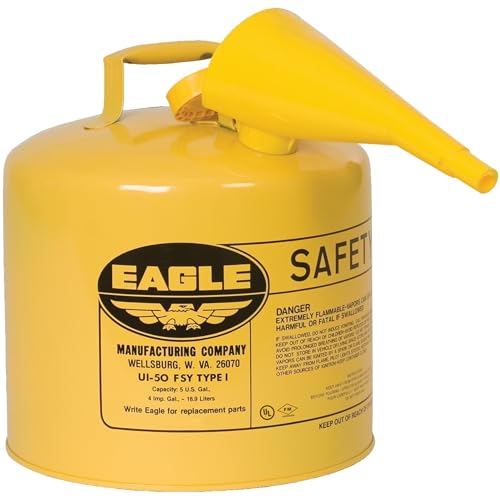
Fits Your Needs - Type I safety cans have a single opening for filling and pouring fluids. They are used to safely store, transport, and dispense flammable liquids.

Fits Your Needs - Type I safety cans have a single opening for filling and pouring fluids. They are used to safely store, transport, and dispense flammable liquids.

Fits Your Needs - Type I safety cans have a single opening for filling and pouring fluids. They are used to safely store, transport, and dispense flammable liquids.