Thinking about charging a lithium battery without a dedicated charger? It’s risky but sometimes necessary, and there are important safety steps to follow.
You need a stable power source set precisely to 4.2 volts per cell and safety devices like a Battery Management System and thermal sensors.
Keep everything on a non-flammable surface and stay attentive.
Full details below.
Never Charge a Lithium Battery on a Random Power Source
Plugging your lithium-ion battery into a random power source is dangerous and should be avoided at all costs. These batteries require precise voltage and current control to charge safely. Using an incompatible or unverified charger can deliver the wrong voltage or current, leading to damage over time. This mismanagement reduces your battery’s capacity and can bypass essential safety protections built into the battery management system (BMS). In contrast, selecting the best inverter ensures stable power delivery for safe charging. For reliable and safe operation, always choose quality propane tanks from verified sources. For additional protection against electrical fluctuations, a surge protector can help safeguard your charging setup.
Incompatible chargers risk overheating the cells, which can cause thermal runaway—a chain reaction resulting in a fire. Such fires release toxic and flammable gases, posing serious hazards to your safety and property. Fire authorities frequently connect improper charging practices to house fires, especially when charging is unattended with random adapters. Repeated use of unaligned power sources or mismatched chargers can cause permanent capacity loss or trigger BMS lockouts, making the battery unusable.
Even if a charger physically fits the connector, it can still be unsafe if it does not match the voltage, current, or circuitry specifications of your battery. To prevent this, always use the manufacturer-approved charger, ensure the charging setup is on a non-combustible surface, and disconnect the battery once fully charged. Never take chances with random power sources—your safety depends on proper charging practices.
The 4 Must-Have Components for Safe Lithium Battery Charging
To safely charge a lithium battery without a dedicated charger, you need four key components in place. First, ensure voltage stability by matching your power source to the battery’s exact chemistry and pack voltage. Using a generic charger can lead to overvoltage or undervoltage, which risks damaging the cells or causing safety hazards. For reliable long-term health, consider regular load testing to detect capacity fade early, similar to how deep cycle batteries are evaluated for replacement. To further ensure safety, you can build a DIY solar panel kit to provide a stable and regulated power source for the charging process. Understanding the chemical restoration process used in desulfators helps explain why regular maintenance charging prevents sulfate buildup that can permanently reduce battery capacity. Second, a Battery Management System (BMS) is essential. The BMS monitors and protects against overcharge, overcurrent, and short circuits. If any of these limits are exceeded, the system disconnects the battery to prevent damage or fire. Third, include cell-balancing functionality, especially for series packs of 2 cells or more. Cell balancing prevents any single cell from overcharging or discharging relative to others, which reduces the risk of damage and improves battery lifespan. Finally, thermal regulation is critical. Use temperature sensors and implement a cutoff mechanism to restrict charging within the recommended temperature range. Stop charging immediately if abnormal heat, swelling, or a strange odor is detected. These four components work together to eliminate guesswork and significantly reduce the risk of fire or cell damage during charging.
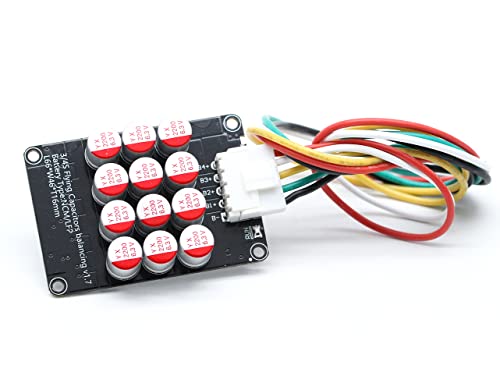
Working Voltage: 2.7V-4.2V, suitable for NCM Ternary polymer lithium battery (Li-ion), lithium iron phosphate battery (LiFePO4). It can Not fit LTO battery. NOTE Tips: Well tested by the manufacturer. As long as the wiring is correct, the product guarantees long-lasting and effective performance. (Default Not include any batteries.)

This is an active equalization module for lithium batteries, which can be compatible with all other brands of BMS.
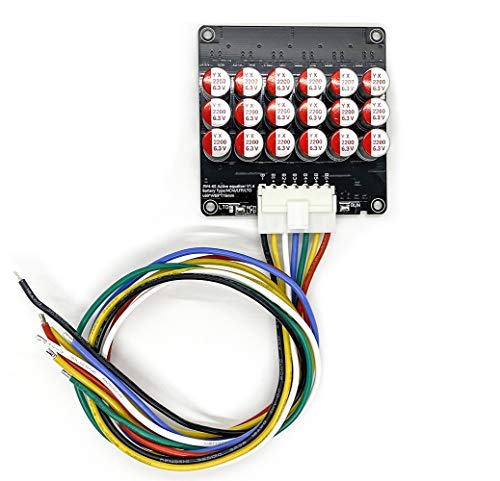
Working Voltage: 1.8V-4.5V, suitable for NCM Ternary polymer lithium battery (Li-ion), lithium iron phosphate battery (LiFePO4), lithium titanate battery (LTO). (Default Not include any batteries.)
How to Charge a Single Lithium-Ion Cell With a Regulated Power Supply
Connect the cell to a regulated power supply set to the appropriate charging voltage, typically around 4.2 volts for a lithium-ion cell. Watch the voltage rise during the constant current phase. When it reaches the designated maximum voltage, the power supply will switch to constant voltage mode, holding the voltage steady while the current gradually tapers off. Don’t rely solely on voltage for termination; instead, stop charging when the current drops to about 0.05C to 0.1C, which indicates the cell is nearing full capacity. Never leave the cell at the voltage limit indefinitely, as this can accelerate degradation and shorten its lifespan. Remember, this method is only suitable for single cells; never attempt it with series packs, which require more specialized charging and balancing procedures.

CONVERTS AC TO DC: The Pyramid Bench Power Supply features a linear/regulated design. Provides convenient and reliable AC-to-DC power conversion (12V DC) w/ constant source of DC voltage. Works w/ cellular phones, CB radio, scanner, HAM radio, etc

【Adjustable & Precise DC Output】This HYELEC PS-28A DC regulated power supply offers 1.5V–15V adjustable voltage with a rotary selector for constant output, and up to max 2A current. It has a voltage resolution of 0.1V and a current resolution of 0.01A, and can achieve precise control.

Newly upgraded 150W DC power supply with higher voltage and current: This DC power supply can be freely switched between 15V 10A and 30V 5A. When the current value is set to 10A, the voltage value cannot exceed 15V. If the voltage value is set to 30V, the current value cannot exceed 5A. [The device can only output 150 W, but don't worry, the device cannot be set to output current and voltage values exceeding 150 W.]
Why Balance Charging Matters When You Have No Charger for Packs
Since balance charging is crucial when you have no dedicated charger, you must carefully monitor and manually manage each cell’s voltage during the process. Without a built-in Battery Management System (BMS), the charger won’t automatically balance the cells, so individual oversight becomes essential. If you ignore balancing, charging will stop once the highest voltage cell reaches its limit, leaving other cells undercharged. This results in a loss of capacity and reduces runtime because your pack cannot deliver its full energy potential. Over time, imbalance causes uneven wear on cells, shrinking their expected lifespan by approximately 20 to 30 percent. A standard battery tender will refuse to charge a deeply discharged lithium pack because its safety logic cannot detect the necessary voltage, so a dedicated charger is always the better option for reviving dead cells. Additionally, you should treat the process with the same caution as filling a propane tank by always working in a well-ventilated area to prevent dangerous gas buildup.
Monitoring each cell’s voltage is not optional here; it’s the only way to ensure all cells finish charging together and remain healthy. Failing to do so risks one cell drifting too high or too low, which can lead to overheating, swelling, or even thermal runaway—a hazardous failure mode. When you have no charger with a built-in balancing function, you must take responsibility for safety precautions, such as using a portable generator only in well-ventilated outdoor areas to avoid carbon monoxide buildup. Check every cell individually, charge the cells with the lowest voltage first, and strive to keep all cells matched in voltage. These steps help protect both your battery pack and yourself from potential risks.

High-quality and safety: The B6 charger is made of high-quality chips and materials to provide you with high-quality products and function performance, This charger also has short-circuit protection, overcharged protection, overcurrent protection and overheat protection. It can prevent the overcharging which may lead to an explosion due to the uer's fault.
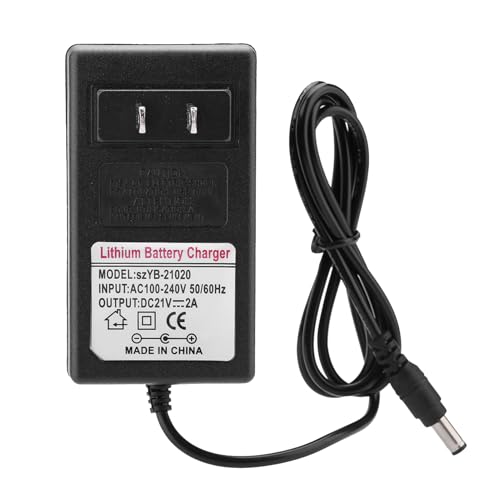
【Universal Charger for Multiple Devices】This 21V 2A power adapter is a fast, charging solution to replace lost or broken chargers. It a wide range of 21V devices, from power tools like electric drills and wrenches to balance cars, toy cars, and LED headlamps. Enjoy the convenience of one charger for all, eliminating clutter and the need for multiple units.

Built-in independent balancer & high precision charging, preventing overcharge and extending battery life
Emergency Alternatives for Lithium Battery Charging Without a Charger
If you need to charge a lithium battery without its proper charger, a regulated USB port or power bank can work in a pinch—just keep the current at 500 mA or less and never exceed 4.2 volts per cell. For better control, use an adjustable DC power supply set to the correct voltage, limit the current between 0.2C and 0.5C, and always check the polarity before connecting. A portable solar charger may be an option, but you’ll need a voltage regulator to account for its fluctuating output. When using vehicle power, a DC-DC converter ensures the voltage matches the battery’s requirements. For direct-wire connections, test the battery’s voltage and compatibility with a multimeter first. Throughout the process, continuously monitor voltage and current—watch for voltage rise and current tapering to prevent overcharging. Improvised setups can work for small packs but are unsafe for larger ones. Never leave the battery unattended during charging to avoid overvoltage or overheating. For a safer and more reliable alternative, consider using a generator with a regulated power output, such as a propane generator, which offers stable voltage and lower maintenance needs compared to gasoline models. Most modern generators include transfer switches to safely connect backup power without dangerous backfeeding. For portable camping scenarios, a portable inverter generator provides clean, stable power suitable for sensitive charging electronics.

1️⃣【4-Digit Display & Power Calculation】: The Jesverty SPS series features a big bright 4-digit LED display that shows measured values of V/A/W that the unit outputs in real-time. The display resolution is up to 0.01V, 0.001A, and 0.1W.

【Adjustable Voltage】Input: AC 100~240V, 50/60Hz, Output Voltage can be adjusted from 3V to 24V DC (such as 3V 4V 4.5V 5V 5.5V 6V 9V 12V 14V 15V 19V 20V 24V). Wattage Max 3A, 72W; It can supply with amps less than 3A, such as 300mA, 500mA,1A, 1.5A, 2A, 2.5A, 3A.

New feature, First released: DC power supply Adopts the “reverse polarity protection” principle, has added a charging prompt indicator light, providing reverse connection protection and alerts. Press the "Battery" button, the indicator light on the panel will light up. When it is not correctly connected or not connected to the battery that needs to be charged, the "battery" button will display a yellow light flashing, and the "output" button cannot be pressed. When the "battery" button displays a yellow light and stops flashing, it indicates normal charging. When the "battery" button displays a green light, After charging, Automatic output disconnection when charging is complete
Warning Signs That Mean You Must Stop Charging Immediately
If your battery shows warning signs like swelling, leaking, hissing, smoking, or any unusual behavior, you must stop charging immediately. Swelling indicates internal damage that can cause a fire hazard, so do not ignore it. If the battery becomes hot to the touch—more than just warm—disconnect it right away to prevent further damage. A burning or chemical smell also signals breakdown and requires urgent action. Listen carefully; popping or crackling sounds are abnormal and can mean internal failure. Handling a damaged battery carelessly can create risks similar to those from improper surge protector wiring, which also requires strict safety precautions.
If your device’s back panel lifts, it doesn’t sit flat, or buttons become stiff, those are signs of internal pressure from swelling. Any sudden change in shape during charging is abnormal and dangerous. Additionally, if charging finishes faster than usual or your device shuts off unexpectedly, it may indicate battery damage. Swollen or damaged batteries should never be used or charged again to avoid risking fire or injury.