Not sure if your propane tank is empty when you need it most? It’s a common question, and the good news is there are simple ways to tell.
From weighing the tank to checking the flames and temperature changes, you can get a pretty good idea without guesswork. Keep reading to learn the straightforward methods to accurately determine if your propane supply has run out.
Weigh Your Tank: The Most Accurate Way to Check Propane Level
To check your propane level accurately, start by locating the tare weight stamped on the tank’s collar—look for the “TW” or “TARE” marking. This number indicates the empty weight of the tank, not the propane itself, and serves as your baseline. Next, place the tank on a flat, stable scale and record the gross weight. Subtract the tare weight from this number to find out how much propane remains. For example, if the total weight is 37 pounds and the tare weight is 17 pounds, you have 20 pounds of propane left. Divide this remaining weight by the tank’s rated propane capacity to estimate the fill percentage. Keep in mind that tank material affects weight: steel tanks are heavier, while composite tanks are lighter. Always follow safety precautions—keep the tank upright, avoid overfilling, and inspect for damage or corrosion. If the tare weight stamp is unreadable, consider replacing or having the tank professionally inspected. Just as with propane equipment, using an undersized extension cord gauge can create safety hazards like overheating and voltage drop. Similarly, never pour old gas down the drain or onto the ground; instead, use an approved fuel disposal facility to prevent environmental harm. For generator maintenance, selecting the right engine oil viscosity ensures reliable performance and prevents wear.

Compatible with 5LB, 10LB, 20LB, 30LB and 40 lb Propane tanks * High precision weight sensor

ALWAYS HAVE PROPANE READY: Don’t worry about running out of propane again! With this digital gas indicator, you can track and monitor the levels of your large or small tank, so you never run out of gas in the middle of a good barbecue!

Highly Accurate Measurement: Our propane scale is built to deliver precise readings for all common tank sizes—5LB, 10LB, 15LB, 20LB, 30LB, and 40LB. Provides reliable measurements that are unaffected by temperature changes, outperforming traditional propane gauges.
Use the Warm Water Trick to Find the Fuel Line Without Tools
To identify the fuel line boundary on your propane tank without tools, use the warm water trick. Ensure your tank is upright, stable, and turned off. Carefully pour warm tap water in a vertical strip down one side of the tank, avoiding the valve and fittings. For a typical 100 lb propane tank, this method works reliably to estimate remaining fuel.
After a minute or so, run your hand along the wet area. You’ll notice a temperature difference: the upper part feels warm because it’s exposed to vapor only, while the lower part feels cooler, as the liquid propane inside absorbs heat. The line where these temperature changes occur indicates your approximate fuel level. This method is a quick and simple visualization technique that requires no scale or gauge. Since this test only estimates fuel, it does not change the fact that whole house generator installation costs typically remain nondeductible for personal use.
You should also watch for warning signs of tank failure like rust or dents to know when replacement beats repair.
Read Your Propane Tank Gauge for a Quick Level Check
If your propane tank has a gauge, checking the fuel level takes just a few seconds. Open the protective dome and locate the circular dial near the valve. The needle shows a percentage of usable propane remaining, not gallons. For example, 80% means the tank is at its safe maximum fill, while 40% indicates you have about 40% of your fuel left. A 0% reading means the tank is empty.

WIDELY SUITED - Compatible with all appliances with a QCC1 / type1 connection and 5 lb to 40 lb propane tanks, and can be worked with propane tank cylinders, propane regulator with hose and propane adapter
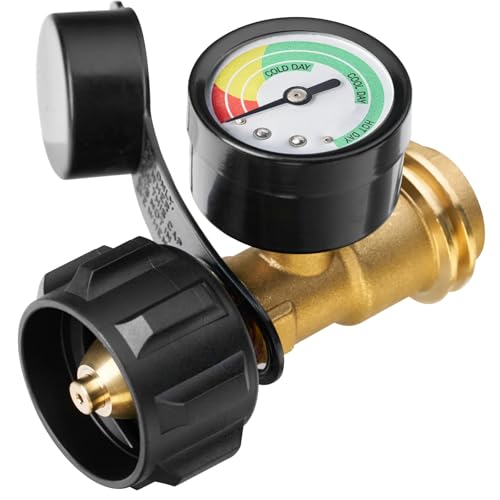
WIDELY SUITED - Compatible with all appliances with a QCC1 / type1 connection and 5 lb to 40 lb propane tanks, and can be worked with propane tank cylinders, propane regulator with hose and propane adapter
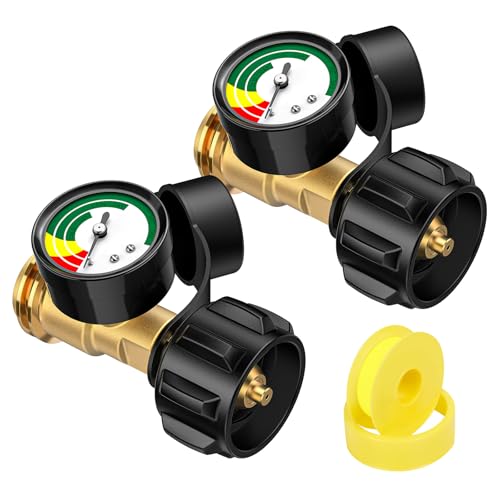
LEAKAGE-PROOF DESIGN: Engineered with 100% solid brass, the heavy-duty propane tank gauge is precisely manufactured to ensure proper connection, preventing leakage or clogging. With a robust and flexible structure, the weather-resistant propane gauge enjoys a longer lifespan and is trustworthy in seamless connection, safety, durability and sturdiness.
What to Do If Your Propane Gauge Is Inaccurate
If your propane gauge seems off, the first step is to ensure safety. Turn off the tank valve before touching the connection. Inspect the threads for debris or damage, then reattach the gauge by hand-tightening only, as over-tightening can strip threads. Open the valve slowly and listen for hissing. To check for leaks, apply soapy water to the connection. If bubbles form, it indicates a leak, and you should replace a damaged O-ring or call a professional. For a reliable electrical connection in solar systems, the MC4 connectors are a standard choice for high-quality panels. For campers who need reliable off-grid power, a portable power station can serve as a safe alternative when dealing with propane uncertainties.
For calibration issues, consider temperature effects: let a cold tank stabilize in 50 to 80°F air before reading. Avoid judging the gauge accuracy immediately after weather changes. Cross-check the gauge by testing it on a full tank—such as a new 20-pound propane cylinder, which typically weighs about 38 pounds when full—and an empty tank, around 18 pounds. If the dial remains stuck, foggy, or shows inconsistent readings, replace the gauge. If you’re still unsure about the accuracy or safety, contact a propane technician to inspect the tank, regulator, or gauge thoroughly. For added precision, consider using a hydrometer method to measure the specific gravity of the battery electrolyte, which provides a more reliable state-of-charge indicator.

Compatible with all appliances featuring a QCC1 / Type 1 connection, this gauge is suitable for propane tanks ranging from 5 lb to 40 lb. Note: This product is not suitable for propane tanks exceeding 40 lb
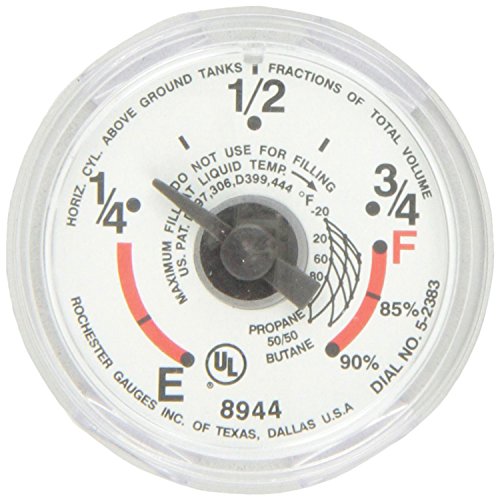
Direct reading dial for tanks
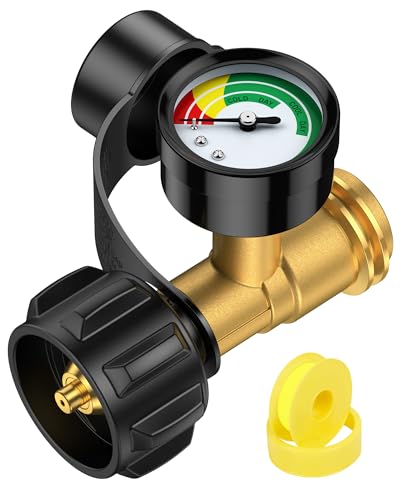
COLORED & RELIABLE GAS MONITOR – Colored reading allows you to check the gas level at a glance. Needle in green area means sufficient gas, yellow means low gas, and red means nearly empty gas. Through detecting air pressure, the propane tank gauge measures remaining capacity of propane. This propane gauge can also work as LEAK DETECTOR.
Weak Flames and Other Appliance Clues That Signal Low Propane
Weak flames—smaller, yellow, or orange instead of a steady blue—are clear signs of low propane. If your grill, stove, or heater produce these irregular flames, it indicates insufficient fuel pressure. You may also notice burners struggle to stay lit, sputtering or taking longer to heat food or water. When multiple appliances exhibit these symptoms, it’s a strong indicator that the tank is running low rather than a fault with individual equipment. Additionally, a faint propane smell near the tank or unusual noises from the regulator as pressure drops are common clues. If switching tanks improves the flames, it confirms low propane rather than clogged burners. Paying attention to these performance cues helps you catch an empty tank early. For example, knowing your appliance’s power requirements helps prevent undersized setups that lead to weak performance.

✓ PROPANE BRASS ORIFICE FITTING SIZES - 3/8 flare M x 1/8 MNPT
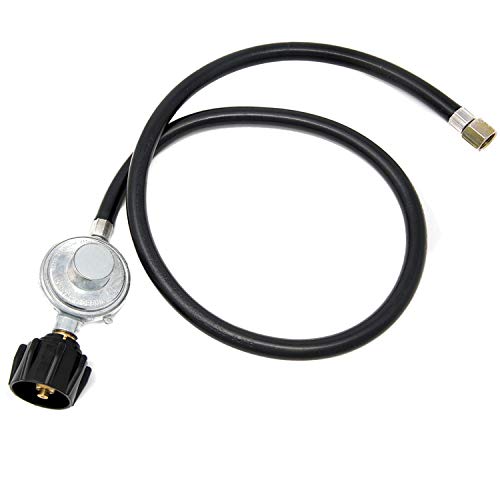
A TOP QUALITY PROPANE REGULATOR AND HOSE - maxing out at 80, 000 BTU, this 3Ft low pressure propane regulator is fiber reinforced to ensure quality performance. The hose is the perfect fit for a wide variety of grills, fire pit tables, and other propane appliances

USER FRIENDLY AND TOP QUALITY CONNECTION - this high-pressure regulator and hose is adjustable from 0-20 psi with its red knob and has a top notch output for a wide variety of propane appliances from burners and heaters to smokers and fryers
Tap the Tank to Check Fuel (But Don’t Rely on It)
Tapping the side of a propane tank can give you a rough idea of how much fuel remains, but it’s not reliable. When you tap lightly, the sound can change depending on what’s inside. Generally, emptier sections produce a higher-pitched, hollow tone, while areas containing liquid propane sound duller or more solid. However, the tank’s material—thick steel or temperature variations—can distort these subtle differences. Noisy environments make it even harder to distinguish the sounds clearly. Partially filled tanks add further confusion, as the mixture of liquid and vapor produces inconsistent tones. Just as kerosene can degrade over time, propane remains stable indefinitely when stored properly because it is a petroleum gas that does not expire. To get a better sense of how full your tank is, tap gently and listen for any tone changes. Never strike hard or damage the valve area. Always check the tank’s overfill prevention device to ensure safe handling during filling. Additionally, pouring boiling water down the tank and feeling for temperature differences can help indicate the propane level where the cooler zone begins. Remember, this method only offers an approximate estimate of volume. It can suggest whether the tank is more empty or more full but cannot confirm if it’s completely empty. For more certainty, weighing the tank or checking its temperature are more reliable options. Using a reliable portable inverter generator can also provide consistent power for checking propane levels with electronic scales.
Confirm Your Tank Is Empty With Two Cross-Checks
Confirm your tank is truly empty, use two cross-checks together for accuracy. First, weigh the tank against its stamped tare weight (TW). If the total matches the TW, it means there’s no propane left. Second, perform the warm-water test: pour warm tap water down one side of the tank and run your hand along the wetted surface. Feel for a cool zone; if present, liquid propane remains. If there’s no temperature change, the tank is empty. Propane tank refill costs can vary based on market demand and location, which affects how quickly you might replace an empty tank. For safety, always store an empty container outdoors in a well-ventilated area away from heat sources. Choosing among the best propane tanks with gauges can simplify this process, as a built-in gauge offers continuous visual confirmation of fuel level.
The weight provides a numerical confirmation, showing whether the tank has any propane. The water test verifies if liquid propane is still inside by detecting the cooling effect of the liquefied gas. Cross-checking both methods reduces the chance of misreading a nearly empty tank. An empty tank weighs exactly the tare weight and shows no cold spot during the water test. Using these checks prevents running out of gas unexpectedly during cooking, which can cause low pressure and disrupt your burner and regulator performance.
How to Prevent Running Out of Propane Mid-Cook
The most reliable way to prevent running out of propane mid-cook is to plan ahead and monitor your tank continuously. Start by checking your tank level before igniting the grill—pressure alone isn’t sufficient. Using a low-fuel gauge or a smart sensor provides a more accurate and real-time reading, helping you keep track of remaining fuel. Plan refills before the tank is fully drained to ensure you don’t unexpectedly run out during cooking. Keep a detailed usage log to predict how long your tank lasts based on your typical grilling sessions. Always have a second filled tank nearby for quick swapping; store it safely and in accordance with propane safety guidelines. Rotation and labeling of tanks can help you keep track of their fill status, preventing confusion during critical moments. Practice smart habits such as preheating only when necessary, keeping the lid closed during cooking, and cleaning burners regularly to optimize fuel efficiency. Confirm that your tanks hold valid certification, ensuring safety and reliable performance. Finally, match your tank size to your typical cooking duration to avoid shortages—larger tanks are better for longer cookouts, while smaller tanks might suit quick grilling sessions. For those who need to power a portable generator during a cookout, selecting the best inverter ensures stable power for accessories like smart sensors. Checking your tank level with a dedicated gauge prevents the common mistake of relying on pressure, which can lead to unexpected shutdowns. Understanding the starting-watts versus running-watts difference is essential for selecting a generator that can reliably power your smart sensor equipment.

WIRELESS PROPANE GAUGE - This digital propane tank gauge is an essential tool for anyone who enjoys outdoor cooking or using propane-powered patio heaters. The Mopeka tank sensor connects to your phone through a mobile app, providing you with real-time updates on the propane level.

Package Contents: you will receive 2 pieces of gas level indicators, the sufficient quantity and simple designs can satisfy your various decorating needs, which has a color scale that changes according to gas level

Includes One Magnetic Sensor.Fit Type: Universal Fit
Three Mistakes That Lead to False Empty Readings
False empty readings often stem from three common mistakes. First, you might misread the 80 percent safety fill level as fully empty. That safety margin is normal and allows for tank expansion, so it does not indicate a fuel shortage. Second, temperature effects can cause false readings. Cold weather contracts propane volume, making the gauge appear lower without any actual fuel loss. Always consider ambient temperature when reading your gauge. Third, rely on a faulty gauge. Mechanical dials that haven’t been calibrated recently or are sticky can show empty even when plenty of fuel remains. To avoid these errors, check the gauge again after warming the tank, and verify the reading by physically weighing the tank. Taking these steps prevents false empty indications and ensures you always have enough fuel for your cooking needs. You can also use the hot water trick to reveal frost lines and check for remaining propane without relying on the gauge.
How to Log Refill Dates and Track Your Supply
Keeping a detailed refill log is essential for maintaining a predictable propane supply. Record crucial details for each delivery: the date, amount filled, and tank identification. Tracking gauge readings over time helps you identify consumption patterns, making it simpler to plan future refills. By noting the date and filling percentage, you can estimate when your tank will need a refill before it drops to 20%. Also include the supplier and total cost to manage your expenses and supplier reliability. Consistency is key; use a dedicated notebook or an app to record this information regularly. Reviewing your logs helps you anticipate upcoming needs, avoid running out during a cookout, and maintain safety by preventing unexpected empty tanks. A straightforward log with fields for date, tank ID, fill percentage, and notes provides a clear picture of your propane usage and supplies.