Not sure how much propane is left in your tank? It’s a common question for anyone relying on propane for heating or appliances.
Luckily, there are quick and easy ways to check the level without guesswork. From using a gauge to simple tricks, you can get a pretty good idea before running out unexpectedly.
Keep reading to learn how to monitor your propane supply effectively.
How to Read a Propane Tank Gauge in Seconds
To read a propane tank gauge quickly and accurately, start by opening the protective dome on top of the tank to access the dial. The round gauge features a needle that indicates a percentage rather than gallons, so focus on the number the needle points to. The scale typically runs from 5 to 95 percent, with 80 percent representing a full tank. Remember, safety regulations limit filling to 80 percent to prevent overpressure. To determine your fill level, simply note the percentage where the needle points—no conversions needed. After reading, close the dome to protect the gauge from dirt and damage. Regular checks ensure you’re not caught empty during cold weather or peak usage times. Reading the gauge takes only a few seconds once you know where to look and what the numbers mean. For keeping your other equipment powered, you might also consider a solar charger for your car battery to maintain readiness without relying on propane. Just like with a dead battery, you should never attempt to jump start a car starter incorrectly, as it can damage sensitive electrical components. For mobile power needs on the road, a reliable inverter setup ensures your devices stay charged regardless of your propane supply.

[MATERIAL] - The QCC1 Propane Dust Caps are made of high-quality plastic material to ensure durable and long-lasting to use

Different from traditional dust covers: QCC1 propane dust caps has a built-in rubber seal that helps prevent gas leakage from the valve, making it safe and reliable

All-Around Protection: The QCC1 Propane Dust Caps offer comprehensive protection for your propane tank, adapter, filler valve, and gauge fittings, preventing damage during storage and maintenance
How to Weigh Your Propane Tank and See What’s Left
To accurately determine the remaining propane in your tank, weigh it on a scale rather than relying solely on the gauge. First, locate the tare weight (TW), which is stamped on the tank’s collar—this number indicates the weight of the empty tank in pounds. Disconnect the tank safely, secure it in place, and place it on a level, zeroed scale. Record the gross weight, then subtract the tare weight to find out how many pounds of propane are left. For instance, if your tank weighs 26 pounds and the tare weight is 17 pounds, you have about 9 pounds of propane remaining. To convert this to gallons, divide the remaining pounds by 4.2, which is the typical weight of one gallon of propane. This method ensures an accurate reading, helping you avoid surprises during use. Keep in mind that tare weights can vary slightly between tanks, so double-check the stamp and make sure your scale is properly calibrated for the most precise measurement. Safety checks such as inspecting for leaks and damage should be performed before connecting any propane appliance, as outlined in comprehensive DIY guides. For those using this propane with a portable generator, choosing the best inverter can help optimize power output and efficiency. Reviewing top-rated propane tanks for quality and performance can also guide your selection of a reliable replacement or backup tank.

Compatible with 5LB, 10LB, 20LB, 30LB and 40 lb Propane tanks * High precision weight sensor

Highly Accurate Measurement: Our propane scale is built to deliver precise readings for all common tank sizes—5LB, 10LB, 15LB, 20LB, 30LB, and 40LB. Provides reliable measurements that are unaffected by temperature changes, outperforming traditional propane gauges.

Calibrated to common 20 lb exchangeable propane tanks, the LCD Screen illuminates in 3 intuitive colors (red, orange or green) for immediate insight into tank gas level for the hurried chef or grill master.
Use the Hot Water Trick to Find the Propane Line
After a few seconds, run your hand down the wet strip. You’ll feel a clear warm-to-cold transition at the liquid line, indicating propane presence. This is easiest to detect on a clean steel tank, thanks to its smooth surface texture. If the cool zone sits roughly halfway up, your tank is about half full. Keep in mind that dirt or grease can obscure the temperature change, so wipe the tank first for the best results. Remember, this method provides an estimate rather than an exact measurement, but it’s a quick and practical check when you’re off the grid. For a more precise alternative, consider using an inverter generator that includes a fuel gauge. Like maintaining a deep cycle battery, this quick check helps you decide whether replacement beats repair when the tank’s performance becomes unreliable. Always prioritize safe operating tips when handling any fuel or electrical equipment to prevent accidents.
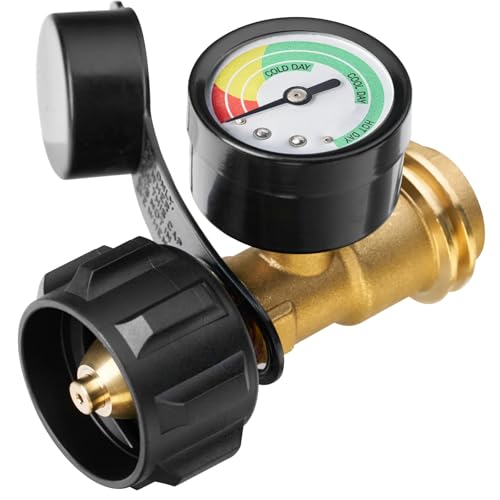
WIDELY SUITED - Compatible with all appliances with a QCC1 / type1 connection and 5 lb to 40 lb propane tanks, and can be worked with propane tank cylinders, propane regulator with hose and propane adapter

Compatible with all appliances featuring a QCC1 / Type 1 connection, this gauge is suitable for propane tanks ranging from 5 lb to 40 lb. Note: This product is not suitable for propane tanks exceeding 40 lb

Universal Compatibility:Compatible with QCC1 / type1 connectors and 5-20 lb propane tanks
Can You Check Your Propane Level Just by Listening?
Yes, you can get a rough idea of your propane level just by listening. Tap the tank gently and listen for a solid thump, which indicates more liquid inside. If you hear a hollow ringing sound, it suggests the tank is lower on fuel. Moving the tank slightly may cause the liquid propane to slosh, providing further clues. However, this method is crude and not very reliable—it does not replace a proper gauge or visual inspection. Always combine sound checks with other methods like checking the tank gauge or performing a hot-water test for better accuracy. Remember to prioritize safety: avoid opening valves or disturbing fittings when listening, and be alert for hissing or clanking noises, which can signal leaks or mechanical issues rather than fuel levels. Use sound checking only as a quick screening tool, not as your primary method for determining propane quantity.
4 Appliance Signs That Propane Is Running Low
Weak or flickering flames are among the clearest signs that your propane is running low. When the propane level drops, flames on your appliances such as stoves, grills, or heaters often appear smaller, sputter, or shift from a steady blue to yellow. You might also notice that it takes longer for your appliances to heat up—your grill preheats slowly, or your oven struggles to reach the desired temperature. Ignition problems are another warning; burners may fail to light on the first attempt, or pilot lights may frequently go out. Reduced performance is common too, with stoves not cooking properly or heaters providing less warmth than usual. Paying attention to these signs can help you avoid unexpected shutdowns. To prevent this, schedule refills when your tank drops to about 30 percent. Regular maintenance and monitoring can keep your appliances operating smoothly and safely. When the tank gets this low, you can also try the quick test methods to confirm the remaining fuel level.

WIDELY SUITED - Compatible with all appliances with a QCC1 / type1 connection and 5 lb to 40 lb propane tanks, and can be worked with propane tank cylinders, propane regulator with hose and propane adapter
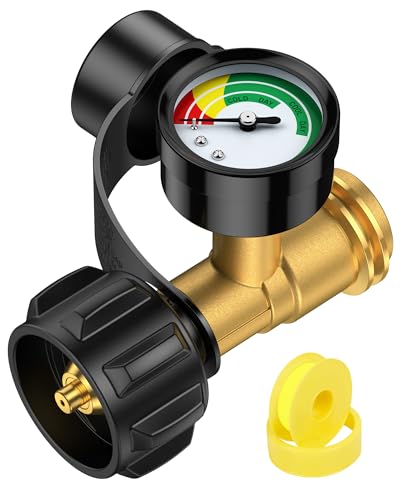
COLORED & RELIABLE GAS MONITOR – Colored reading allows you to check the gas level at a glance. Needle in green area means sufficient gas, yellow means low gas, and red means nearly empty gas. Through detecting air pressure, the propane tank gauge measures remaining capacity of propane. This propane gauge can also work as LEAK DETECTOR.

Package Contents: you will receive 2 pieces of gas level indicators, the sufficient quantity and simple designs can satisfy your various decorating needs, which has a color scale that changes according to gas level
When to Refill: The Best Thresholds to Avoid Running Out
Refill your tank when it hits approximately 30%. This threshold provides a buffer against delivery delays and unexpected heavy usage, helping you avoid running out unexpectedly. For safety, never let the level drop below 20%. When your gauge reaches 20%, order a refill immediately to prevent pressure drops that can occur during cold days, which increase the risk of outages. Regularly checking your gauge ensures you stay above these critical levels and maintains system reliability. During winter, plan for a minimum of 30%, but if the weather is milder, you can push the threshold to around 25%—just ensure it never dips below 20%. Running out of fuel triggers safety checks, causes service delays, and complicates system restarts. Staying vigilant with consistent gauge checks helps maintain continuous service and avoids unexpected disruptions. Propane tank levels directly affect fuel vaporization, so keeping them above 20% prevents pressure drops that starve your generator. Just as a car battery charger requires attentive monitoring to avoid costly mistakes, a propane tank demands regular checks to prevent pressure drops during cold weather. For those relying on propane for 50 amp power, choosing the right generator ensures consistent fuel flow even during peak demand.

Set of 2. Compatible with all appliances with a QCC1 / type1 connection and up 5 lb to 40 lb propane tanks.

【VERSATILE COMPATIBILITY & PACKAGE CLARITY】:Designed for 5-40 lb propane tanks with QCC1/Type 1 connections, this versatile gauge is the ideal accessory for your grills, propane heaters, camping stoves and various appliances. Package Includes: 2 Gauges. Installation hardware (thumb screws, covers, wrench, cushion) is NOT INCLUDED, as they are part of your propane system's standard valve assembly

All-in-One Integrated Design: Safety and Convenience in One Step.We innovatively combine precise pressure monitoring with leakproof into one device. You no longer need to purchase two separate products. AWEASROY propane tank gauge provides a one-stop solution for both core needs—propane level management and safety leakproof—delivering comprehensive peace of mind