Wondering how much a full propane tank really weighs? A typical 20-pound tank actually tips the scales at about 37 pounds when full.
The key number to look for is the tare weight stamped on the collar, which shows the empty tank’s weight.
Knowing how to read this helps you track your fuel and save money during exchanges.
Keep reading to learn the details.
A Full 20-lb Propane Tank Weighs About 37 Pounds
To determine if your 20-pound propane tank is full, look for a total weight of about 37 pounds. This includes the tank itself plus the 20 pounds of propane inside. The actual full weight typically ranges between 36.5 and 38.5 pounds, depending on your tank’s stamped tare weight, which is usually between 17 and 19 pounds. Knowing this weight range is important for safety and proper maintenance. Use a scale to check the total weight—don’t rely on guesswork. If your tank weighs less than 37 pounds, it’s likely low on fuel. Remember, the “20-pound” label refers only to the propane content, not the total weight of the tank. Weighing your tank accurately prevents overfilling and unexpected runouts, supporting safe and efficient use. For those seeking top propane tanks, reviews highlight quality and performance ratings to guide your purchase. Subtract the tare weight from the total to confirm if the propane inside reaches the full 20 pounds. For reference, a generator like the Predator 5000 also requires precise oil capacity checks to ensure safe operation. Choosing a viscosity grade that matches your generator’s operating conditions is equally critical for engine longevity.
What Does the Tare Weight (TW) Number on Your Tank Mean?
The tare weight (TW) number stamped on your tank indicates its exact empty weight, including the cylinder, valve, and any permanent attachments like paint. This number is essential for safety and proper handling because it provides a certified baseline that tells you how much the tank weighs without any propane inside. The TW varies depending on the tank’s size, material, and design, so you must always check the specific stamp on your tank rather than relying on estimates. For a typical 20 lb propane tank, knowing the TW helps you determine how long a propane tank will last per refill by calculating the fuel weight. Regular testing and maintenance helps ensure the tank’s integrity, much like checking a battery’s condition to avoid sudden failure, and building a soundproof enclosure can further protect the tank from environmental damage.
This marking is required to be permanently and clearly visible, often found on the collar or neckband. It must be preceded by the letters “TW” or “tare weight.” The TW is not the weight of the propane inside but the weight of the empty container. Using the stamped figure ensures you do not accidentally overfill the tank and helps meet safety and legal standards. Never guess the tank’s empty weight—always verify it with the actual stamped number.
How to Weigh Your Tank and Know Exactly What’s Left
To accurately determine how much propane remains in your tank, weigh it using a sturdy bathroom or kitchen scale placed on a flat, stable surface. Set the tank securely on the scale and record the total weight. Subtract the stamped tare weight (the empty tank’s weight, marked on the tank) from this measurement to find the pounds of propane left. For example, if your tank weighs 30 pounds and the tare weight is 17 pounds, you have 13 pounds of propane remaining. Dividing that by 4.2 converts it into gallons, giving you a precise measurement of fuel left. This method is more reliable than guessing, ensuring you know exactly when to refill and avoiding running low unexpectedly. Keep in mind, if the scale reading matches the tare weight, your tank is completely empty. Unlike gasoline, diesel fuel is much less likely to ignite from a spark or open flame, which is why propane tanks require different safety precautions. For a different type of maintenance check, best trickle chargers can keep your motorcycle battery fully charged. However, if you ever need to power a car’s electronics from a propane system, you should understand that a deep cycle battery is designed for sustained energy draw rather than the high burst needed for engine starting.

Compatible with 5LB, 10LB, 20LB, 30LB and 40 lb Propane tanks * High precision weight sensor

Calibrated to common 20 lb exchangeable propane tanks, the LCD Screen illuminates in 3 intuitive colors (red, orange or green) for immediate insight into tank gas level for the hurried chef or grill master.

ALWAYS HAVE PROPANE READY: Don’t worry about running out of propane again! With this digital gas indicator, you can track and monitor the levels of your large or small tank, so you never run out of gas in the middle of a good barbecue!
Why a ’20-lb’ Propane Tank Isn’t Really 20 Pounds
The “20-lb” label on a propane tank refers only to the weight of the propane inside, not the total weight of the tank. In reality, a full tank weighs roughly 37 pounds because the steel tank itself adds about 17 pounds of tare weight. Safety regulations also restrict filling the tank to 80% capacity to accommodate vapor expansion, so you’re rarely getting a full 20 pounds of propane. Just as a truck’s power inverter must be matched to its electrical load, choosing the right type of gas tank scale ensures you get an accurate reading of remaining fuel. Similarly, when you dispose of old gas from a generator, never pour it on the ground or down a drain; instead, take it to a designated hazardous waste facility for safe recycling. This means when you lift or weigh the tank, the total weight includes both the propane and the tank. To determine how much fuel is left, check the collar for the stamped tare weight, which indicates the tank’s empty weight. Knowing the tare weight helps you avoid overestimating your remaining fuel and ensures safe handling. For a quick comparison, a solar charger for a car battery operates on similar principles of matching capacity to device requirements, just as a propane tank’s tare weight must be matched to your heating or grilling needs.
How Much Do 100, 250, and 500-Gallon Tanks Weigh?
A 100-gallon tank weighs approximately 215 pounds when empty and about 555 pounds when full. Since propane weighs roughly 4.2 pounds per gallon, a full tank contains around 420 pounds of propane. A 250-gallon tank has an empty weight near 485 pounds and a full weight around 1,335 pounds, with roughly 1,050 pounds of propane when filled. For a 500-gallon tank, expect about 950 pounds empty and approximately 2,650 pounds when full, which includes roughly 2,100 pounds of propane. To safely transfer propane from a delivery truck into these tanks, a reliable fuel transfer pump is essential for efficiency and control.
Keep in mind these figures are approximate because manufacturer designs vary. Regular maintenance of valves and checks for corrosion are essential, as they influence the accuracy of weight calculations and the safety of the tank. Handling tanks of this size involves thousands of pounds, so accurate weight estimates are crucial for safe transport and proper placement. Always confirm your specific tank’s exact weight specifications before moving or installing it.
What’s the Real Cost to Refill a 20-lb Propane Tank in 2025?
Refilling a 20-lb propane tank typically costs between $12 and $20 at a dealer or refill station. Once local fees are added, totals usually fall between $15 and $25. You’re paying around $2.50 to $3.99 per gallon for approximately 4.7 gallons of usable propane. This amount is enough to power hours of lawn maintenance or several cooking sessions on your grill. Prices can vary widely depending on the retailer: Costco often refills for $10 to $14, while smaller stores may charge $15 to $25 or more. Your tank’s current level also impacts cost since you’re only paying for the propane actually dispensed. If your tank isn’t completely empty, topping off can reduce the overall price for the refill. For those with camping or emergency needs, using a top propane generator can help you maximize the value of each refill. Understanding how your propane setup compares to electrical alternatives can clarify whether a power inverter or converter suits your energy needs better. For heavy usage, selecting the correct power inverter ensures your battery system efficiently powers your appliances alongside your propane generator.
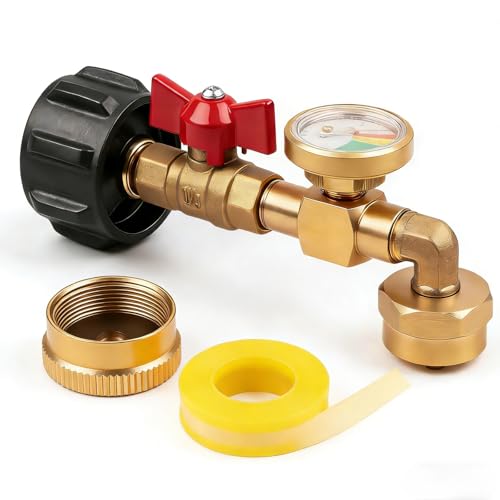
Effortless Propane Refilling: Upgrade your propane experience with the Siasky Propane Refill Adapter. A convenient 90-degree elbow design allows you to effortlessly fill 1 lb bottles directly from your 20 lb tank

Easy to Refill & Versatile - The propane adapter 20lb to 1lb converter with Gauge and Control Valve is designed for simple and fast refills from your 20lb propane tank
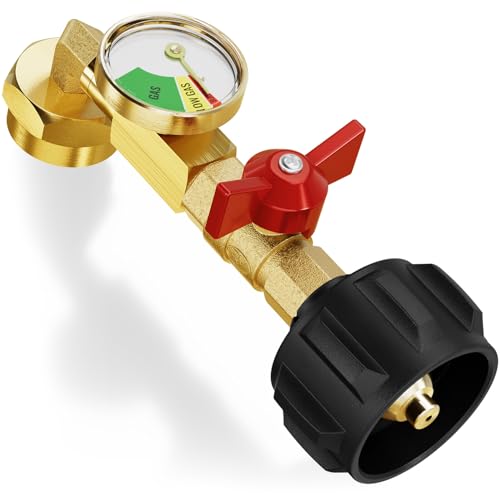
Effortless Refilling - The 90-degree elbow design facilitates smooth gas flow to smaller cylinders, allowing for easy attachment to large tanks and 16oz tanks, enabling refills in just one minute.
Refill vs. Exchange: Which Saves More Money?
Refilling your 20-lb propane tank generally saves you more money than exchanging it. A full refill costs about $15 to $20, providing nearly 20 pounds of propane. In contrast, an exchange typically costs $20 to $25 but offers only around 15 pounds of propane. This means refilling costs roughly $0.85 per pound, while exchanging averages about $1.47 per pound, a difference of about 73 percent. While exchange programs offer the convenience of quick turnaround and minimal effort, they usually come with a higher cost and less propane volume. Refilling, however, allows you to perform necessary tank maintenance and ensures safety through professional inspection of your valve and O-rings. For frequent users, choosing refilling over exchanges can save between $120 and $180 annually. If speed is your priority, exchanges still work, but be aware you’re paying extra for the ease. For portable generator owners, a similar comparison shows that an inverter for portable generator can deliver more usable power per dollar than older models. For those interested in alternative energy projects, building your own solar panel can be a rewarding and cost-effective way to harness sunlight for electricity without ongoing fuel costs. Similarly, using a battery charger with desulfator can extend battery life and improve performance by restoring sulfate-damaged cells.

Effortless Refilling: The 90-degree elbow design ensures a smooth gas flow, making it easy to connect to both large tanks and 16oz tanks for quick refills in just 1 minute.

Cost-Saving Propane Refill Solution: Refill your 1 lb propane bottles from a 20 lb tank instead of buying disposable cylinders. This propane refill adapter helps reduce waste and save money on camping, grilling, heating, and outdoor cooking.
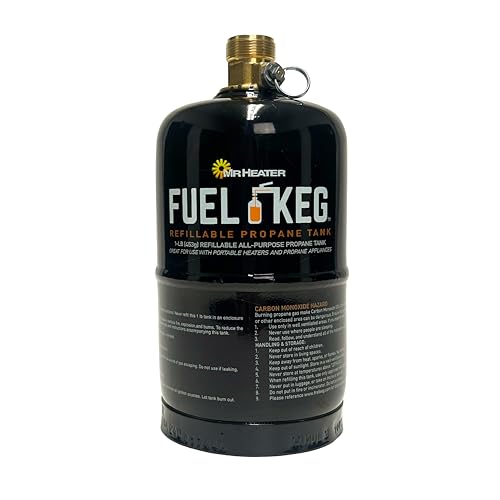
Patent pending tool free operation
What Drives Up Your Propane Tank Refill Costs?
Seasonal demand spikes in winter can significantly increase your propane refill costs. During colder months, heating needs rise, causing per-gallon rates to climb as suppliers experience higher demand. Delivery fees also tend to be higher, often adding between $0 and $15, especially if you live in a rural area or require emergency service. Taxes, inspection charges, and hazmat surcharges related to safety protocols can further inflate your bill. Environmental regulations may also impose compliance fees for bulk refills, adding to the overall cost. Always ask your provider whether delivery is itemized separately so you can anticipate the total expense and avoid surprises. Planning ahead and understanding your local fee structure helps keep your propane costs manageable. Beginners must also follow safe operating tips to avoid overfilling, which can cause leaks or dangerous pressure buildup.

ITEMS INCLUDED – (2) Refillable EMPTY 1LB Propane Tanks, (2) Caps, and (2) Allen Keys - 2mm (5/64") in size

Safe & Precise Refilling Control:This propane refill adapter is equipped with a pressure gauge and ON/OFF valve for accurate fuel control. As a high-performance propane refill adapter for 1 lb. Tanks, it ensures safe, efficient refills for 1lb propane cylinders

TOP QUALITY MATERIALS: Propane QCC1/Type1 Elbow Filling Adapters are built and tested to strict quality control standards, made of solid brass to ensure your safe leak-free operation and provide good weather resistance, safe and durable.
How to Calculate Weight and Cost for Your Specific Propane Tank
To calculate your specific propane tank’s weight and refill cost, start by locating the tare weight stamped on the cylinder collar. This number represents the empty tank weight, including the valve and paint, but not the protective cap. To determine how much propane is left, weigh the tank on a reliable scale and subtract the tare weight from the total. Propane weighs approximately 4.24 pounds per gallon, so you can convert the remaining volume into weight by multiplying the number of gallons by this factor.
When calculating the refill cost, first determine how many pounds of propane you need to add to reach your desired full level. Subtract your current propane weight from the target full weight to find the pounds needed. Convert this amount into gallons by dividing by 4.24, then multiply by your local price per gallon. Always ensure you do not exceed the tank’s rated capacity, and consider propane expansion during regasification, which makes precise weight measurements essential for safe handling and preventing overfill.

Highly Accurate Measurement: Our propane scale is built to deliver precise readings for all common tank sizes—5LB, 10LB, 15LB, 20LB, 30LB, and 40LB. Provides reliable measurements that are unaffected by temperature changes, outperforming traditional propane gauges.
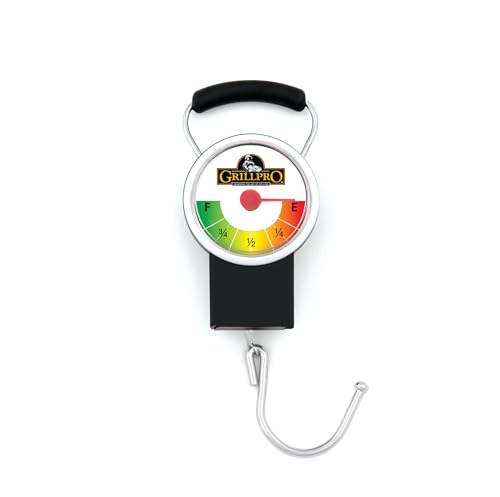
Hook it under the handle of any standard North American 20 lbs. tank and lift to take a reading

High-Precision Propane Tank Scale Ensures Accurate Weighing: Designed for ultimate precision, this propane tank scale has a weighing capacity of up to 110 pounds and is suitable for all propane tanks and gas cylinders weighing between 5 and 100 pounds