Wondering how long your generator can run on propane? It depends on the size and load, but for example, a small 2,000W generator on a 20-pound propane tank can last around 20 hours at half capacity.
Larger models, like a 22 kW standby unit, may use over 3 gallons an hour at full power. Your runtime hinges on factors like load, tank size, and weather.
Keep reading to see how conditions like cold and altitude can affect your generator’s performance.
What’s the Actual Fuel Burn Rate for Common Generator Sizes?
Propane consumption for generators varies significantly by size and load, but generally, small 2,000-watt portable units burn about 0.5 gallons per hour at half load. As you increase the size, consumption increases as well: a 5,000-watt generator typically uses around 1.2 gallons per hour at 50 percent load. Fuel efficiency tends to drop sharply as you add load, making larger units less economical at higher outputs. For example, a 7,500-watt generator burns approximately 0.72 gallons per hour at half load and up to 1.22 gallons per hour at full load. Larger standby models, like a 22-kilowatt unit, can consume about 2.1 gallons at 50 percent load, rising to 3.4 gallons at full capacity. Using a fuel stabilizer can help preserve the quality of stored propane and prevent system clogs. Maintaining your generator with clean filters and proper tuning improves fuel efficiency and helps you save propane during each use. Using the correct 10W-30 oil for your generator helps maintain engine performance and further reduces fuel consumption. Regularly testing your deep cycle battery ensures your generator starts reliably, preventing wasted propane from extended cranking.
How Long Can You Run a Generator on a 20 or 30 Lb Propane Tank?
A 20 lb propane tank typically provides about 7 to 23 hours of runtime for a small portable generator. The actual duration depends on the generator’s fuel consumption rate; smaller inverter models often burn less fuel, extending runtime. Larger or more powerful generators will use fuel faster, potentially lasting only 2 to 3 hours on the same tank. If you are comparing power sources, inverter generator models tend to be much more efficient than conventional options.
A 30 lb tank offers about 50% more propane than a 20 lb tank, which means you can expect roughly 50% longer running time—often around 12 to 15 hours on smaller inverter generators. This additional capacity makes a 30 lb tank more suitable for longer power needs or situations where refueling options are limited. For those who prefer sustainable off-grid solutions, DIY solar panel kits provide a renewable alternative to propane generators. Unlike gasoline, diesel fuel is less flammable and requires a high compression ratio to ignite, making it safer for storage near generators.
Always verify that your generator is compatible with propane and whether it requires a conversion kit, as not all models accept propane directly. Regular maintenance, including checking seals and hoses for leaks, ensures safe and reliable operation. In general, a 20 lb tank suits short to moderate power needs, while a 30 lb tank helps extend your run time, giving you steady power over a longer period.

Pre-filled and ready to use — connects directly to standard propane appliances

High-grade steel-welded construction; premium OPD (overfilling protection device) valve assembly

NEVER RUN OUT OF PROPANE: Our built-in gas meter gauge provides accurate gas level readings so you don’t have to worry about running out of propane!
How Does Load Level Change Your Generator’s Runtime?
The load you place on your generator directly impacts its runtime. When you increase the electrical demand, the engine burns more fuel—specifically propane—leading to shorter operating hours. For example, a 22 kW generator uses approximately 2.53 gallons per hour at half load, but this jumps to about 3.90 gallons per hour at full load. This demonstrates how efficiency drops as the load increases. Selecting a hybrid solar inverter can help reduce your dependence on a generator by optimizing battery storage and solar usage.
Managing load levels is crucial for extending runtime. Running a generator at around 50 percent load can roughly double the operating hours compared to operating it at full capacity. Small loads, such as a 2,000-watt inverter powering essential devices, can allow your generator to run for approximately 20 hours on a 20-pound tank of propane at half load.
Keep in mind that transient starting draws—like refrigerator motors kicking on—can temporarily spike the total demand. Always calculate total running wattage, including startup surges, rather than just peak wattage. Adding a safety margin of about 15 percent helps account for factors like elevation or efficiency losses and ensures your generator isn’t pushed beyond its limits. One common mistake is ignoring sound-dampening placement that can reduce noise while maintaining proper airflow for safe operation.

9500 Running Watts and 12500 Peak Watts (Gasoline); 8500 Running Watts, 11200 Peak Watts (Propane); Remote Start with Included Key Fob, Electric and Recoil Start; Up to 12 Hours of Run Time on a 6. 6 Gallon Fuel Tank with Fuel Gauge
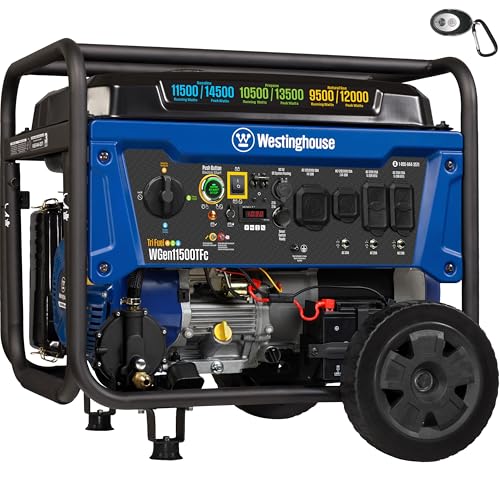
Perfect as a backup power source for larger homes or a dependable source of portable power

Switch between gasoline (4750 surge watts, 3800 running watt) and propane (4350 surge, 3500 running) with the simple turn of the selection dial
What Runtime Can You Expect From a 250, 500, or 1,000-Gallon Tank?
A 250-gallon tank, filled to 80 percent for about 200 usable gallons, provides roughly 3 to 5 days of runtime based on typical propane consumption. This size is suitable for short-term outages or power blips but won’t last through extended grid failures. If you experience a prolonged outage, you should plan for a larger tank to ensure continuous backup fuel.
A 500-gallon tank, with approximately 400 usable gallons, offers about 1 to 2 weeks of runtime. Its larger capacity makes it a reliable middle-ground choice for those wanting longer backup periods without frequent refilling. This size is ideal if you anticipate outages lasting several days to a week.
For extended outages, a 1,000-gallon tank contains around 800 usable gallons, translating to roughly 2 to 5 weeks of runtime. The actual duration depends on your propane usage rates. This size significantly extends your backup capacity, allowing you to handle prolonged grid disruptions with fewer refills.

Mounting sizes(hole to hole) length: 23.25" ,Width: 16.1", Height: 6.1". Please carefully TAKE A LOOK AT THE 2ND PICTURE to learn the sizes before ordering. A few customers didn't check the sizes and then return the tanks without quality issues, complaining it was not the right sizes for their generators. This should have been avoided if read the dimension information before ordering. Thank you. Fuel capacity: 7 gallon or 26.5 L. Fuel gauge and rubber grommets are already bulit in( many other tanks don't)
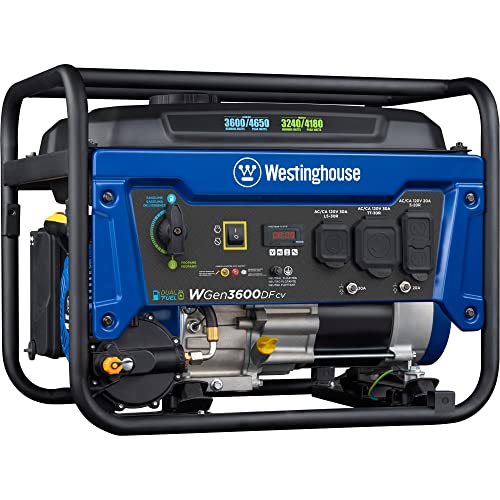
4650 Peak Watts & 3600 Rated Watts (Gasoline); 4650 Peak Watts & 3240 Rated Watts (Propane); 4 Gallon Fuel Tank (with Fuel Gauge); Up To 14 Hours of Run Time Per Tank

EMPTY TANK: Pre-purged vacuum ready for filling with propane; built from high-grade, welded steel and powder coated for rust prevention
How to Calculate Propane Generator Runtime: Tank Capacity ÷ Burn Rate
To calculate how long your generator will run on propane, divide your usable tank capacity by the generator’s burn rate. First, convert your tank’s contents into gallons of liquid propane. For example, a 20-pound cylinder holds about 4.7 gallons, while a 100-pound tank contains approximately 23.6 gallons. Next, determine your generator’s burn rate, usually found in the manual in gallons per hour. If the burn rate is listed in pounds per hour, divide that number by 4.24 to convert it into gallons per hour. Never refuel a running generator, as spilled gasoline can ignite on hot engine components. A similar fire risk applies to propane connections, which can leak if not secured with weatherproof coverings. Finally, divide the usable gallons of propane by the gallons-per-hour burn rate to estimate runtime. Remember, always base your calculation on the actual fill amount, not the tank’s full label capacity. Fuel efficiency can vary depending on the load—heavier loads tend to reduce runtime. Using proper tank insulation can help maintain consistent pressure, especially in cooler weather, leading to more accurate estimates. For the most precise calculations, rely on manufacturer data rather than general assumptions. Always inspect hoses and regulators for cracks or wear before each use to prevent dangerous leaks.

Constant Output:Two stage regulator stabilizes the output flow of the product much better than a single regulator

Real-time monitoring: Gain peace of mind with the ability to monitor the liquid propane (LP) fuel levels in your tank in real-time. Stay informed about your fuel consumption and plan for deliveries accordingly, ensuring you never run out unexpectedly

【Flexible mobility】:The propane regulator hose can connect to all gas grill equipment (3/8" Female Flare Nut). An ample length of propane hose allows you to move your propane equipment freely.
Why Cold Weather, High Altitude, and Cycling Drain Propane Faster
Cold weather, high altitude, and frequent generator cycling all accelerate propane consumption beyond what tank size alone indicates. Cold temperatures reduce vapor pressure, meaning less vaporizes from your tank at lower temperatures. For example, at 0°F, a 250-gallon tank vaporizes only half as much fuel as it would at 40°F, increasing the risk of engine starvation and stalling during heavy demand.
High altitude diminishes air density, decreasing your generator’s power output by approximately 3.5% for every 1,000 feet climbed. As a result, you need to burn more propane to maintain the same electrical load, which shortens runtime. Additionally, cycling your generator on and off repeatedly causes extra fuel to be burned during warming and stabilization phases, wasting propane on unnecessary fuel bursts.
Together, these conditions can significantly reduce your effective runtime, making your propane supply last much less than the tank’s nominal capacity suggests.
How Much Propane Storage for a 3-Day or 2-Week Outage?
For a 3-day outage, a 250-gallon propane tank typically suffices, providing about 180 usable gallons after filling it to 80% capacity. This amount can run a 20 kW generator at approximately 2.5 gallons per hour for the entire 72 hours. For a 2-week outage, you should plan for a 1,000-gallon tank, which offers around 840 usable gallons. This quantity can sustain your generator for approximately 336 hours at the same rate. Always ensure proper professional installation of the tank, including adequate ventilation, stable ground placement, and compliance with local safety codes. Remember to verify your generator’s fuel consumption rate at your typical load before purchasing storage capacity—demand can vary and affect runtime significantly. For shorter needs, consider a portable power inverter as a flexible alternative for on-the-go charging. If you must dispose of any old gasoline from other equipment, never pour it on the ground or into drains; instead, follow safe disposal methods like taking it to a certified collection center. Using a surge protector between the generator and your sensitive electronics can add an extra layer of safety against power fluctuations.

PRE-INSTALLED with propane float gauge, can easily accommodate "Remote Ready Dial" for accurate gas level readings - sold separately

Compatible with all appliances featuring a QCC1 / Type 1 connection, this gauge is suitable for propane tanks ranging from 5 lb to 40 lb. Note: This product is not suitable for propane tanks exceeding 40 lb

WIRELESS PROPANE GAUGE - This digital propane tank gauge is an essential tool for anyone who enjoys outdoor cooking or using propane-powered patio heaters. The Mopeka tank sensor connects to your phone through a mobile app, providing you with real-time updates on the propane level.